Headphones and Tinnitus: A Data-Driven Comparison
Explore headphone options for tinnitus-prone listeners with a data-informed, objective comparison. Learn which features reduce loudness exposure, protect hearing, and ease tinnitus symptoms in daily use.


TL;DR: For tinnitus-prone listeners, there isn’t a single best headphone. Prioritize listening at safe, moderate volumes, seek strong isolation or effective ANC to avoid raising the volume, and choose models with comfortable cushions for long sessions. According to Headphones Info, the optimal choice depends on your environment, fit, and hearing habits—test candidates with controlled volume and take regular listening breaks.
The Link Between Headphones and tinnitus
Tinnitus is the perception of sound in the ears or head when no external source is present. For many listeners, headphones are a tool to manage daily noise exposure, but they can also influence tinnitus symptoms depending on how they are used. In the context of headphones and tinnitus, the focus is on how design, fit, and listening habits affect perceived loudness, masking of external noise, and stress on the auditory system. Headphones Info notes that prolonged exposure to loud sound can aggravate tinnitus in susceptible individuals, while well-chosen headphones used with sensible listening habits can reduce annoyance by masking background noise and enabling lower volumes. The practical question is not only which model sounds good, but how it supports hearing protection over time. This article provides a data-informed comparison of common headphone classes and offers actionable guidance for people who want to minimize tinnitus flare-ups while enjoying music, podcasts, or games.
The safe listening baseline for tinnitus-aware use
Many listeners with tinnitus benefit from lowering overall exposure rather than chasing the perfect tonal balance. A safer listening baseline combines two elements: (1) strong isolation to keep ambient noise out and reduce the pressure to raise volume, and (2) a design that minimizes listening fatigue during extended sessions. Headphones Info recommends anchoring your setup around a comfortable fit, consistent use of volume limits, and deliberate breaks. While devices differ, the principle is consistent: better isolation at modest volumes is generally preferable to louder playback. This approach helps to maintain symptom stability and may improve overall enjoyment by reducing auditory stress. When used thoughtfully, headphones can support tinnitus management rather than exacerbate it.
Noise isolation: passive vs active noise control
Isolation is the first line of defense against tinnitus aggravation. Passive isolation—via snug ear cups and well-sealing pads—often allows you to listen at lower levels because surrounding noise is naturally reduced. Active noise cancellation (ANC) can further diminish exterior sound, but its effectiveness depends on fit, ear shape, and the presence of high-frequency content in the environment. ANC might introduce slight pressure or a different sound character for some users, which can affect comfort over long sessions. The takeaway is to test both passive isolation and ANC in real listening scenarios and prefer the option that permits quiet listening at lower volumes without introducing discomfort.
Key features to look for in tinnitus-friendly headphones
When selecting headphones with tinnitus in mind, prioritize these features: (1) strong passive isolation with a good seal, (2) efficient ANC that reduces external noise without requiring high volume, (3) light, comfortable clamping force to minimize fatigue, and (4) a smooth frequency response that avoids harsh treble or overly bass-forward sound, which can intensify listening fatigue. Ear cushions made of memory foam or plush velour can improve comfort during long sessions. Materials and weight matter: lighter cups and headbands reduce pressure points that can distract you from the listening task. In practice, a well-balanced design helps you maintain safer listening levels and lower symptom fluctuation over time.
Safe listening habits and headphone design go hand in hand
Even with good headphones, the human factor remains critical. Safe listening habits—such as taking regular breaks, avoiding extended listening at high volumes, and using shorter listening blocks with gradual volume adjustments—are essential for people with tinnitus. Headphones Info emphasizes that the balance between volume, duration, and comfort determines the real-world effect on symptoms. Consider using listening apps that monitor time and encourage interval breaks. In environments where ambient noise is unavoidable, effective isolation becomes a tool to keep listening levels sustainable, reducing the risk of aggravating tinnitus.
ANC vs passive isolation: choosing what works for you
ANC can be a powerful aid for tinnitus-prone listeners because it reduces background noise and allows lower volumes. However, not all users tolerate ANC equally; some report a sense of pressure or unfamiliar sound signatures that can be distracting. Passive isolation, on the other hand, depends on the physical fit and seal quality. The best approach is to compare both modes in real-life scenarios: use ANC where you need to suppress external noise and rely on passive isolation when a comfortable, natural sound is preferred. The choice should be guided by comfort, perceived sound quality, and the ability to maintain safe listening levels over time.
Use-case scenarios: where the difference matters
Commuting, working from home, and leisure listening each pose different challenges for tinnitus. For commutes, strong isolation reduces the impulse to turn up the volume when city noise peaks. At home or in quiet spaces, comfort and a natural sound signature become more important. In gaming or cinematic viewing, prioritizing fatigue-free design and stable fit helps you enjoy longer sessions without increasing stress on the ears. In every scenario, the 2- to 4-hour listening windows should be moderated by breaks, volume checks, and a conscious plan to protect hearing.
Myths and misconceptions
A common myth is that higher bass automatically improves tinnitus comfort. In practice, bass can mask environmental noise, but excessive bass can also cause listening fatigue and masking effects that distort perception. Another misconception is that more expensive models are always better for tinnitus. Price often reflects features and build quality, but comfort, fit, and the ability to maintain safe listening levels are the decisive factors. The most reliable path is to test models in your actual environment and monitor how your ears respond over several days.
How to test and optimize your setup at home
A practical testing workflow begins with a baseline test at a quiet volume using a favorite track. Check for comfort after 30 minutes and adjust the seal or ear pad size if needed. Experiment with ANC off and on to determine which mode enables safer listening in your specific setting. Keep a listening log for a week, noting any tinnitus fluctuations and the corresponding headphone model, volume level, and duration. Small, iterative adjustments often yield the best long-term results. The goal is clear: maintain comfortable listening with minimal symptom fluctuation.
Maintenance, ergonomics, and long-term strategies
Maintenance matters: keep cushions clean, replace worn pads to preserve seal, and store headphones properly to prevent pressure points. Ergonomics influence comfort; ensure your headphones sit evenly on the head with balanced clamp force. For long-term strategies, consider combining headphones with sound therapy apps or masking sounds when appropriate, and consult a clinician or audiologist if tinnitus symptoms change significantly. A thoughtful setup, regular breaks, and careful monitoring create a practical framework for safer listening and symptom management.
Headphones Info’s approach and practical conclusions
The Headphones Info team approaches headphones and tinnitus with a focus on objective testing, user comfort, and hearing safety. We synthesize data from user reports, design reviews, and listening tests to identify models that reliably support safer listening habits. In practice, the best choice varies by person, environment, and tolerance. Our approach emphasizes two pillars: (1) strong isolation at modest volumes and (2) a comfortable, fatigue-free listening experience that reduces the urge to raise volume over extended periods. This combination tends to yield the most reliable outcomes for tinnitus-prone listeners.
Comparison
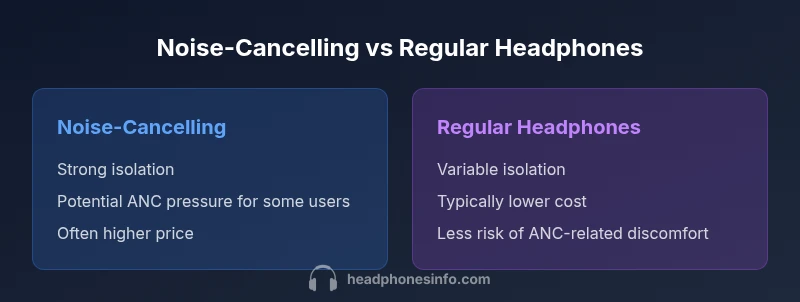
| Feature | Noise-cancelling headphones | Regular headphones |
|---|---|---|
| Isolation | Excellent passive isolation with tight seal (often usable at lower volumes) | Moderate isolation; reliant on fit and design |
| Active noise cancellation | Strong ANC reduces ambient noise and enables safer lower volumes | Typically no ANC or basic noise suppression |
| Comfort for long listening | High comfort with plush padding and lightweight design | Can vary; often heavier or less forgiving over long sessions |
| Sound balance | Balanced to avoid harsh highs that fatigue ears | Can vary; some models emphasize bass or brightness |
| Price range | Mid to high range depending on ANC and build quality | Low to mid range for basic models |
| Best use case for tinnitus | Environments with variable noise; safe listening with low volumes | Louder environments or budget listening setups |
Upsides
- Promotes safer listening by reducing ambient noise
- Can lessen listening fatigue during long sessions
- Allow lower volumes without sacrificing perceived detail
- ANC adds flexibility in noisy environments
- Comfort-focused design benefits all-day wear
Disadvantages
- Higher upfront cost for quality ANC models
- Some users experience pressure or altered sound with ANC
- Not all units are equally comfortable; weight and clamp can vary
- Maintenance and pad replacement may be needed for sustained seal
Noise-cancelling headphones generally offer a safer listening path for tinnitus-prone users, provided they fit well and are used to maintain moderate volumes.
Choose models with strong passive isolation or effective ANC and prioritize comfort. Pair with mindful listening habits and regular breaks. For most users, this combination reduces tinnitus flare-ups while preserving enjoyment.
People Also Ask
Can wearing headphones cause or worsen tinnitus?
There is no universal rule that headphones cause tinnitus. Prolonged exposure to loud sound can worsen symptoms for some people, but using headphones with safe listening practices and good isolation can minimize risk. If symptoms persist, consult an audiologist.
Headphones won't universally cause tinnitus, but loud listening can worsen it for some people. Use safe levels and good isolation, and check with a clinician if symptoms persist.
What types of headphones are best for tinnitus sufferers?
Most tinnitus-prone listeners benefit from over-ear, closed-back designs with strong passive isolation and comfortable padding. If possible, test several models with gentle frequencies and avoid harsh treble; consider ANC if it helps you keep volumes down in noisy environments.
Over-ear, closed-back headphones with good isolation often work best, especially if they stay comfortable and quiet. Try ANC if it helps you keep volume low in noisy places.
Should I use tinnitus masking sounds with headphones?
Masking sounds can help reduce the perception of tinnitus in some situations. Choose gentle white or nature sounds at a comfortable level and avoid masking to the point of discomfort. Use masking as a complement to, not a replacement for, safe listening practices.
Masking sounds can help some people, but use them at a comfortable level and continue safe listening habits.
Are there any general volume guidelines for listening with headphones?
General guidance suggests keeping listening at moderate levels and taking breaks, especially if you notice changes in tinnitus. Individual tolerance varies, so adjust based on how you feel rather than aiming for a fixed number.
Keep volumes moderate and take breaks; adjust based on how your ears feel rather than chasing a numeric target.
Do wireless headphones impact tinnitus differently than wired models?
The connection type itself doesn’t cause tinnitus, but wireless devices can introduce additional noise from certain codecs or battery-related artifacts if the fit isn’t secure. Focus on comfort, isolation, and a clean signal with steady battery life.
Wireless vs wired isn’t the main issue; prioritize comfort, isolation, and a clean signal to keep listening safe.
What’s the best way to test headphones for tinnitus in-terms of real-world use?
Test models in typical environments (home, work, commute) at low-to-moderate volumes, monitor tinnitus symptoms over several days, and log comfort and fatigue. Choose the model that consistently supports safer listening while staying comfortable.
Try headphones in your usual places at safe volumes and monitor symptoms over a few days to pick the most comfortable, safest option.
What to Remember
- Prioritize strong isolation to keep volumes down
- Test ANC and passive isolation in real environments
- Focus on comfort to encourage longer, safer listening sessions
- Balance sound signature to avoid fatigue-inducing highs
- Incorporate breaks and monitoring into daily listening