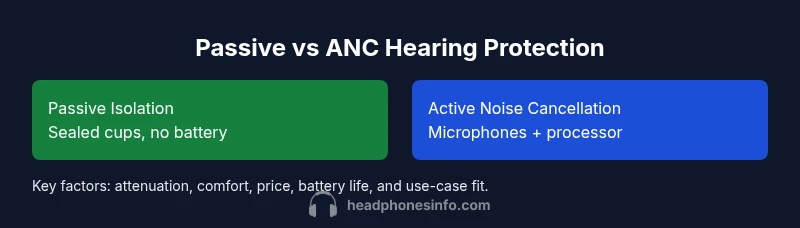
Hearing Protection Headphones: Side-by-Side Review
A data-driven, objective comparison of hearing protection headphones, weighing passive isolation against active noise cancellation for work, travel, and studio use. Learn which model best balances attenuation, comfort, and value.


Passive and active hearing protection headphones both reduce ambient noise, but they excel in different conditions. ANC models deliver the strongest attenuation in loud environments, while passive headphones rely on dense cups and seals for comfort and portability. For most users, prioritize ANC for noisy workplaces or travel; choose passive options when budget, battery life, or long-wear comfort trump extra noise reduction.
Why Hearing Protection Headphones Matter
According to Headphones Info, choosing hearing protection headphones requires balancing attenuation, comfort, and practicality for your environment. In workplaces with constant loud noise, reliable protection reduces fatigue and long-term hearing risk. For travelers and studio producers, selective attenuation can preserve important ambient cues while protecting listening comfort. The keyword here is versatility: the best pair protects without turning every moment into a decision point. Hearing protection headphones are designed to strike that balance across materials, fit, and technology. The right model adapts to your daily routines, whether you’re counting decibels on a factory floor or tuning in to critical audio in a recording booth. You’ll want a design that stays comfortable after hours of wear, offers predictable audible quality, and scales from a quiet room to a bustling environment.
Key Use Cases for Hearing Protection Headphones
Diverse environments demand different protection profiles. In a workshop with heavy machinery, you want strong attenuation and a secure seal to minimize leakage. For long-haul travel, comfort and battery life take precedence, along with convenient controls. In the studio, you may prioritize flat response and low hiss from ANC systems so you can hear subtleties in your mix. For sleep-oriented headphones, you’ll seek gentle masking rather than aggressive bass. These scenarios show that there isn’t a single best headset for all tasks; there is a best headset for your primary use case.
Core Technologies: Passive vs Active Noise Reduction
Passive hearing protection headphones rely on physical barriers—dense earcups, tight seals, and optimized clamping force—to reduce noise without electronics. Active Noise Cancellation (ANC) adds microphones and processors that generate cancelling sound waves, effectively lowering low-frequency rumble and consistent background hum. The result is that ANC typically yields higher attenuation in loud environments, while passive designs excel in simplicity, reliability, and a more natural natural listening experience when ambient sounds are irregular. From Headphones Info’s perspective, the best choice balances your typical noise profile with your tolerance for weight, heat buildup, and battery management.
Comfort and Fit Considerations
Long listening sessions demand ergonomic comfort as much as attenuation. Weight distribution, headband padding, and earcup geometry determine whether you can wear headphones for hours without pain. Passive models often win on comfort because they use simpler assemblies and lighter materials, but premium ANC models can compensate with plush padding and adjustable clamping force. Try to assess how the cups seal—too tight, and you’ll experience pressure; too loose, and leaked noise undermines protection. Remember to check breathability, especially in warm environments, and consider the ease of replacing ear pads over time.
Sound Quality vs Protection Trade-offs
Protection and sound quality aren’t mutually exclusive, but there can be a trade-off. High-attenuation designs may introduce slight coloration in the sound or a perceived loss of energy in certain frequency bands. Some may notice a hiss or pumping artifact with ANC in very quiet rooms. For practical listening in protected environments, prioritize models with a neutral or pleasing tonal balance, low distortion, and a comfortable listening volume range. For critical listening in studios, you’ll want a flat-ish response in the protected range and consistent attenuation across frequencies.
Battery Life and Maintenance
ANC headphones require batteries or rechargeable cells and have maintenance considerations that passive models do not. Look for indicators of remaining charge, quick-charge options, and a balanced charging ecosystem to avoid performance drops during multi-day use. Regular cleaning reduces sweat buildup and ear-pad discoloration; replace pads when they show wear. A simple maintenance routine includes wiping cups after use, storing in a protective case, and avoiding moisture exposure to preserve seal integrity and microphone accuracy in ANC systems.
Durability and Build Quality
Durability matters when you rely on hearing protection headphones in harsh environments. Look for reinforced hinges, metal yokes, robust headbands, and earcups with scuff resistance. Water resistance ratings can matter for fieldwork or sweaty gym environments, while cable durability and replaceable cables add resilience. In wearable comfort terms, ensure the headband remains adjustable after repeated use and that the swivel or pivot joints do not loosen over time.
Price Bands and Value Proposition
Hearing protection headphones span a wide price range. Budget options can deliver reliable passive attenuation for casual use, while mid-range models introduce more comfort and better seals. Premium ANC models offer stronger noise reduction, longer battery life, and refined ergonomics, but the price premium should be justified by your environment and wear-time. A practical approach is to map your typical use-case intensity to a price tier that maximizes utility and minimizes waste, then prioritize fit and durability within that tier.
How to Choose Based on Environment
Consider your primary environment and noise profile. In industrial settings with persistent low-frequency noise, ANC can offer clear advantages. For intermittent sounds or irregular noise, a robust passive seal can be more effective and comfortable for long shifts. If you travel frequently, battery life and foldable design become critical factors. For sleep or quiet background masking, choose lightweight, unobtrusive designs that deliver gentle attenuation without overpowering the listening experience.
Real-World Scenarios: Studio, Workshop, Travel
In a studio, a near-neutral response with reliable attenuation and minimal color is desirable to preserve audio cues during editing. In a workshop, look for strong passive isolation plus rugged construction and a secure fit. On long flights or train journeys, prioritize comfort, battery life, and travel-friendly features like quick controls and companion apps. Across all scenarios, verify that you can clean and replace cushions easily and that the microphone and control scheme are intuitive for frequent use.
Authority sources
- OSHA Noise and Hearing Protection: https://www.osha.gov/noise
- NIOSH Noise and Hearing Safety: https://www.cdc.gov/niosh
- Major publications for further reading: https://www.nature.com/
Practical setup checklist
- Verify fit and seal before every session; adjust headband and earcups for a snug yet comfortable seal.
- Charge ANC headphones fully before long sessions and carry a spare charger if traveling.
- Clean ear pads regularly and replace them when worn to maintain attenuation and hygiene.
Comparison
| Feature | Passive Hearing Protection Headphones | Active Noise-Cancelling Hearing Protection Headphones |
|---|---|---|
| Noise Reduction | Moderate to high passive isolation | High ANC performance in low to mid frequencies |
| Comfort & Fit | Lightweight, simple design, minimal electronics | Plush padding, adjustable clamps, potential heat buildup |
| Battery Life / Power | N/A | Requires battery; varies by model and usage |
| Price Range | $50-$150 | $150-$400 |
| Best For | Budget-friendly protection; general noise reduction | Loud environments, travel, studio work with critical listening |
Upsides
- Typically lower upfront cost than ANC models
- Passive models offer reliable attenuation without batteries
- Lighter and simpler to use for long sessions
- Fewer moving parts, often easier maintenance
Disadvantages
- ANC models add cost and require charging
- Maximum attenuation can be lower for some passive designs in extreme noise
- Comfort varies with clamp force and cup size
- Some users report pressure or hiss with certain ANC systems
ANC headphones win in loud environments; passive options win on cost and long-wear comfort.
Choose ANC for the strongest protection in loud spaces and when you want to preserve ambient cues. If budget, battery life, or long wear matters most, start with passive models and evaluate ANC later.
People Also Ask
What are hearing protection headphones?
Hearing protection headphones are designed to reduce ambient noise while allowing normal listening; they may use passive insulation or active noise cancellation to protect hearing in loud environments. They are commonly used in workplaces, studios, and during travel.
Hearing protection headphones help cut down loud noises so you can hear what you need to while staying safe.
How do passive and active models differ in attenuation?
Passive models rely on physical barriers to block sound, offering consistent protection without batteries. Active models use microphones and processors to cancel noise, delivering greater attenuation in many loud settings but requiring power and more maintenance.
Passive blocks noise with its design; active cancels noise electronically, usually better in loud places but needs charging.
Are there safety concerns with long-term use?
When used properly, hearing protection headphones reduce exposure to harmful noise levels. Some people may experience ear fatigue or pressure from tight seals or aggressive ANC; taking breaks and rotating styles can mitigate these effects.
Use breaks and rotate styles if you notice fatigue; most people can wear them safely with moderate use.
Can I use these for sleep?
Yes, there are sleep-focused models designed for comfort and gentle masking. For sleeping, look for low-pressure seals, lightweight builds, and a soft fit to avoid disturbing sleep.
There are sleep-friendly options that mask noise without tight pressure.
How should I maintain and clean them?
Regularly wipe down cups and pads, replace worn ear pads, and avoid moisture exposure. Store in a protective case, and check cushions and seals for signs of wear during longer use.
Keep them clean, replace pads when worn, and store properly.
Do they require special electronics or batteries?
ANC models require batteries or charging; passive models do not. If you travel frequently, prioritize models with long battery life and easy charging options.
ANC requires power; passive models don’t, but still protect you well in many settings.
What to Remember
- Define your environment to pick the right tech
- Prioritize comfort for long sessions
- Balance attenuation with battery life and price
- Check for easy maintenance and pad replacement
- Test fit and seal before buying