How Many Hours Should You Wear Headphones? A Practical Guide
Discover safe listening durations, the 60/60 rule, and how to tailor headphone hours to your ears for better hearing health. Data-driven guidance from Headphones Info Analysis, 2026.


How many hours should you wear headphones? There isn’t a universal limit. A practical approach is to take breaks after about 60 minutes of listening, keep volume at or below 60% of max, and avoid long sessions without rest. Individual needs vary by ears, age, and health; monitor fatigue and adjust accordingly for safe listening.
Why listening duration matters
Listening duration matters for ear health and long-term hearing. Prolonged exposure to loud sound can cause fatigue, temporary threshold shifts, or even lasting damage over years of practice. According to Headphones Info, the risk of fatigue grows with longer sessions and higher volumes, but breaks and mindful listening can substantially reduce risk. Modern listeners often assume that more time equals better immersion, yet the ear’s recovery processes need space to reset after focused listening. This section lays the groundwork for a safe, personalized approach to headphone wear.
The science emphasizes not just how loud you listen, but how long. When you extend listening time without rest, your cochlea experiences microtrauma, which can accumulate. While exact thresholds vary by individual, adopting structured breaks and moderate volumes aligns listening habits with safer listening patterns. Keeping a log of daily headphone use can illuminate patterns that lead to fatigue or discomfort and help you adjust before it becomes a problem.
The 60/60 rule and practical limits
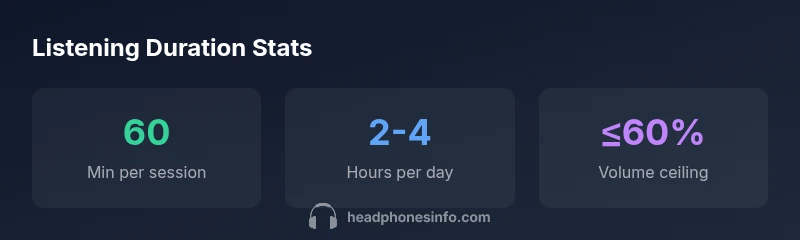
The 60/60 rule—60 minutes per session at no more than 60% of maximum volume—offers a practical baseline that many listeners find workable. This framework helps balance immersion with ear health. Headphones Info analysis suggests that people who adopt the 60/60 framework often maintain a total daily listening window in the 2–4 hour range, depending on personal comfort and context. Apply the rule as a starter, then tune it to your ears.
To apply it in real life, start with a 60-minute session, set your device’s volume meter or limit, and schedule a break of at least 5–15 minutes before starting again. If you still feel fatigue after the break, shorten subsequent sessions. For outdoor listening, prefer open-ear or ambient sound strategies to reduce volume needs while staying aware of surroundings.
How to tailor hours to your ears
No single number fits everyone. The best approach is to listen for body signals and set a flexible routine. Start with 60 minutes per session, then adjust based on signs of fatigue or ear fullness. Keep a simple log: note the time, duration, volume setting, and how you feel afterward. If you notice ringing, muffled hearing, or headaches, cut back and extend breaks.
Different listeners will have different needs:
- General daily listener: 2–3 hours total with 5–15 minute breaks between sessions.
- Commuter or student: Shorter in-session times (30–45 minutes) with multiple breaks to align with study or transit routines.
- Gamer or content creator: Blocked sessions of 60–90 minutes with deliberate rest periods to protect listening health during long stretches.
- Musician or sound engineer: Listening budgets may be tighter; prioritize critical listening with breaks to preserve auditory clarity over long marathons.
Headphone type, volume, and comfort factors
Device choice affects how long you can listen comfortably. Over-ear headphones with good padding and a breathable seal are generally more comfortable for longer sessions than tight in-ear buds. Active noise cancellation (ANC) can reduce the need to raise volume in noisy environments, but ANC itself adds processing that some users perceive as pressure or ear fatigue over very long sessions. Choosing well-fitted headphones with soft padding and a neutral frequency response reduces fatigue and allows for more comfortable listening within safe limits. Beyond hardware, durability and battery life influence how often you recharge and whether you’ll push listening sessions to the edge. Keep volumes modest, especially with highly efficient drivers that can deliver clear sound at lower levels.
For parents and caregivers, infants and children should have even stricter limits. Use volume-limiting features when available and supervise listening sessions to prevent overexposure. Regularly checking device health, including battery health and driver integrity, helps maintain safe listening habits over time.
Daily routines for different users
Routine shapes listening duration. A typical weekday for a busy listener might include short 30–45 minute sessions between tasks, plus a longer 60-minute block during study or commute, totaling 2–3 hours. Remote workers can schedule two 60-minute blocks with a mid-day break. Gamers and streamers may schedule three or more sessions of 45–60 minutes with rests to maintain focus and awareness. Travelers can alternate short listening bursts with walking breaks to stay alert. The core principle remains: monitor volume, respect fatigue signals, and rest when needed. Tailoring hours to your schedule and ears improves both safety and enjoyment.
Special considerations for kids and sensitive ears
Children have more susceptible hearing and developing auditory systems. Prioritize shorter sessions and lower volumes, with parental oversight. For kids, a stricter application of the 60/60 rule can be appropriate, and devices with built-in volume caps are useful. If a child reports discomfort, headaches, or ear pain after listening, stop and reassess their listening plan. For sensitive ears or tinnitus-prone individuals, even modest sessions at low volume may require more frequent breaks and shorter overall exposure. If concerns persist, consult an audiologist to tailor a safe listening plan.
How to build a listening plan
A structured approach helps translate guidelines into daily habits. Start by establishing a baseline: a single daily session of 30–60 minutes at a comfortable volume, plus a 10–15 minute break. Incrementally increase or decrease session length based on comfort and fatigue signals, never forcing longer listening. Create a weekly schedule that includes at least one rest day for auditory recovery, and log experiences to refine your plan. Regularly review your plan and adjust for changes in usage, device type, or environment. By building a thoughtful plan, you support hearing health while still enjoying headphones.
Structured guidance for safe listening duration
| Aspect | Guidance | Notes |
|---|---|---|
| Per-session duration | 60 minutes per session | Starting point; adjust by comfort |
| Total daily listening window | 2-4 hours | Varies with ear health and context |
| Volume ceiling | ≤60% max | Practical safety threshold |
| Recovery between sessions | 5–15 minutes | Allows ear resetting and comfort |
People Also Ask
How many hours should you wear headphones in a day?
There isn’t a universal daily limit. If you use moderate volume and take breaks, a typical range is 2–4 hours of total listening, spread across sessions. Individual tolerance matters, so adjust based on comfort and signs of fatigue.
There's no one-size-fits-all daily limit. Start with 2–4 hours total and listen for signs of fatigue.
Is it safe to wear headphones while exercising?
Yes, provided you keep the volume modest and ensure a secure fit. Be mindful of surroundings and consider ambient sound when outdoors; use breaks to avoid continuous wear.
Safe if you keep volume down and stay aware of your environment.
What volume level is safe?
Aim for a practical ceiling of ≤60% of max volume. Some devices offer volume meters to help you stay within this range.
Try to keep volume under sixty percent.
How can I tell if I'm listening too long?
Look for ear fullness, ringing, headaches, or muffled hearing after listening. If these occur, take a longer break and reduce future session lengths.
If you notice ringing or discomfort, stop and rest.
Do over-ear vs in-ear change recommended duration?
In-ear headphones can fatigue ears sooner due to pressure and fit. Over-ear headphones with good padding and proper fit tend to be more comfortable for longer sessions.
In-ear can fatigue sooner; choose comfortable, well-fitted over-ear options when possible.
Are there differences for children?
Children are more sensitive to sound; keep sessions shorter, volumes lower, and supervise listening. Consult a pediatric audiologist if there are concerns.
Kids need extra care; limit exposure and use safe volumes.
“Listening duration should be guided by comfort and early signs of ear fatigue, not a fixed timer.”
What to Remember
- Set a session limit and take breaks
- Keep volume at ≤60% of max
- Listen for fatigue and adjust
- Tailor hours to your ears and health
- Track listening to improve hearing health