Is It Better to Run Without Headphones? A Balanced Guide
Explore whether running with or without headphones fits safety, motivation, and environment. A data-driven comparison of open-ear, in-ear, and no-headphone setups for runners.


Is it better to run without headphones? The quick answer is: it depends on your priorities. Headphones can boost motivation and pacing, but they reduce ambient awareness and may raise safety risk in traffic. For many runners, lightweight, open-ear designs or situational listening offer a safer balance. Headphones Info's analysis suggests choosing based on environment and personal safety needs.
Is It Worth Considering Headphones for Running?
Is it worth considering headphones for running? If you're weighing benefits vs risks, you're not alone. According to Headphones Info, the answer hinges on environment, personal safety, and training goals. For many runners, headphones offer a steady tempo cue, reduce perceived exertion, and transform dull routes into engaging experiences. Yet they can mute traffic sounds, sirens, and other hazards, raising safety concerns in busy streets or urban trails. In this section, we lay out the essential trade-offs and how to tailor your setup to your surroundings. The core question remains: is it better to run without headphones? The consideration should be framed by context, training objectives, and personal comfort with risk. Throughout this guide, we compare scenarios you’ll actually encounter on different routes and weather conditions, so you can decide with confidence.
Safety and Environmental Awareness
Safety is central to the question of headphones use while running. When you’re in busy city streets or near vehicle traffic, reduced ambient hearing can delay sirens, approaching cyclists, or a shout for help. Open-ear designs and bone-conduction options help preserve some environmental cues while still delivering audio, but they aren’t foolproof. From Headphones Info’s perspective, the safest approach is to adapt your listening strategy to the environment. On well-lit sidewalks with light traffic, music can improve cadence and motivation. In high-noise zones or at dawn and dusk, consider lowering volume or using ambient-aware modes that let in essential sounds. The key is to stay aware of hazards while enjoying your preferred form of audio.
Comfort, Fit, and Sweat Management
Comfort is a major determinant of whether headphones help or hinder a run. Poor fit can cause chafing, pressure points, and even blisters after long sessions. Sweat management matters too: over-ear clamping can trap heat; moisture from sweat can degrade grip and cause skin irritation. Lightweight, secure in-ear options with silicone or memory foam tips are common favorites, but open-ear or bone-conduction devices often offer better airflow and less pressure around the ear. Practical tips include trying different ear tips, using a lightweight headband to manage moisture, and choosing IP-rated electronics that withstand sweat. In this context, you should evaluate both fit stability and long-run comfort to answer is it better to run without headphones for you.
Sound and Motivation: Music, Podcasts, and Tempo
Audio content shapes pacing and perceived effort. Upbeat tracks with a steady tempo can help you maintain a consistent stride, while long-form podcasts may distract you from fatigue cues. The difference between running with music and running without headphones often boils down to personal preference and the training plan. For tempo-focused workouts, music with a BPM close to your target cadence can be beneficial, but it may obscure fatigue signals in some individuals. In addition, consider a mixed setup: run with ambient sound on neutral routes and switch to music on safe, controlled friends-only loops. This is where Headphones Info sees real value in choosing devices that support adaptive listening and easy volume control.
Open-Ear vs In-Ear: The Core Trade-offs
The central trade-off is ambient awareness versus immersive sound. Open-ear headphones sit outside the ear canal and transmit sound via the cheekbone, preserving awareness of traffic and surroundings. In-ear models provide better sound isolation and bass, but may reduce awareness and cause pressure during long runs. Some runners opt for bone-conduction devices to maximize safety, though these can have different bass response and fit requirements. When deciding is it better to run without headphones, consider your route, time of day, and personal safety thresholds. If your run includes crossing streets or sharing space with cyclists, open-ear or ambient-aware modes are often the safer middle ground.
Technology and Transparency: How Modern Headphones Help
Advances in audio gear offer features designed to balance safety with enjoyment. Transparency or ambient-aware modes let in environmental noise while still delivering audio content. Some models provide adjustable amplification for ambient sounds, so you don’t miss approaching hazards. Battery life is another practical concern: longer runs require reliable stamina, and many runners benefit from quick-charge options. In this section, we weigh these features against comfort and fit to help you decide is it better to run without headphones in certain contexts, or to adopt a more nuanced approach with safer listening modes.
Weather, Noise, and Terrain: When to Skip Headphones
Weather and terrain affect your listening strategy. Rain, wind, or cold weather can affect fit and comfort, and off-road trails may expose you to animals, pedestrians, or uneven surfaces that require heightened awareness. In windy conditions, sound can be muffled, making it harder to hear approaching vehicles or echoes. The takeaway is that on hazardous routes or poor visibility, reduce or drop headphone use and rely on situational listening instead. In milder conditions with lighter traffic, headphones can be a helpful ally for motivation and cadence.
Practical Setup Tips for Runners
To implement a sound strategy that aligns with your goals, consider these practical steps: start with a safety-first mindset, choose a headset that fits securely without pinching nerves, and test listening scenarios on safe routes first. Set volume limits to protect hearing, enable ambient-aware modes, and keep essential sounds audible at all times. Create a short weekly testing plan to compare training session feel and pacing with headphones on and off. Track your observations and adjust based on what keeps you motivated without compromising safety.
Decision Framework: When to Wear Headphones vs Not
Ultimately, your decision should balance safety, motivation, and context. If you’re training for endurance and want consistent pacing, headphones—preferably open-ear or with ambient awareness—may be advantageous on low-risk routes. For high-traffic urban runs or late-evening sessions, consider skipping headphones or using a filtered listening option that keeps critical sounds audible. Headphones Info recommends developing a flexible plan that adapts to location, time, and weather, ensuring you can switch modes quickly as conditions change. By following this framework, you’ll get the benefits of audio while minimizing risk.
Is It Worth It? A Quick Recap for Runners
The short answer remains context-dependent. For many runners, headphones are a tool for motivation and structure, not a requirement. The best practice is to tailor your choice to the route, traffic level, and personal sensitivity to danger. If you adopt a flexible, safety-forward approach, you can enjoy music, podcasts, or tempo cues without compromising awareness. This approach aligns with Headphones Info’s guidance to prioritize environment and personal safety when deciding is it better to run without headphones.
Comparison
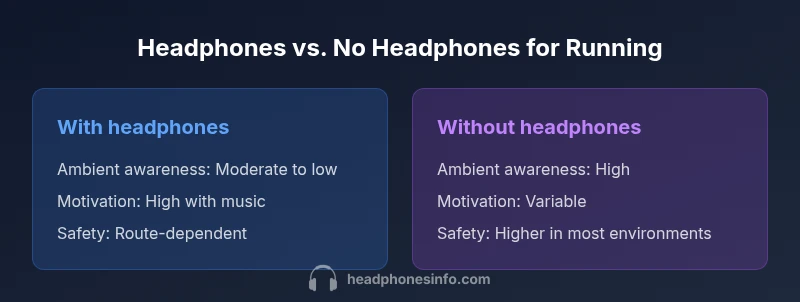
| Feature | With headphones | Without headphones |
|---|---|---|
| Ambient awareness | Reduced awareness during music playback | Full ambient awareness |
| Motivation and pacing | High with music/tempo cues | Low without audio guides |
| Safety risk in traffic | Moderate-to-high depending on volume and route | Lower risk; easier to hear hazards |
| Sound quality and immersion | High quality, immersive sound (in-ear) | Not applicable |
| Comfort and fit | Can cause pressure or moisture build-up | No ear hardware; nothing on ears |
| Cost and maintenance | Purchase and upkeep; battery life matters | No cost; no charging needs |
Upsides
- Enhanced motivation and cadence through music or podcasts
- Structured training cues and pace control
- Potential distraction reduction on dull routes
- Open-ear options preserve some environmental awareness
Disadvantages
- Safety risks from reduced ambient sound in traffic
- Fit, comfort, and irritation during long runs
- Volume can contribute to hearing fatigue or damage
Balanced use with safety-first choices
For most runners, headphones work best when you pick open-ear or ambient-aware modes. Use them on routes with low traffic or time-of-day with good visibility. When hazards are present, consider reducing volume or skipping headphones.
People Also Ask
Is it safer to run without headphones in busy urban areas?
Yes. In busy urban areas, removing or reducing headphones improves environmental awareness, allowing you to hear traffic, cyclists, and pedestrians. If you must listen, use ambient-aware modes that let essential sounds through.
Yes, in busy urban areas, go without headphones or use ambient-aware modes to stay aware of traffic and hazards.
Do open-ear headphones reduce safety risk?
Open-ear headphones generally preserve more ambient sound than traditional in-ear types, reducing safety risk in traffic. However, always stay alert to your surroundings and avoid relying solely on audio cues.
Open-ear designs help you hear more around you, but stay vigilant and don’t rely only on audio cues.
What type of headphones are best for runners?
The best headphones for runners balance weight, fit, and safety. Open-ear or bone-conduction models are popular for safety, while secure in-ear options suit sound quality and stability on longer runs.
Open-ear or bone-conduction options are great for safety, while secure in-ear models offer better sound.
How can I protect my hearing while using headphones?
Keep volumes moderate, use volume limiting features, and give your ears breaks after long sessions. Prefer devices with adaptive listening and avoid prolonged exposure at high levels.
Keep volume moderate, take breaks, and choose devices with safe listening features.
Can headphones improve running performance?
Yes, for some runners, music or tempo cues can improve pacing and perceived effort, aiding consistency. Others perform best with minimal distractions, so it’s situational.
For many runners, music helps pace; others prefer silence for focus—it's situational.
Are there legal restrictions on headphone use while running?
Some venues or events require no headphones for safety reasons, but general public roads typically have no universal prohibition. Always follow local rules and event regulations.
Check local rules or event guidelines; some venues may restrict headphone use.
What to Remember
- Choose open-ear or ambient-aware modes for safety.
- Test headphones on familiar routes before hazardous paths.
- Keep volume at safe levels to protect hearing.
- Switch to no-headphone listening in heavy traffic or low visibility.