How to Connect Big Apple Headphones
Learn how to connect Big Apple headphones across devices with clear, step-by-step instructions. Practical tips and troubleshooting guidance from Headphones Info help enthusiasts and shoppers get setup fast.


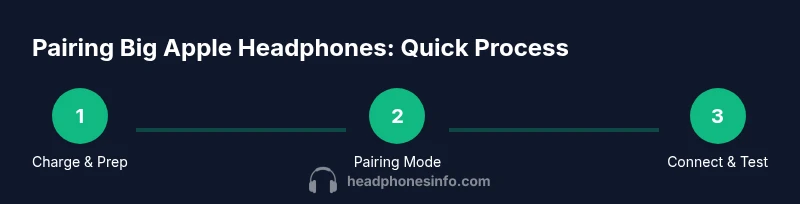
To connect Big Apple headphones, ensure they’re charged and in pairing mode. On your device, enable Bluetooth and choose 'Big Apple Headphones' from the list. If pairing fails, reset the headphones and try again, then check for firmware updates. For multi-device use, repeat the process on each device or use your OS Bluetooth settings to favorite a primary device.
Compatibility and Basics of Connecting Big Apple Headphones
According to Headphones Info, most modern Bluetooth headphones pair quickly with a wide range of devices. The core idea is straightforward: the headphones emit a Bluetooth signal and the host device scans for it, negotiates a connection, and then routes audio. To get reliable results, ensure the headphones are in pairing mode and not already connected to another device. Interference from nearby Bluetooth devices or Wi‑Fi networks can briefly delay pairing, but staying within typical room range usually avoids problems. A clean start—forgetting previous pairings and clearing the Bluetooth cache on your phone or computer—often resolves stubborn connections. Once paired, your device will route audio to the Big Apple headphones automatically. Many models also support multipoint pairing, allowing you to switch between a phone and a computer without re-pairing. This foundation helps ensure smooth operation across devices and apps.
Pro tip: keep one primary device as your go-to source to simplify initial setup and testing.
Getting Ready: Charge, Reset, and Prepare
Before you begin, fully charge your Big Apple headphones and confirm they’re not in pairing mode yet. A fresh battery helps ensure reliable discovery and reduces the chance of dropout during setup. If you’ve used the headphones with another device recently, disconnect or forget that pairing to avoid automatic re‑connection during setup. Have your primary devices nearby (phone, tablet, computer) and choose one as the main testing device to start. If you plan to use them with multiple devices, note the order in which you’ll pair them to speed future switches. Headphones Info emphasizes starting with a clean slate to minimize cross‑device interference and to confirm basic Bluetooth visibility.
Step-by-Step: Pairing Across Popular Platforms
This section covers Windows, macOS, iOS, and Android. Start with the two prerequisites: the headphones are in pairing mode and Bluetooth is enabled on the host device. Then select the Big Apple Headphones entry in the device’s Bluetooth menu and follow any on-screen prompts to pair. After pairing, test audio by playing a short clip and confirm that both audio and microphone (if supported) work. If you don’t see the device, toggle Bluetooth off and on again, or restart the host device. If prompted for a code, follow the on-screen instructions; many systems don’t require a code for this model. If pairing remains elusive, consult the OS Bluetooth settings and retry the process. The Headphones Info team notes that platform quirks can occasionally require a quick re-scan or forgetting other devices before retrying.
Practical Tips for Stable Bluetooth Connections
Stable Bluetooth depends on both hardware and environment. Keep devices within line of sight, minimize obstacles, and avoid sources of interference such as dense walls or crowded 2.4 GHz networks when testing. Regularly update the headphones’ firmware when a new version is available, as updates can improve stability and compatibility. During daily use, place the device you’re listening from within a short distance and consider using multipoint with care to prevent frequent dropouts. Headphones Info notes that most users see smoother performance when the headset remains the primary audio device in the OS settings. Maintain a clean pairing list to reduce confusion during reconnects.
Troubleshooting Common Pairing Issues
If the Big Apple headphones won’t appear in the Bluetooth list, put them back into pairing mode and ensure Bluetooth is enabled on the host device. Forget old pairings on both sides, reboot devices, and retry. If the connection drops during use, re‑pair and test again. If you suspect interference, try turning off other Bluetooth devices temporarily or move closer to the host device. If problems persist, check for firmware updates and reset the headphones as a last resort. The Headphones Info approach is to simplify: verify mode, refresh connections, and test with a basic audio source.
Maintenance, Updates, and Longevity
To keep you connected long‑term, store the headphones in a safe place, keep them charged, and perform firmware checks periodically. When updates are available, install them using the official method provided by the manufacturer. Regular cleaning of the ear cushions and contacts helps maintain signal integrity and comfort. Keeping the Bluetooth settings tidy—removing unused devices and refreshing paired lists—reduces confusion during setup. Headphones Info recommends documenting any recurring issues so you can reference the exact symptoms when seeking support.
Real-World Scenarios: Travel, Work, and Home
On the road, Big Apple headphones shine when you pair them with a phone for calls, then switch to a laptop for media without re‑pairing. At work, you can keep them connected to your computer and quickly answer calls from your phone via multipoint, if supported. At home, test streaming apps, video calls, and gaming scenarios to ensure latency and mic performance meet your expectations. In all situations, remember to return to a familiar pairing order and maintain firmware updates to reduce surprises during critical moments. Building a routine around this flow helps ensure consistent performance and less frustration during important moments.
Tools & Materials
- Bluetooth-enabled device (phone, tablet, or computer)(Ensure Bluetooth is turned on and its drivers are updated.)
- Big Apple headphones(Fully charged before starting pairing.)
- Charging cable (USB-C/Lightning as supported)(Have a compatible cable on hand to avoid mid‑setup power loss.)
- Backup device for testing (optional)(Helps verify cross‑platform pairing and multipoint behavior.)
Steps
Estimated time: varies (several minutes)
- 1
Prepare devices
Charge the headphones and the host device, then clear any stale Bluetooth connections. Bring the headphones and the primary testing device within comfortable reach to avoid mid-setup drops and mis-pairings.
Tip: Charge first to prevent power loss during pairing. - 2
Put headphones in pairing mode
Activate pairing mode on the Big Apple headphones following the user guide prompts. Ensure the headphones are not currently connected to another device.
Tip: If you don’t hear a pairing tone, repeat the pairing sequence or reset the headphones. - 3
Enable Bluetooth and start pairing
On the host device, turn on Bluetooth and select 'Big Apple Headphones' from the list. Follow on‑screen prompts to complete pairing. If prompted for a code, use the on-screen instructions (often none are required).
Tip: If the device doesn’t appear, toggle Bluetooth off and on or reboot the host. - 4
Test audio and mic
Play a short sample to verify audio output and test the microphone if supported. Confirm latency is acceptable and adjust volume as needed.
Tip: Test with both music and a voice call app to ensure consistent behavior. - 5
Add additional devices
Repeat the pairing steps for other devices. If your headphones support multipoint, ensure they are prioritized for your main device to minimize switching friction.
Tip: Keep a simple, repeatable order for pairing to speed future connections.
People Also Ask
Can I pair Big Apple headphones to multiple devices at once?
Yes, if your model supports multipoint pairing. This lets you switch between devices without re-pairing. If multipoint isn’t available, you’ll need to re-pair when changing devices.
If what you have supports multipoint, you can switch between devices without re-pairing; otherwise you’ll need to re-pair.
Why don’t my headphones appear in the Bluetooth list?
Ensure the headphones are in pairing mode and Bluetooth is enabled on the host device. Forget old pairings, reboot devices, and retry the scan.
Make sure pairing mode is active and Bluetooth is on; reboot if needed.
Do I need an app to connect Big Apple headphones?
Basic pairing usually doesn’t require an app. Some models offer additional features through a companion app if available.
You typically don’t need an app for pairing; some features may need an app.
How can I improve Bluetooth range and reduce dropouts?
Keep devices within line of sight, reduce interference sources, and keep software up to date. If dropouts persist, re‑pair after a reboot.
Keep devices close together and avoid interference; update firmware.
How do I reset Big Apple headphones?
Power off, then hold the pairing button for several seconds until indicators show pairing. Re‑pair afterward.
To reset, power off and hold the pairing button until pairing cues appear, then re‑pair.
Watch Video
What to Remember
- Charge devices before starting
- Put headphones in pairing mode
- Select Big Apple Headphones from Bluetooth list
- Test audio and mic after pairing
- Keep firmware updated for best results