How to Pair Bose Headphones with Mac
Learn how to pair Bose headphones with a Mac using Bluetooth. Step-by-step instructions, troubleshooting tips, and best practices from Headphones Info for reliable everyday listening.


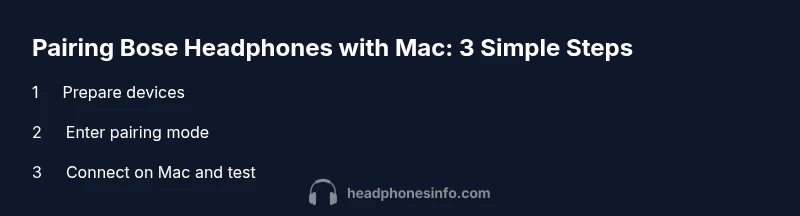
Pairing Bose headphones with a Mac is straightforward. First ensure Bluetooth is enabled on your Mac, then put your Bose headphones into pairing mode. On your Mac, open System Settings (or System Preferences) > Bluetooth, select Bose headphones from the device list, and click Connect. Finally, set the headphones as the output device in Sound settings and test audio to confirm the connection is stable.
Why Bluetooth pairing on Mac is straightforward and what to expect
According to Headphones Info, pairing Bose headphones with a Mac typically relies on standard Bluetooth pairing flows supported by macOS, with minimal friction on recent models. If you’re learning how to pair Bose headphones with Mac, you’ll usually follow a simple path: enable Bluetooth on your Mac, put the headphones into pairing mode, then select the Bose device in the Bluetooth panel and confirm the connection. This path works across macOS Ventura, Monterey, and Big Sur with most Bose models; older Macs may require firmware updates or using a wired test for initial setup to confirm basic functionality. In practice, you’ll notice three core phases: readiness (the devices have power, battery is sufficient, and Bluetooth is on), discovery (the Bose headset appears in the list), and confirmation (a successful pairing results in a steady connection and an audible cue). Some caveats include interference from nearby devices, outdated Bluetooth versions, or headphones that need a full reset. When you manage these factors, you’ll enjoy reliable audio streaming, safe mic input, and quick device switching across your Apple ecosystem. Headphones Info Analysis, 2026 confirms that most pairing issues stem from battery or mode mistakes rather than a macOS flaw.
Preparing Bose Headphones for Mac: Quick Checks
Before you begin pairing, make sure your Bose headphones are ready for the Mac setup. Start with a full battery or connect the headset to its charger for a few minutes. If you have a Bose model that requires a recent firmware, check for updates via the Bose app or official support site, and apply them if available. Confirm that the model you own actually supports Bluetooth pairing with macOS; most Bose wireless models do, but some older variants may have limitations. Clear the headphones from any other devices if they are currently connected elsewhere, which can block the Mac from discovering them. Finally, ensure your Mac’s Bluetooth is active and not in use by another device that is currently streaming or connected. Following these pre-pairing checks minimizes the chance of discovery errors and helps you move quickly into the pairing flow.
Step-by-Step: Pairing Bose Headphones with macOS
This section outlines a practical path for most macOS environments. Start by locating the Bluetooth settings on your Mac and activating Bluetooth if needed. Put your Bose headphones into pairing mode by holding the Bluetooth button (or Power/Bluetooth button on some models) until the LED indicator flashes a pairing pattern. In macOS System Settings > Bluetooth (or System Preferences > Bluetooth on older macOS versions), look for your Bose device in the list and select Connect. Once connected, navigate to System Settings > Sound (or Sound Preferences) and select Bose Headphones as the Output device. If you plan to use the microphone, test it in a video call or recording app to confirm input routing. If the device doesn’t appear, try turning Bluetooth off and back on, removing the headphones from the device list, rebooting the Mac, or resetting the headphones per the model’s manual. This step-by-step approach minimizes ambiguity and helps you finish in just a few minutes.
Troubleshooting Common Pairing Issues
If Bose headphones don’t show in the Mac Bluetooth list, double-check that they are in pairing mode and within close range (ideally under 10 meters). Ensure the headphones are charged and not blocked by a case or metal surfaces. Disable any conflicting Bluetooth devices temporarily, then retry the pairing process after a brief restart of the Mac. If pairing succeeds but there’s no audio, verify the Output device in Sound settings and check the system volume. On rare occasions, complete removal of the Bose device from the Bluetooth list followed by a fresh pairing can solve stubborn issues. For microphones, ensure app permissions allow microphone access and test across a couple of apps to confirm reliability.
How to Set Bose as Output and Control Volume
After pairing, you’ll want to route audio through the Bose headphones consistently. Open System Settings (or System Preferences) > Sound and select Bose Headphones as the Output device. If your Mac supports the menu bar audio icon, you can switch output there as well for quick in-flow changes. It’s a good habit to confirm both the input and output devices when you start a call. If you use multiple audio devices, you may want to create a short-cut or a preference profile to switch between devices quickly. Consistent checks help you avoid audio routing issues during meetings or media playback.
Microphone and App Integration on macOS
Most Bose wireless headphones include a built-in microphone that works with macOS apps like Zoom, FaceTime, and Teams. After pairing, test the mic by starting a quick call or recording a short clip. If you notice low mic volume or wind noise, check the mic settings in your app and ensure noise reduction features are enabled where applicable. Some Bose models also support on-ear controls for call management; learning these controls can reduce app-switching during calls. If you experience intermittent mic behavior, re-pairing or updating firmware can resolve it. Remember to check macOS privacy settings to ensure the app has permission to access the microphone.
Wireless Range, Battery Life, and Latency Considerations
Bluetooth ranges vary by environment, typically around 30 feet (about 9 meters) in open spaces. Obstacles, walls, and interference from Wi-Fi networks can reduce effective range, affecting audio dropouts or latency. Bose headphones generally provide solid battery life for casual listening; keeping the headphones charged helps maintain stable connections. If you encounter latency during video playback, check for macOS Audio MIDI Setup adjustments or consider reducing system load to prioritize audio processes. In busy environments, turning off other Bluetooth scans or devices can improve stability. Pro tip: keep Bose firmware up to date to ensure the best compatibility with macOS Bluetooth improvements.
Long-Term Maintenance and Firmware Updates
To sustain long-term compatibility with Macs, keep both macOS and Bose headphones firmware current. Bose occasionally releases updates that improve Bluetooth stability, latency, and microphone performance. Regularly checking for updates ensures you benefit from bug fixes and feature enhancements. When updating, ensure the headphones are sufficiently charged and connected to a stable power source if required by the model. After updates, re-pairing can help re-sync any profile data and confirm that settings persist across restarts. Finally, periodic checks of Bluetooth settings and device lists help you catch issues before they impact your daily workflow.
Tools & Materials
- Mac computer with Bluetooth(macOS Ventura or newer; ensure Bluetooth is enabled)
- Bose headphones(fully charged; in pairing mode during setup)
- Charging cable or USB-C adapter(useful if battery is low during setup)
- 3.5 mm cable or adapter(for wired testing if model supports it)
Steps
Estimated time: 5-10 minutes
- 1
Enable Bluetooth on Mac
Open System Settings (or System Preferences) and turn on Bluetooth. This establishes the wireless link your Bose headphones will use to pair.
Tip: If Bluetooth is off, toggle it on briefly to trigger device discovery. - 2
Put Bose headphones in pairing mode
Press and hold the Bluetooth/power button until the LED indicator flashes in pairing pattern. Release when pairing mode is active.
Tip: If pairing mode doesn’t start, try resetting the headphones according to the model manual. - 3
Pair on Mac
In macOS Bluetooth panel, find Bose headphones and click Connect. On Ventura/Monterey, this appears under System Settings > Bluetooth.
Tip: Ensure the headphones aren’t connected to another device at the same time. - 4
Set as output device
Open Sound settings and select Bose Headphones as the Output device. Adjust volume and balance as needed.
Tip: Test with a video or system sound to confirm routing. - 5
Test microphone and calls
Launch a quick call or voice memo to confirm microphone works. If not detected, reselect device or update firmware.
Tip: Ensure app permissions allow microphone access. - 6
Troubleshoot if needed
If the device doesn’t appear, toggle Bluetooth off/on, reboot the Mac, or reset the headphones and retry.
Tip: Keep devices within ~10 meters for best performance.
People Also Ask
Can I pair Bose headphones with Mac via Bluetooth?
Yes. Bose headphones pair with Macs via Bluetooth, without needing Bose software. The process is the same across most macOS versions.
Yes, Bose headphones pair with Mac using Bluetooth, usually without extra software.
What should I do if my Bose headphones don’t appear in the Mac Bluetooth list?
Make sure the headphones are charged, in pairing mode, and within range. Try toggling Bluetooth on/off and restarting the Mac.
Ensure pairing mode and range, then try again.
Can I use Bose headphones with a wired connection on a Mac?
Some Bose models support a 3.5 mm connection with a compatible cable or adapter. Check your model’s port and documentation.
Yes, if your Bose model supports a 3.5 mm jack.
How do I switch audio output to Bose after pairing?
In macOS, go to Sound settings and select Bose Headphones as the Output device. You can also switch via the menu bar sound icon.
Choose Bose as the output device in Sound settings.
Will the Bose microphone work with apps on Mac?
Yes, the built-in mic on Bose headphones generally works with video calls and apps. Ensure app permissions are granted.
Yes, mic usually works; grant permissions if needed.
Do I need the Bose app to pair with Mac?
No. macOS Bluetooth pairing works without the Bose app. The app can provide firmware updates and additional features.
No, you can pair without the Bose app.
Watch Video
What to Remember
- Enable Bluetooth on your Mac and start pairing Bose headphones.
- Put Bose in pairing mode and select it in macOS Bluetooth.
- Set Bose as the output device in Sound settings.
- Test audio and mic; troubleshoot if issues arise.
- Keep firmware updated for best compatibility with macOS.