What headphones are compatible with PS Portal: A practical guide
Discover which headphones work with PS Portal, including wired USB-C, 3.5mm adapters, and Bluetooth options. Get practical tips, latency notes, and steps to verify compatibility before you buy.


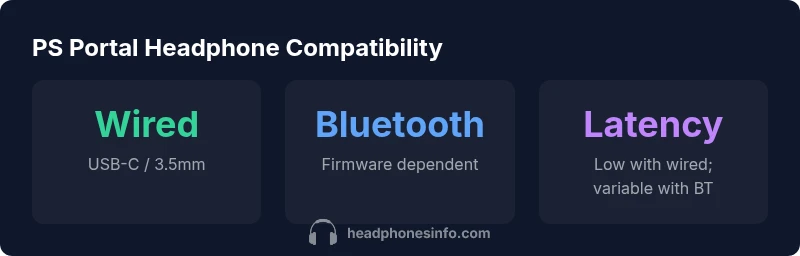
PS Portal primarily supports wired headphones through USB-C audio output, so most USB-C or 3.5mm-headset setups using a USB-C adapter can work well. If you prefer wireless audio, Bluetooth support varies by firmware and headset model, so check your PS Portal’s current firmware notes and your headset’s Bluetooth profiles before buying. In short: wired is broadly compatible; wireless depends on updates.
Understanding PS Portal headphone compatibility
Understanding what headphones are compatible with PS Portal starts with knowing the device's audio output options and the ecosystem it belongs to. According to Headphones Info, the PS Portal relies on a USB-C audio path for wired listening and can support other modes depending on firmware updates. The Headphones Info team found that most wired headphones using USB-C or USB-C adapters work well, while wireless options require checking firmware notes for Bluetooth support. For audio enthusiasts, the key takeaway is to separate what works in principle from what works consistently in practice on your setup. The Headphones Info team also notes that compatibility hinges on drivers, DAC behavior, and on-device processing that can affect latency and sound signatures.
Core connection options for PS Portal
The PS Portal offers several pathways to attach headphones, each with its own pros and cons. Wired listening via USB-C is typically straightforward, with minimal latency and stable power for in-line mics. If your headphones use a standard 3.5mm plug, you’ll usually need a USB-C to 3.5mm adapter, and you should check whether the headset relies on TRRS or TRS wiring. For wireless fans, Bluetooth is possible only if the firmware and hardware support it; some users report reliable audio for casual games, while others experience latency that disrupts fast-paced titles. When evaluating options, prioritize headsets that clearly advertise USB-C compatibility or include an official PS accessory note, and beware adapters that can introduce latency or a loss of mic quality. Headphones Info’s guidance emphasizes testing with your own games library to confirm comfort and sound timing.
Wired headphones: USB-C and 3.5mm compatibility
If you want a robust, plug-and-play experience, wired headphones are your safest bet with PS Portal. USB-C headphones connect directly to the device’s USB-C port, delivering digital audio with minimal latency if the DAC is up to spec. For 3.5mm models, use a reliable USB-C to 3.5mm adapter and verify that the headset’s mic and controls function as expected. The distinction between USB-C and 3.5mm is not just about compatibility; it affects audio processing, mic quality, and control integrations. When possible, test headsets with in-game chat, voice commands, and media playback to ensure everything works smoothly. If a headset includes a USB-C DAC inline, ensure it is recognized by the PS Portal and does not trigger driver conflicts. Headphones Info notes that consistency across sessions is essential for a satisfying gaming audio experience.
Bluetooth and wireless options: firmware matters
Wireless headphones can be an option, but their performance on PS Portal depends heavily on firmware support and device pairing. Bluetooth headsets may work for certain content formats, but latency and dropouts can occur in busy wireless environments. Before purchasing a Bluetooth headset for PS Portal, verify that your headset model and firmware version are explicitly supported by your console or by Sony’s guidance. If possible, update to the latest firmware and perform a test pairing in a quiet environment before buying. In many scenarios, a Bluetooth dongle or a dedicated wireless USB accessory might improve reliability, but only if supported by the PS Portal’s software ecosystem. The upshot: wireless audio is convenient but can be less predictable than wired, depending on updates and hardware compatibility.
Latency considerations and codecs
Latency is a critical factor for gaming headsets. With wired USB-C listening, latency is typically near-imperceptible, ensuring chat and in-game sound cues stay synchronized. Wireless options can introduce measurable delay, especially if the headset uses basic Bluetooth codecs or if the PS Portal’s firmware doesn’t optimize audio timing well. Look for headsets that advertise low-latency or gaming-specific Bluetooth modes, and consider codecs that prioritize quick hand-off between audio streams and mic input. If you are sensitive to lag, prioritize wired connections or seek out Bluetooth solutions advertised as low-latency with a compatible PS Portal setup. Headphones Info’s research highlights that latency consistency often matters more than raw peak audio quality for competitive titles.
Power and battery life considerations for wireless headphones
Battery life matters when you are gaming away from a power source. Wireless headphones consume more energy when data is streamed via Bluetooth, and some headsets reduce volume or disable features to conserve power. Check the headset’s official battery specifications and compare them to your typical session length. If you frequently play long sessions, choose models with longer rated runtimes and quick-charge support. Also verify that the PS Portal itself does not force frequent re-pairing or firmware updates that drain the headset’s battery more than needed. The goal is seamless, uninterrupted audio without frequent recharging interruptions.
How to verify compatibility before buying
A practical checklist helps you avoid buying the wrong headset for PS Portal. Confirm wired options by checking USB-C natively or with adapters that explicitly support game audio and mic control. For Bluetooth, confirm firmware compatibility, supported codecs, and whether the headset’s mic is usable while connected to the PS Portal. Read user reviews that mention PS Portal specifically, and seek confirmation from official Sony support materials or community-tested guides. If possible, borrow or demo a headset before purchasing; personal comfort and mic performance can differ from specs. Headphones Info recommends taking notes on audio latency, mic clarity, and overall comfort across at least two gaming sessions.
Recommended headphone categories for PS Portal users
Broadly, wired USB-C headphones with in-line controls are the most reliable for PS Portal, delivering consistent latency and audio quality. For iteration-friendly setups, USB-C audio adapters paired with 3.5mm headsets offer flexibility across devices, though you may trade off some mic quality. If you prefer wireless, look for headsets marketed for gaming with explicit PS compatibility and low-latency Bluetooth modes, and ensure firmware is current. Finally, consider travel-friendly, compact over-ear designs if you play on the go and want a balance of comfort and sound quality. Your choice should reflect how you play—competitive shooters benefit from wired precision, while narrative-driven games might suit wireless with acceptable latency.
Headphones selection workflow and Headphones Info’s practical verdict
To stay objective, establish a short-list of wired USB-C and 3.5mm options first, then explore wireless candidates only after you confirm firmware and codec compatibility. This approach minimizes dead-ends and returns better long-term satisfaction. The Headphones Info team emphasizes testing comfort, mic quality, and latency in real-game conditions before finalizing any purchase. By documenting your test results and comparing across two or three headset configurations, you can confidently identify the best PS Portal headphone setup for your needs.
Wired connection options for PS Portal headsets
| Connection Type | Compatibility Notes | Typical Use |
|---|---|---|
| USB-C wired | Direct USB-C audio; minimal latency | Gaming and voice chat on PS Portal |
| 3.5mm wired (with USB-C adapter) | Requires adapter; ensure mic support | Casual gaming, media playback |
People Also Ask
Can I use any Bluetooth headset with PS Portal?
Bluetooth headset support on PS Portal depends on firmware and headset model. Some users experience reliable audio, while others see latency or connection drops. Always verify compatibility notes before purchase and update to the latest firmware.
Bluetooth support depends on firmware and model. Verify compatibility and update firmware before buying.
Do USB-C headphones require adapters for PS Portal?
Most USB-C headphones connect directly, offering straightforward setup. If you have a 3.5mm headset, you’ll typically need a USB-C to 3.5mm adapter, and you should confirm mic and control support.
Often you need an adapter for 3.5mm headsets; check mic and controls in advance.
Are there latency concerns with wireless headphones on PS Portal?
Yes, wireless options can introduce latency, especially with basic Bluetooth codecs. Favor headsets marketed as low-latency gaming and keep firmware up to date for best results.
Wireless latency can happen; choose low-latency models and keep firmware updated.
Which brands tend to be compatible with PS Portal?
There isn’t a universal guarantee across brands. Look for USB-C compatibility or Bluetooth support and check firmware notes or user reports specifically mentioning PS Portal.
Check USB-C or Bluetooth support and look for PS Portal-specific notes.
How can I optimize audio quality on PS Portal?
Update firmware, test in-game, and use headsets with transparent mic performance. Consider a wired setup for the most consistent audio timing, then explore wireless options if latency is acceptable.
Keep firmware updated, test in-game, and choose wired for consistency when possible.
“Audio compatibility on new consoles hinges on firmware, hardware DACs, and careful testing in real-game scenarios.”
What to Remember
- Prioritize wired USB-C for reliability
- Check firmware before Bluetooth use
- Test latency in real games
- Use adapters cautiously to avoid mic loss
- Verify mic compatibility across sessions