Best Wireless Headphones and Earbuds for 2026: A Side-by-Side Comparison
A data-driven comparison of wireless headphones and earbuds for comfort, sound quality, ANC, latency, and battery life, helping you choose the best model for home, travel, and workouts in 2026.


Wireless headphones and earbuds offer a balance of convenience, sound quality, and battery life. Over-ear models provide stronger noise isolation and longer listening sessions, while true wireless earbuds excel for sport and travel. Prioritize fit, codec support (AAC/LDAC/APT-X), battery life, and latency. For most users, a mid-range over-ear with ANC serves versatile daily listening; budget earbuds are best for light use.
Why Wireless Headphones and Earbuds Matter in 2026
In 2026, wireless headphones and earbuds are no longer niche accessories; they are everyday essentials. The market has expanded beyond simple Bluetooth audio to feature-rich devices that adapt to your routine with intelligent software and improved hardware. For the majority of listeners, the core decision is not wired vs wireless but which form factor best fits their daily activities—home, office, commuting, workouts, or travel. The Headphones Info Team notes that modern models emphasize three pillars: sound quality, comfort, and connectivity reliability. As you shop, consider your primary listening context and the environment where you spend most of your time. If you frequently work from home or enjoy cinema-grade sound, over-ear wireless headphones with active noise cancellation (ANC) and large drivers are compelling. If you are constantly on the move, compact true wireless earbuds with a secure fit and pocketable charging case may be more practical. The technology stack—Bluetooth version, codecs (AAC, aptX, LDAC), and latency optimizations—will influence both perceived audio quality and synchronization with video content.
Core Differences: Over-Ear vs True Wireless
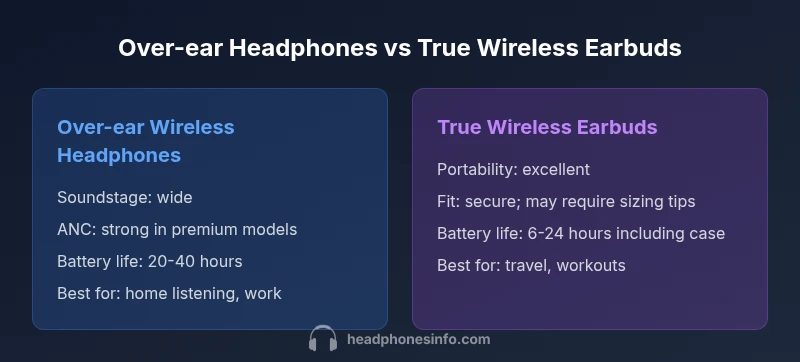
The most visible distinction is form factor. Over-ear wireless headphones encase the ear and usually offer larger drivers, which translates to a wider soundstage, stronger bass, and superior passive isolation. They typically pack bigger batteries, enabling longer listening sessions between charges and more stable multipoint connectivity for work and home use. True wireless earbuds, by contrast, are tiny, highly portable, and designed for active lifestyles. They compensate with compact charging cases and rapid access to voice assistants, but may trade off some bass weight and soundstage. ANC quality can vary widely in both categories, but premium over-ears frequently outperform compact buds in the same price tier. In practice, most users choose over-ears for home listening or office work and buds for commuting, workouts, and travel when portability is paramount.
Key Specifications to Compare
When evaluating wireless headphones and earbuds, several specs matter most:
- Drivers and frequency response: Look for larger drivers for headphones (40 mm+) and balanced tuning for earbuds to preserve detail.
- Codecs and latency: AAC is common; LDAC or aptX Adaptive improves quality on compatible devices. Latency should be low enough for videos and gaming on newer models.
- ANC and transparency: Active noise cancellation and ambient modes vary by model; test comfort and seal as these affect effectiveness.
- Battery life and charging: Headphones often offer 20–40 hours with ANC on; earbuds typically range 6–24 hours with the case.
- Water resistance: IP ratings protect against sweat and rain; assess durability for workouts or travel.
- Multipoint and app support: Multi-device pairing and EQ customization can greatly improve day-to-day use.
- Comfort and fit: Over-ears require headband comfort; buds depend on tip choices and ear geometry. A good test is a full day of wear without fatigue.
For most shoppers, pairing a mid-range over-ear model with ANC and long battery life with a compact, secure-fitting pair of true wireless earbuds covers a broad set of needs.
Battery Life and Charging: What to Expect
Battery expectations differ by form factor. Over-ear wireless headphones commonly deliver 20–40 hours of playback with ANC off, and 15–25 hours with ANC engaged on mid-to-high-end models. Many units include rapid-charge options that give several hours of use from minutes of charging. True wireless earbuds generally offer 6–12 hours per charge, with the charging case extending total lifespan well into the 20–60 hour range depending on the model. The case itself becomes part of the battery system, providing multiple recharges before needing a wall plug. If you travel frequently, prioritize models with USB-C fast charging and efficient standby modes. In general, expect trade-offs between weight, seal quality, and battery capacity: sleeker buds may sacrifice endurance for a lighter footprint.
Sound Quality and Codec Support
Sound quality hinges on driver size, tuning, and the codec path from device to ear. Over-ear headphones benefit from larger drivers and more flexible tuning, delivering deeper bass, wider soundstage, and smoother high frequencies. Earbuds can still deliver impressive detail, but their smaller drivers require careful tuning to avoid harsh highs or midrange glare. Codec support matters: AAC works well on Apple devices; aptX or LDAC can elevate Android devices with compatible hardware, reducing compression artifacts and improving latency. If you value film and gaming experiences, verify that the headset supports low-latency codecs and has a robust wireless range. For casual listening, good tuning and comfort often trump the last ounce of technical spec.
Comfort, Fit, and Durability
Long sessions demand comfort. Over-ear models rely on padding quality, weight distribution, and clamping force; premium cushions and adjustable headbands help reduce fatigue. Earbuds are all about fit stability; silicone and memory-foam tips with different sizes can dramatically improve seal and isolation. Durability is another factor: IP ratings contribute to sweat and water resistance, while detachable cables or rugged housings can extend life under daily wear. The best approach is to try several models in your typical setting—commute, desk, gym—and track comfort after hours of use. Remember that even the best-sounding headset won’t satisfy if it’s uncomfortable.
Noise Cancellation: ANC Performance in Practice
ANC effectiveness depends on both hardware and software. In premium over-ear headphones, ANC can reduce low-frequency rumble from airplanes and HVAC systems to a near-silent hiss. Some mid-range buds offer compelling ANC for their size, but the sealing capability and microphone arrays often limit performance compared with larger headphones. For many listeners, the choice isn’t just about noise reduction; transparency or ambient modes are equally important when you need awareness of the surroundings. Real-world results vary by ear anatomy and fit, so testing with your typical noise environment is crucial. Headphones Info analyses show that adaptive ANC, which adjusts to the environment, offers the best overall experience across both categories.
Use-Case Scenarios: Home, Travel, Workouts
Different environments demand different gear. At home or in the office, a comfortable over-ear headphone with strong ANC creates quiet focus and cinematic listening. For travel, portability and case protection are paramount, so true wireless earbuds with a compact charging case shine. In workouts, secure fit, IP rating, and sweat resistance dictate success; many buds are designed with wing tips or fins to stay put during runs. Finally, for casual day-to-day use, a versatile hybrid can be a solid compromise: a compact bud for on-the-go and a lightweight over-ear to switch to when you’re seated and relaxed. Across these scenarios, consider not just the sound but the ecosystem compatibility with your devices.
Pricing and Value: Budget vs Premium
Wireless headphones and earbuds span a broad price range. Entry-level models can deliver solid sound and reliability but may lack advanced codecs or robust ANC. Mid-range options often balance sound quality, comfort, and feature sets like multipoint pairing and customizable EQ. Premium models push the envelope with best-in-class ANC, wider soundstage, more durable materials, longer battery life, and richer app ecosystems. The value question isn’t purely about price; it’s about how well the feature set aligns with your usage. If you travel frequently, durability and case protection can drive value more than absolute sound quality. For home listening and critical listening, invest in a model with reliable ANC and broader driver sizing. The Right choice is a model that offers meaningful improvements over your current setup without paying for features you won’t use.
Brand and Model Recommendations by Category
Based on category needs, you can narrow options to a few representative designs. For home listening with ANC and rich sound, prioritize over-ear models with large drivers and strong noise cancellation. For commuting and gym use, focus on true wireless earbuds with secure fit, sweat resistance, and a compact, durable charging case. If you value calls and voice assistants, look for loud, clear mic performance and robust multipoint pairing. In practice, you will likely pick one over-ear candidate for calm listening and one true wireless pair for travel and workouts. Use the criteria above to map your priorities to a handful of models that fit your budget and ecosystem.
How to Choose: Step-by-Step Checklist
Use this checklist when narrowing down options: 1) Define primary use cases and environments; 2) Decide on form factor and comfort needs; 3) Set required codec support and latency targets; 4) Check battery life for both listening and travel; 5) Evaluate ANC effectiveness and transparency; 6) Confirm multipoint pairing compatibility; 7) Inspect build quality, IP rating, and warranty terms; 8) Read real user reviews focusing on fit and durability. After identifying a few candidates, rent or borrow to test before purchasing to avoid buyer regret. Finally, compare total ownership costs, including replacement tips and charging case longevity.
Common Pitfalls and Maintenance Tips
Avoid common mistakes such as buying solely for bass boost or flashy features without testing comfort and fit. Don’t neglect cleaning tips; silicone tips require periodic replacement to protect seal and hygiene. Keep firmware updated to benefit from codec improvements and bug fixes. Don’t overcharge or leave devices in extreme temperatures; heat can degrade battery health over time. If your usage changes (e.g., a move from commuting to studio work), reassess your gear to ensure it still suits your needs. Regular care and mindful testing will help you maximize performance over the long term.
Comparison
| Feature | Over-ear wireless headphones | True wireless earbuds |
|---|---|---|
| Fit & Comfort | Designed for extended wear, memory foam pads with adjustable headband | Compact, secure fit with multiple ear tips and fins |
| Sound Quality | Larger drivers yield wider soundstage and deeper bass | Detail-rich sound with good imaging, but smaller drivers limit bass depth |
| Noise Cancellation | Strong ANC in premium models | Variable ANC; best in higher-end buds, some models limited |
| Battery Life | Typically 20-40 hours with ANC on; case adds more | 6-24 hours per charge; case extends total life |
| Latency | Low latency with modern codecs; good for video | Low latency in select models; watch for higher latency on budget buds |
| Water Resistance | IPX4 to IPX5 common in many | IPX4 or none in budget options; some premium have better |
| Best For | Home, office, cinema-like listening | Travel, workouts, quick on-the-go listening |
| Price Range | $100-400 | $50-250 |
Upsides
- High portability and versatility across activities
- Broad price points accommodate many budgets
- No wires, quick device pairing saves time
- Strong competition drives features like ANC and multipoint pairing
- Wide ecosystem compatibility with modern devices
Disadvantages
- Over-ear models can be bulky and heavier for daily wear
- Earbuds may have shorter battery life and variable comfort
- ANC quality varies by model and can mis align in some ears
- Potential latency with older codecs on budget options
Over-ear wireless headphones generally offer the best overall performance, while true wireless earbuds excel in portability and activity-based use.
If you prioritize sound quality and noise cancellation for home or office, choose over-ear models. If you need light, compact gear for travel or workouts, opt for true wireless earbuds. The right pick balances your main use case with comfort and battery life.
People Also Ask
What is the key difference between wireless headphones and earbuds?
Wireless headphones are typically over-ear, offering larger drivers and better noise cancellation. Earbuds are compact and highly portable but may deliver less bass and a smaller soundstage. Your choice should hinge on where you plan to use them most.
Over-ear headphones are bigger and often better at blocking noise; earbuds are tiny and great for on the go.
How important is codec support for wireless audio quality?
Codec support determines how efficiently audio is compressed and transmitted. AAC is widely compatible, while LDAC or aptX Adaptive can improve fidelity and reduce latency on supported devices. Always check compatibility with your phone or laptop.
If your devices support high-quality codecs, you’ll hear bigger improvements.
Do wireless headphones or earbuds have better battery life?
In general, over-ear headphones offer longer listening times per charge due to larger batteries. Earbuds rely more on their charging case for extended use. Check both per-charge life and total case capacity to estimate true endurance.
Headphones usually last longer per charge, but the case often makes up the difference for earbuds.
Is noise cancellation worth paying more for?
ANC effectiveness varies by model and form factor. Premium over-ears typically deliver stronger noise reduction, but some high-end earbuds also perform well in certain environments. Weigh ANC against fit, comfort, and price.
ANC can be great, but you’ll want a good fit and reasonable price too.
What should I consider for comfort and fit?
Test different ear tips for buds and adjust headband tension for over-ears. Comfort is highly personal and directly impacts listening duration. Look for models with lightweight designs and breathable materials.
Fit matters just as much as sound.
Are wireless headphones good for workouts?
Many wireless models offer sweat resistance and secure fits, especially buds with fins or wings. Check IP ratings and ensure the model stays in place during movement. Battery life and durability are also key for athletic use.
If you’re active, look for secure fit and sweat resistance.
What to Remember
- Choose over-ear headphones for sound and ANC in quiet spaces
- Opt for true wireless earbuds for travel and workouts
- Prioritize codec support and low latency for video synced content
- Test comfort with real-world wear before buying
- Consider total ownership cost including the charging case