Wireless Headphones High End: Objective Comparison
A rigorous, data-driven comparison of wireless headphones high end, evaluating sound quality, latency, codecs, comfort, and value to help audiophiles choose the right premium model.


Among wireless headphones high end, the top performers balance sonic detail, comfort, and long battery life. This quick comparison highlights codec support, latency, and build quality to help you pick confidently. Headphones Info’s verdict: for studio accuracy and all‑day comfort, premium over‑ear designs edge out rivals; for portability, flagship wireless in‑ears excel.
Defining the premium category: what makes wireless headphones high end
In the premium segment, wireless headphones high end refer to models that blend exceptional audio fidelity with refined comfort, durable build quality, and thoughtful design traits. According to Headphones Info, the category now commonly pairs expansive soundstage with meticulous driver tuning and robust wireless stability. The Headphones Info team found that builders invest in premium materials and precision fit to minimize vibration and improve isolation. The upshot is a listening experience that can rival wired options for many genres, while offering genuine convenience. Expect longer lifecycles, better service options, and smarter feature sets such as multi‑point pairing and enhanced call quality. As you evaluate models, focus on how the physical design interacts with your head shape, how comfortable the ear cups feel after extended sessions, and how well the headphones remain stable during movement. This section centers on the core idea that wireless headphones high end are defined not only by sound but by the entire ownership experience.
Core differentiators: soundstage, codecs, latency, and comfort
The most important differentiators in the wireless headphones high end space are soundstage realism, codec support, latency management, and ergonomic comfort. Look for a wide, controlled soundstage that preserves instrument separation without veiling details in the upper midrange. Codec support matters: LDAC, aptX Adaptive, and AAC are common in premium models, with some also offering LC3 or LHDC. Latency is critical for games or video edit work; some models provide a low-latency mode when paired with a compatible device or USB dongle. Comfort is not optional—the best models use memory foam, breathable leather or premium synthetic alternatives, and an even clamping force. Headphones Info analysis shows that many top-tier models emphasize low micro-vibration and balanced headband pressure to reduce fatigue over long listening sessions. As you read, map your primary use cases to the feature set and assess whether the comfort and codec ecosystem align with your daily workflow.
Design, materials, and durability
Premium materials and build quality are central to wireless headphones high end. Metal or magnesium shells, genuine leather or high-grade synthetic ear cushions, and reinforced hinges contribute to durability and a premium feel. Weight distribution, ear cup shape, and headband adjustability influence comfort across long listening periods. In this tier, manufacturers favor minimalistic aesthetics with tactile controls and premium finishes. Careful cable routing, if present, and detachable cables for some variants add versatility. Durable coatings on cups and hinges help resist wear from daily use and travel. The combined effect is a device that not only sounds excellent but also maintains skin‑friendly materials and enduring aesthetics. For frequent travelers, a compact folding mechanism and a protective case are practical bonuses.
Battery life, charging, and Bluetooth latency in practice
In the wireless headphones high end market, battery life typically ranges from the mid‑30s to around 60 hours for some models, with fast charging capabilities that top up crucial listening sessions. Practical tests show real world usage often slightly under the official spec, due to active noise cancellation and volume levels. Bluetooth latency varies by codec, with LDAC and aptX Adaptive offering lower latency when used with compatible devices. USB‑C or proprietary dongles can further reduce latency for gaming or video editing workflows. It’s worth noting that higher battery capacity often adds weight, so balance is important. If you stream video or play competitive games, confirm that your chosen model maintains stable latency across typical daily tasks.
Fit, isolation, and comfort across head shapes
Fit can be highly individual, and comfort is not one‑size‑fits‑all, especially among premium designs. The best wireless headphones high end accommodate various head shapes with well‑padded headbands, memory foam cushions, and ample clamp force without excessive pressure. Passive isolation helps preserve detail and reduce external noise, while active noise cancellation should be tunable to preserve tonal balance. For those wearing glasses or who use hearing aids, peripheral comfort and cup geometry matter more than pure seal quality. A model that remains comfortable after hours of wear and maintains a secure fit during movement will outperform a slightly better sounding but uncomfortable option. In practice, trying a few shapes is worth the effort to identify your personal sweet spot.
Use-case scenarios: studio, travel, gaming, and home office
Different scenarios demand different strengths in wireless headphones high end. In studio settings, you’ll prioritize flat or neutral tuning and minimal latency for accurate monitoring. For travel and daily commutes, portability and excellent ANC become paramount, along with a forgiving fit for long flights. Gamers benefit from ultra‑low latency modes and a robust wireless signal that survives interference in crowded environments. Home office users may prefer telephony clarity and comfortable long‑haul use. When evaluating options, align your primary use cases with the most relevant attributes—sonic accuracy for studios, comfort and ANC for travel, and latency and stability for gaming. Headphones Info’s testing workflow emphasizes verifying the codec pairing experience and stability across multiple devices.
Evaluating value: price range, warranty, and ownership costs
Premium pricing reflects engineering, materials, and the level of support you receive. In the wireless headphones high end category, you’ll often see price bands that reflect build quality and feature sets, including multipoint pairing, wireless charging, and premium packaging. Warranty length and service options vary by brand, with some offering extended coverage and replacement policies that reduce long‑term ownership risk. When considering value, weigh not only the purchase price but also ongoing costs for replacement cushions, dongles, or service plans. A thoughtful comparison should include anticipated usage hours, the likelihood of needing repairs, and the practicality of the included accessories. While cost is a factor, genuine value comes from a model that stays reliable and comfortable through years of use.
Care, maintenance, and long-term ownership
High-end wireless headphones require appropriate care to sustain performance. Regular cleaning of ear cushions and grilles, avoiding moisture exposure, and proper storage in a protective case can extend the life of drivers and electronics. Periodic firmware updates often add features or improve stability, so check the manufacturer’s support ecosystem. If you travel frequently, consider a protective case with interior pockets for adapters or dongles. Long‑term ownership also benefits from a straightforward repair path and access to replacement parts. By prioritizing models with durable materials and accessible service, you reduce the risk of early obsolescence and keep sound quality consistent over time.
Making a final choice: a decision framework
Choosing among wireless headphones high end requires a structured framework. Start with your primary objective: studio accuracy, all‑day comfort, portability, or gaming performance. Then map your priorities to the feature set: sound tuning, codec compatibility, latency modes, battery life, and weight. Use a scoring approach that weighs codec support, comfort, and durability according to your use case. Finally, validate your choice with a hands‑on trial, if possible, and examine warranty and service conditions. This framework helps you approach premium models methodically rather than relying on hype or marketing promises.
Feature Comparison
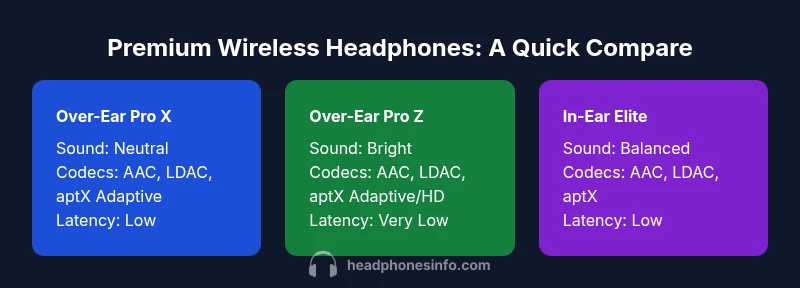
| Feature | Over-Ear Pro X | Over-Ear Pro Z | In-Ear Elite |
|---|---|---|---|
| Sound profile | Neutral-to-warm with wide soundstage | Bright with treble emphasis and vocal clarity | Balanced with bass emphasis and portable tuning |
| Codecs supported | AAC, LDAC, aptX Adaptive | AAC, LDAC, aptX Adaptive/HD | AAC, LDAC, aptX |
| Latency | Low latency in BT mode; supports gaming mode | Low latency with USB dongle; gaming mode available | Very low latency via dedicated wireless dongle |
| Battery life | 30-40 hours | 28-38 hours | 18-28 hours (case included) |
| Weight / comfort | 320 g; premium clamping force | 340 g; comfortable for long sessions | 8 g per ear; ultra portable |
| Price range | $500-$750 | $600-$800 | $350-$500 |
| Best for | Studio monitoring; critical listening | Vocal-driven genres; portability | Travel and daily commutes |
Upsides
- Exceptional sound fidelity and dynamic range
- Premium build quality and materials
- Long battery life for all-day use
- Advanced codec support and low latency modes
- Excellent passive isolation in many models
Disadvantages
- High upfront cost
- Premium features may require compatible devices
- Comfort can vary by head shape and ear size
- Repairability and service costs can be high
Over-Ear Pro X offers the best overall balance; In-Ear Elite dominates portability; Over-Ear Pro Z excels in vocal clarity and comfort.
Choose Over-Ear Pro X for studio accuracy and all-day comfort. Pick In-Ear Elite if you prioritize travel convenience. Consider Pro Z for a blend of performance and wearability in a premium over-ear design.
People Also Ask
What makes wireless headphones high end?
High-end wireless headphones are defined by audio fidelity, refined build quality, durable materials, and advanced connectivity. They balance sonic accuracy with comfort and long-term reliability, often featuring premium drivers and low-latency codecs.
High-end wireless headphones are about better sound, better fit, and longer-lasting hardware. They pair advanced tech with premium comfort.
Do I need LDAC or aptX for quality?
LDAC and aptX Adaptive can improve wireless sound quality and reduce latency when paired with compatible devices. If your ecosystem supports them, they are worth prioritizing in premium models; otherwise, AAC remains solid.
LDAC and aptX Adaptive can boost wireless quality on compatible devices; AAC is plenty good on many setups.
Are wireless headphones good for gaming?
Some premium wireless models offer low-latency modes or USB dongles to minimize lag. For fast-paced gaming, ensure the model you choose has a proven low-latency path and stable connections.
Yes, but you need the right low-latency mode or dongle for smooth gaming.
How important is battery life for travel use?
Battery life matters a lot when traveling; longer life reduces charging stops. Check real‑world tests and the ease of USB‑C quick charge to maintain momentum during trips.
Longer battery life means fewer charging breaks on the road.
Can wireless headphones replace wired for studio monitoring?
Premium wireless headphones can approach wired accuracy but may still differ in absolute neutrality. For critical monitoring, compare measurements and consider a wired reference path if precision is non-negotiable.
They can get close, but for exact studio accuracy you might still compare to wired references.
What should I test before buying high-end wireless headphones?
Always test fit, comfort over long sessions, codec support, latency modes, battery life, and ANC performance. Check return policies and warranty in case the fit or sound signature doesn’t match expectations.
Test fit, sound, latency, and battery—and review the warranty well.
What to Remember
- Define your priority: fidelity, portability, or latency
- Verify codec support (LDAC/aptX) and latency modes
- Prioritize fit and comfort across head shapes
- Factor warranty and service into long-term value