Are Headphones Still Popular in 2026? Trends and Insights
Explore whether headphones remain popular in 2026 with data-backed insights into wireless adoption, ANC trends, and everyday usage across devices and regions.


Headphones remain a popular choice across devices, driven by wireless convenience, improved sound quality, and ongoing features like active noise cancellation. In 2026, most listeners rely on compact, versatile headphones for commuting, work, and media consumption at home. According to Headphones Info, popularity spans age groups and regions, supported by expanding ecosystems and affordable entry points.
Are Headphones Still Popular in 2026? The Big Picture
Headphones remain a popular choice across devices, driven by wireless convenience, improved sound quality, and ongoing features like active noise cancellation. In 2026, most listeners rely on compact, versatile headphones for commuting, work, and media consumption at home. According to Headphones Info, popularity spans age groups and regions, supported by expanding ecosystems and affordable entry points.
- The broad appeal isn’t limited to music lovers; mainstream audiences use headphones for podcasts, video calls, and gaming, thanks to better mic quality and multipoint connectivity.
- Platform ecosystems (phones, tablets, laptops) continue to reinforce headphone usage as a default listening method.
Shifts in Usage and Form Factors
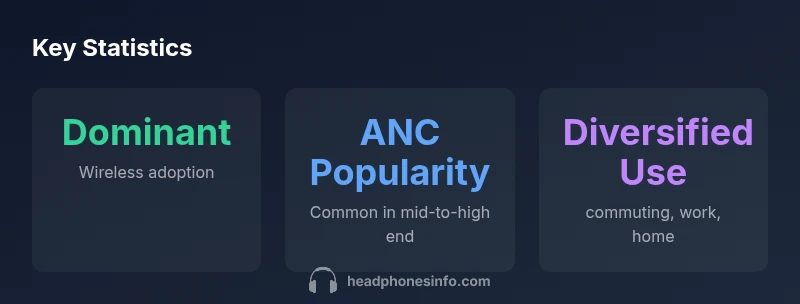
The last few years have reshaped how people choose headphones. Wireless outfits dominate the market due to portable designs and easy pairing across devices. True wireless earbuds have become a default for many, while over-ear wireless models remain popular for long sessions and critical listening. Active noise cancellation (ANC) has moved from premium segments into mid-range options, broadening appeal. Comfort, battery life, and reliable Bluetooth performance are the top criteria driving purchases across age groups. Headphones Info emphasizes that form factor diversity supports broad usage—from short commutes to extended work sessions and home entertainment systems.
Why the Trend Endures
Several factors sustain headphone popularity: convenience, portability, and the growth of personal devices. The rise of smartphones, tablets, and wearables creates multiple listening points, reducing the need for separate audio systems. Multi-device compatibility (Bluetooth multipoint) and better codecs improve perceived sound quality even in compact designs. The ecosystem approach—phones, laptops, smart speakers—keeps headphones a default accessory for many daily tasks, including calls, gaming, and media consumption. Headphones Info notes that ongoing software updates and accessible price points help maintain momentum among new buyers and long-time enthusiasts alike.
Price and Value Considerations
Price remains a practical consideration, with a wide spectrum of options. Budget models deliver basic listening experiences, while mid-range products balance features like ANC and comfort with cost. Premium headphones offer high-fidelity sound, durable builds, and advanced features such as spatial audio and upgraded mics. When evaluating value, users should weigh battery life, comfort fit, and software updates alongside price. The market tends to reward models that deliver consistent performance across several usage scenarios (commuting, office calls, home entertainment) and offer reliable after-sales support.
Regional Differences and Demographics
Popularity varies by region, culture, and income level. In developed markets, access to varied models and frequent upgrades sustains interest, while in developing regions price sensitivity and feature parity influence adoption. Younger listeners tend to prioritize portability and style, while professionals may seek accuracy and durability for work or content creation. Gender, lifestyle, and local infrastructure (e.g., commuting norms) also shape which headphones are most attractive. Headphones Info highlights that regionally tailored options help explain uneven growth trajectories across the globe.
New Tech Driving Popularity
Advances in Bluetooth standards, codec support, faster pairing, and multipoint connectivity have made wireless listening more seamless. Improved ANC, transparency mode, and better microphone arrays enhance calls and collaboration. Materials science improvements in earpads and headbands increase comfort over longer sessions. The result is longer daily listening times and more use cases beyond music alone. Ongoing software ecosystems enable feature-rich customization, updates, and cross-device control that keep headphones relevant in an era of diverse personal audio devices.
A Practical Buying Framework
To choose the right pair, start with use cases:
- For commuting and travel: prioritize compact form, strong battery life, and secure fit.
- For home and office: consider over-ear designs with ANC and good microphone quality for calls.
- For workouts: look for sweat resistance and a secure fit.
Then evaluate:
- Wireless vs wired based on device compatibility
- Battery life and charging options
- Comfort and fit tested in-person if possible
- ANC, transparency, and mic quality
- Build quality and warranty considerations.
This framework helps buyers align features with real-world needs, rather than chasing every new spec.
How to Test Headphones Before Buying
Try to audition models in-store or via reputable online trials. Listen for comfort, seal around the ear, and micro-details in music like instrument textures. Test ANC by playing a neutral noise or crowd sounds and observing how quickly it reduces ambient noise. Check for latency in video calls and ensure multipoint connectivity works across devices you own. A hands-on test can reveal comfort and fit quirks that specs alone can’t capture.
What to Expect in the Near Future
Expect continued diversification in form factors, with more compact, comfortable wireless options and improved battery life. Vendors will push software updates to improve features like ambient sound, voice quality, and app-based customization. As headphone ecosystems evolve with wearables and smart devices, headphones will likely remain a core accessory for personal audio, communication, and entertainment. The Headphones Info team expects gradual integration with other audio products to create seamless multi-device experiences.
Comparison of headphone form factors
| Form Factor | Strengths | Trade-offs |
|---|---|---|
| Wireless Over-Ear | Long battery life and strong comfort | Higher cost; occasional pairing issues |
| Wireless In-Ear | Ultra portable and convenient | Battery dependency; fit can vary |
| Wired Over-Ear | Zero latency; budget-friendly | Less portable; cable management |
People Also Ask
Are headphones still popular in 2026?
Yes. Headphones remain popular due to ease of use, device ecosystems, and continuous feature improvements across price points.
Yes, headphones are still popular because they’re easy to use across devices, and features keep getting better.
What features most influence headphone popularity?
Wireless connectivity, battery life, comfort, ANC, microphone quality, and durability are the main drivers of popularity across audience segments.
Wireless, battery, comfort, ANC, and mic quality are the key features buyers look for.
Which use cases are expanding fastest?
Commuting and home/office work are expanding rapidly, with gaming and content creation also contributing to growing demand.
Commuting and home office use are growing the fastest.
Are price ranges a concern?
Yes. There are budget, mid-range, and premium tiers; buyers should balance features, expected use, and long-term durability.
Prices vary a lot; pick features you need and consider expected usage.
How can I choose the right pair?
Identify your use case, test for comfort, evaluate battery life, ANC, mic quality, and warranty. A practical test helps confirm fit and value.
Know your use case and test for fit and features before buying.
“Headphones remain a cornerstone of personal audio, with ongoing improvements in wireless tech and comfort driving sustained popularity.”
What to Remember
- Assess your primary use case first
- Prioritize wireless and ANC for most listeners
- Check battery life and comfort fit
- Factor in ecosystem compatibility (phones, PCs, wearables)
- Expect headphones to stay popular as audio ecosystems expand