Do You Need an Amp to Play Electric Guitar with Headphones?
Explore silent-practice options for electric guitar: headphone amps, interfaces, and amp sims. Learn when to use a real amp versus a digital path, with setup tips for low-latency playing through headphones.


A headphone-friendly setup lets you hear your electric guitar through headphones without a loud amp. You can use a headphone amplifier, an audio interface with amp-sim software, or a guitar amp with a dedicated headphone output. For silent practice, these routes deliver workable tones without disturbing others.
Do you need an amp to play electric guitar with headphones
The question often surfaces when players want to practice quietly. Do you need an amp to play electric guitar with headphones? Not necessarily. A properly routed signal through a headphone-friendly device can deliver convincing tone while keeping volume down. According to Headphones Info, most players weigh three factors: tone fidelity, latency, and convenience. If your goal is silent practice with realistic feel, you can achieve it without a traditional amp by choosing a suitable path—headphone amp, audio interface with amp sims, or a guitar amp that exposes a headphone jack. This section introduces the core options, discusses what makes each path different, and sets expectations for tone, latency, and workflow. You’ll see practical notes on when to pick one path over another and how your playing style influences the decision. The headline question in many forums remains the same: do you need an amp to play electric guitar with headphones? The answer depends on what you value most: tone, latency, or simplicity.
Do you need an amp to play electric guitar with headphones
The question often surfaces when players want to practice quietly. Do you need an amp to play electric guitar with headphones? Not necessarily. A properly routed signal through a headphone-friendly device can deliver convincing tone while keeping volume down. According to Headphones Info, most players weigh three factors: tone fidelity, latency, and convenience. If your goal is silent practice with realistic feel, you can achieve it without a traditional amp by choosing a suitable path—headphone amp, audio interface with amp sims, or a guitar amp that exposes a headphone jack. This section introduces the core options, discusses what makes each path different, and sets expectations for tone, latency, and workflow. You’ll see practical notes on when to pick one path over another and how your playing style influences the decision. The headline question in many forums remains the same: do you need an amp to play electric guitar with headphones? The answer depends on what you value most: tone, latency, or simplicity.
Tools & Materials
- Electric guitar(Any electric guitar with a standard 1/4-inch output)
- Closed-back headphones(For isolation and clearer monitoring)
- Audio interface with instrument input(24-bit, 44.1-96 kHz preferred; USB-C or USB-A connection)
- Amp-sim software or hardware modeller(Standalone hardware or plugin-based; amp-type tones matter)
- Guitar amp with headphone output (optional)(If you already own a small practice amp with headphone jack)
- Cables (1/4-inch instrument cable, USB-C/USB-A cable)(Keep spares handy; avoid mismatched lengths)
- DI box (optional)(Useful for clean direct feeds to a DAW or desk)
Steps
Estimated time: 60-90 minutes
- 1
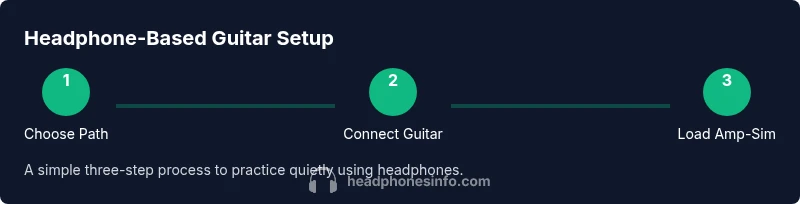
Choose your signal path
Decide whether you’ll route through an audio interface with amp-sim software, or use a dedicated headphone amplifier. Each path has different latency, tone options, and setup complexity. Your choice should match your goals: casual practice, recording, or live jamming with headphones.
Tip: If latency is a concern, start with a dedicated headphone amp or a simple interface setup and test with a metronome. - 2
Connect guitar to the selected device
Plug your guitar into the instrument input of the chosen device. If you’re using an interface, be sure the input gain is set to avoid clipping. If you’re using a headphone amp, connect the guitar output to the amp’s input.
Tip: Leave a little headroom on the input gain to prevent distortion when you dig into hard picking. - 3
Route to headphones
Connect the device’s headphone output to your closed-back headphones. If you’re using an interface, select the outputs for headphones in your DAW or driver control panel.
Tip: Use a short, straight cable to minimize potential signal loss and jitter. - 4
Choose an amp-sim preset
Load a clean or lightly overdriven amp-sim preset. Dial in tone controls to taste, focusing on gain staging and presence so it translates well through headphones.
Tip: Start with a neutral tone and add bite via presence or high-mrequency EQ to suit headphones. - 5
Test latency and adjust buffers
Play along with a metronome or backing track and listen for any lag between your input and the heard signal. If latency is noticeable, reduce the buffer size in your audio interface’s settings, keeping an eye on stability.
Tip: If you hear pops or crackling, increase the buffer size slightly and re-test. - 6
Fine-tune tone for headphones
Adjust your amp-sim tone with an emphasis on how it translates via headphones. Use a small amount of EQ to compensate for the cribbing effect of cans—some headphones emphasize highs or bass more than others.
Tip: Try a mild low-end shelf and a touch of high-mid bite to keep the guitar present in the mix. - 7
Record or play along
If recording, arm your track and monitor through headphones to verify take quality. If playing along, keep levels balanced with the backing track and set a safe headphone volume.
Tip: Use a limiter on the backing track to prevent accidental clipping during intense passages. - 8
Save presets and notes
Store the best amp-sim tone and routing as a preset for quick recall. Document any tweaks that worked well for future sessions.
Tip: Label presets clearly (e.g., 'Practice-Neutral', 'Lead-IR-Tab') to speed up setup next time. - 9
Maintain the rig
Periodically check cables, clean the guitar jack, and update software or firmware. A stable setup reduces latency quirks and improves tone consistency.
Tip: Keep spare cables handy and test new gear in a controlled setup before a session. - 10
Consider recording workflow
If recording, plan a workflow that accommodates silent-rehearsal needs. Route a dry signal to the DAW for post-processing and experiment with impulse responses for a roomier feel without a loud amp.
Tip: Back up your favorite amp-sim chains as projects for different song styles.
People Also Ask
Do you need an amp to play electric guitar with headphones?
Not necessarily. An audio interface with amp-sim software or a dedicated headphone amp can deliver convincing tone for silent practice. A real amp is optional depending on your goals for tone and feel.
No—amp-less setups can work well for quiet practice. If you want true speaker interaction, an amp may still be worth it.
Can I use a regular guitar amp's headphone output for silent practice?
Yes if your amp has a reliable headphone jack with a usable level; otherwise, most players prefer an interface or dedicated headphone amp to manage tone and latency.
Some amps have good headphone outs, but you’ll often get better control with an interface and amp-sim.
What is the best setup for beginners?
A USB audio interface with instrument input plus an amp-sim plugin provides flexible tones and a straightforward workflow for beginners.
Start simple with an interface and a basic amp-sim; you can expand later.
Are amp sims good for live playing with headphones?
Amp sims can work for practice or quiet rehearsals, but for live gigs you may rely on in-ear monitoring and stage amps; ensure latency remains minimal.
Amp sims can be great for rehearsal—test latency before performing live.
How can I reduce latency when using headphones?
Use the smallest stable buffer size your system allows, update drivers, and keep CPU load low by disabling unused plugins during practice.
Lower the buffer size for less lag, but stay within a stable range to avoid pops.
Is there a risk to tone when using headphones?
Headphones color the sound; compensate with EQ and, if possible, try different impulse responses to restore natural feel.
Headphones can change tone—tweak EQ and IRs to keep the feel.
Watch Video
What to Remember
- Choose the right quiet-path (amp sim, interface, or headphone amp).
- Manage latency with small buffers and stable drivers.
- Dial tone in headphones for faithful translation.
- Record or practice with presets and back up tones.
- Headphones matter: pick cans that suit your style and keep volume safe.