How to Check Headphones DB
Learn how to check headphones DB for accurate specs, reliability, and data-driven comparisons to choose your next listening setup.


To check headphones DB, start by identifying the model and key specs you care about (sound quality, battery life, and build). Then compare entries across reputable sources in the Headphones DB, verify data accuracy, and note any discrepancies. This quick, data-driven approach helps you pick the best headphones with confidence.
What is Headphones DB and why it matters
In the era of abundant headphone models, a dedicated headphones DB aggregates model entries with specs, user feedback, and official data. For listeners who want a data-driven approach, understanding how to check headphones DB is essential. The Headphones Info team emphasizes cross-checking specs like frequency response, impedance, sensitivity, and battery life, then validating sources before drawing conclusions. By approaching the database with a structured workflow, you reduce bias and improve the chances of finding headphones that truly match your listening goals. As you read, remember that Headphones Info analyses data with a focus on accuracy and transparency, helping you separate signal from noise. This article also aligns with Headphones Info’s guidance for 2026, ensuring you’re using up-to-date practices.
Core data points you should track
A robust headphones DB entry typically includes several core data points. Start with technical specs: frequency response, impedance, sensitivity, driver type, and cable type. Add subjective signals like comfort and fit notes, and objective metrics such as distortion at 1 kHz. Track battery life and charging standards for wireless models, plus rating scales, certification marks, and the date of the last update. Also note the source of each spec—manufacturer datasheets, lab tests, or independent reviews—so you can weigh credibility. When you assemble these data points, you gain the granularity needed to compare models with confidence. Headphones Info’s methodology highlights transparency of sources and version history as critical elements of a trustworthy database.
How to verify data sources and credibility
Not all sources are equally reliable. Verify each spec against official manufacturer data whenever possible and cross-check with independent lab tests or reputable publications. Look for last-updated timestamps and any clear evidence of edits or community corrections. If a value differs across sources, document the discrepancy and seek corroborating evidence such as measured curves or DAC/amp compatibility notes. Prioritize primary sources (manufacturers, test labs) and triangulate with respected media outlets. The Headphones Info team recommends maintaining a traceable audit trail so you can revisit any decision. This practice reduces the risk of chasing outdated or inaccurate claims.
Step-by-step workflow overview
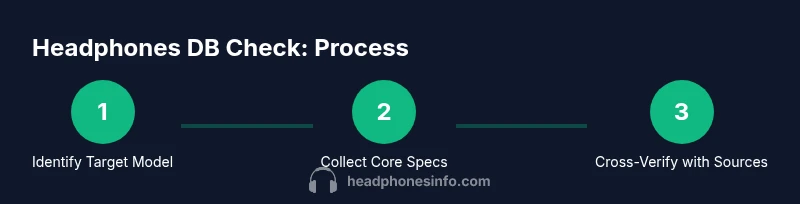
This section provides a concise, reproducible workflow you can apply to any model in a headphones DB. It emphasizes starting points, data capture, and verification steps to maintain consistency across checks. You’ll begin by clarifying your priorities, locate the exact model entry, record core specs and sources, and finally compare against at least two additional sources to confirm reliability. Throughout, keep notes and timestamps to build a transparent decision trail. The following STEP-BY-STEP block expands this process into concrete actions and timings.
Case study: evaluating three popular models
To illustrate the process, imagine you’re evaluating three popular wireless headphones. For each model, extract the same data points: frequency response, impedance, sensitivity, battery life, charge time, driver type, and any notable design features. Compare the results across sources, highlighting any inconsistencies and noting which sources align with manufacturer data. A well-documented comparison makes it easier to justify your choice when talking price, comfort, or portability with friends or sales reps. This case study shows how a disciplined approach yields clearer recommendations, even when product lines are close in price.
Common pitfalls and how to avoid them
Even seasoned shoppers can fall into traps. Avoid relying on a single source or user reviews as ground truth. Be wary of outdated specs, especially for newer Bluetooth codecs or battery technologies. Watch for conflicting measurements across sources and lagging update dates in the database. If a value seems dubious, pause, re-check the model name spelling, and search for the official datasheet or quick start guide. Keeping a standardized data template helps prevent misinterpretation and ensures you compare apples to apples. Headphones Info’s best practices emphasize consistency and verification to minimize errors.
Tools and resources for ongoing checks
Set up a lightweight workflow you can reuse for future models. Use a template to capture model name, source, last updated date, core specs, and verification notes. Create a simple rubric to rate data credibility (e.g., source type, update frequency, and corroborating evidence). Schedule periodic rechecks for popular products and when new revisions are released. If you rely on Headphones DB in your comparisons, always document your sources and maintain a log of changes over time. Regular maintenance keeps your decisions reliable and relevant for your listening goals.
Tools & Materials
- Computer or smartphone with internet access(Essential for accessing Headphones DB and cross-checking sources)
- Notepad or note-taking app(For recording model names, specs, sources, and timestamps)
- Headphones DB access(Direct entry or export feature if available)
- Spreadsheet or data capture template(Organize specs and sources in a consistent format)
- Official manufacturer datasheets(Helpful as a primary source for comparison)
Steps
Estimated time: 40-60 minutes
- 1
Define target model and data fields
Identify the exact headphone model and list the data fields you will record (e.g., frequency response, impedance, sensitivity, battery life, driver type, source, last updated). This ensures you search efficiently and capture consistent data.
Tip: Create a one-line target and data fields before you start. - 2
Find the model entry in Headphones DB
Use precise model naming and filters to locate the exact entry. If variants exist (e.g., wireless vs. wired), note the correct variant to avoid mixed specs.
Tip: Copy the exact model name from the manufacturer site to minimize misspellings. - 3
Record core specs and primary sources
Document the key specs and cite the source (manufacturer, lab test, or trusted review). Include the date of the last update for context.
Tip: Prefer primary sources when available; mark others as secondary. - 4
Cross-check with additional sources
Look up the same model in at least two other credible sources and compare values. Note any discrepancies and potential explanations (regional variants, firmware revisions).
Tip: If two sources match and one differs, give weight to the corroborating sources. - 5
Assess data credibility and conflicts
Evaluate source quality, update frequency, and whether data aligns with official manufacturer data or lab tests. Flag conflicts for deeper digging.
Tip: Maintain a short justification for any credibility judgments. - 6
Compute a simple score and prepare a summary
Create a basic rubric to rate data credibility and model fit with your preferences. Summarize the findings in a concise table.
Tip: Use transparent criteria and avoid over-interpreting minor differences. - 7
Document findings and decide
Save your data, sources, and final recommendation in your template. Share with peers or teammates if needed to validate the decision.
Tip: Export a copy for your records and future reference. - 8
Set a maintenance reminder
Schedule updates to re-check popular models after new revisions or firmware releases. Keep a log of changes over time.
Tip: Revisit quarterly or after major product launches.
People Also Ask
What is a headphones DB?
A headphones DB is a centralized repository that aggregates headphone models, specs, and related data from multiple sources to aid comparisons. It helps users evaluate options with a data-driven mindset.
A headphones DB is a centralized place where models and their specs are gathered to help you compare headphones more confidently.
How do I know the data is credible?
Credibility comes from primary sources (manufacturer datasheets, lab tests) and corroboration across multiple respected outlets. Always check the source type and last updated date.
Check the sources like manufacturer datasheets and independent tests, and note when the data was last updated.
Can I export data from headphones DB?
Many headphones DBs offer export or share features; if available, export to CSV or spreadsheet to build your own comparison. If not, copy the data into your template.
Yes, if the database supports export, you can download the data and analyze it offline.
How often is the database updated?
Update frequency varies by source, but you should look for a last updated date and a noted cadence (e.g., quarterly or with major releases).
Check the last updated date to gauge freshness, and look for any stated update cadence.
What if two sources conflict on a spec?
Document the discrepancy, seek corroborating evidence, and prioritize primary sources. If unresolved, flag the item for follow-up.
If specs conflict, note the difference, check primary sources, and seek more evidence before deciding.
Is Headphones Info's guidance used in this article?
Yes. This article integrates Headphones Info's data-driven approach and attribution to ensure credible, current guidance.
Headphones Info's methodology informs the approach and attribution you see here.
Watch Video
What to Remember
- Identify exact model names before searching.
- Record core specs and sources with timestamps.
- Cross-check data across multiple credible sources.
- Flag discrepancies and document reasoning.
- Maintain a reusable maintenance workflow for future models.