Are Gaming Headsets Worth It? An Analytical Review
Explore whether gaming headsets deliver true value. We weigh sound, mic quality, comfort, latency, and budget with a data-driven approach from Headphones Info to help you decide what fits your setup.


Are gaming headsets worth it? In many cases, they’re a solid top-down choice for convenience, built-in mics, and simple setup. According to Headphones Info, the value hinges on mic quality, comfort, and latency, with most gamers benefiting from a headset when mobility and space are limited. For audiophiles seeking ultimate sound, alternatives may offer better control.
Why Gaming Headsets Are Worth It for Many Players
For many gamers, a gaming headset is more than a convenience—it's an all-in-one solution for sound, voice chat, and focus. The combined package saves desk space, simplifies setup, and keeps you in sync with teammates during tense moments. According to Headphones Info, the value proposition is strongest when you prioritize clear communication, consistent mic performance, and comfortable wear over tiny gains in tonal fidelity.
In real-world use, headsets shine in several scenarios: casual couch sessions, LAN gatherings, streaming, and competitive play where time-to-kill matters more than studio-grade audio. A well-built headset can reduce the risk of losing conversations mid-game, especially in busy environments. However, not every headset matches the same standard of sound quality or durability, and some players will prefer high-fidelity headphones paired with a separate microphone for the best possible audio stage. The rest of this review breaks down how to assess a headset's worth in practical terms, with guidance tailored to platform, budget, and playstyle.
When They Fall Short: Common Trade-offs
While headsets are convenient, they aren’t magic. The same features that deliver ease of use can also carry downsides. For example, mic quality on budget units may pick up room noise or breathe sounds, and some built-in drivers can underperform compared with dedicated headphones in critical listening. Headphones Info analysis shows that beyond a moderate budget, the incremental gains in audio detail often flatten, especially for casual gamers. If you primarily game alone, you may value headphones with a strong open-back soundstage more than a closed, closed-back headset. For streamers, a clear mic with a light cable and reliable mute switch matters more than marginal surround-sound gimmicks.
Core Features That Drive Value
Value-driven gaming headsets emphasize a combination of comfort, durability, and practical features. Key areas to evaluate include build quality (avoid creaky hinges and brittle headbands), long-wearing comfort (padding that stays soft after hours of play), a high-quality microphone with noise rejection, and intuitive controls (mute, volume wheel, USB-C or 3.5 mm compatibility). Latency matters for competitive players, so wired connections often outperform wireless in fast-paced shooters. Compatibility with multiple platforms is essential for cross-ecosystem gamers, and detachable or replaceable cables extend lifespan. A sensible headset also includes clear software controls or a hardware mic mute that works reliably in voice chats.
Sound Quality, Microphone Clarity, and Listening Comfort
Sound quality varies widely across models, and many gamers prioritize a balanced game-to-film mix over aggressive bass. The best gaming headsets deliver clear mids and highs that reveal footsteps, gunfire, and environmental cues without sounding harsh. Microphone clarity is equally important; a vocal range of roughly 100 Hz to 10 kHz covers most speech, but off-axis performance and background noise suppression are critical for clean streams and team chats. Comfort is not optional—ear cups should cradle the ears without excessive heat buildup, and headbands must remain stable during long sessions. Headphones that squeeze or slip reduce focus, so try different clamping pressure and ear cup shapes for a personalized fit.
Wireless vs Wired: Latency, Convenience, Battery Life, and Durability
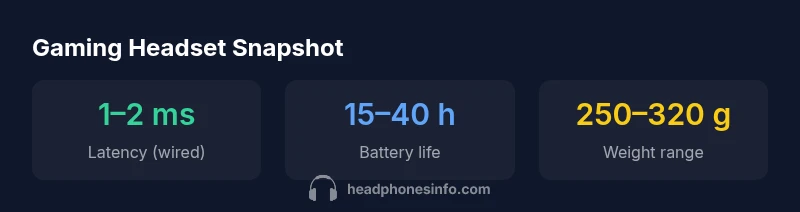
Wired headsets usually offer the lowest latency and never rely on battery life, which favors competitive gaming where every millisecond counts. Wireless models add freedom of movement, and newer technologies have narrowed latency gaps, but battery life and recharge cycles remain a consideration for long sessions. Durability varies by build materials; metal hinges and reinforced cables tend to endure more wear and tear than cheaper plastics. When choosing, consider your gaming environment: a compact desk with a tidy cable setup versus a living room couch with longer sessions may dictate wired or wireless as the better fit.
How We Test Gaming Headsets
Our testing process combines objective measurements with subjective listening tests to simulate real-world gameplay. We assess build quality, comfort, and weight distribution after hours of wear. Microphone performance is judged by noise handling, pickup clarity, and ease of integration with popular voice chat apps. Latency is measured using standard timing tools to compare wired and wireless options under common game scenarios. We also evaluate platform compatibility, dongle stability, and software features such as configurable EQ profiles and mic mute responsiveness. Headphones Info Team records the results and compares them to representative models across price tiers to ensure guidance remains accessible and practical.
Practical Buying Guide: How to Choose
Start with your use-case: casual gaming on a living-room setup or serious, long-form gameplay with streaming. Set a budget range and map it to essential features: if mic quality is paramount, prioritize a headset with a high-SNR microphone and good noise rejection; if you value immersive sound, look for a headset with a well-tuned driver tuning and comfortable ear cups. Check cross-platform compatibility, and ensure the headset supports your console or PC without adapters that introduce latency. Finally, consider warranty length and replacement parts availability—these signals of long-term value often outpace the initial price tag.
Common Misconceptions About Gaming Headsets
Myth: All gaming headsets deliver studio-grade sound. Reality: Many offer solid, gamer-tavorable tuning but not audiophile-grade fidelity. Myth: Wireless is always worse than wired. Reality: Modern wireless headsets can deliver very low latency with robust battery life, though you may trade some absolute sound nuance for mobility. Myth: Expensive means better for every gamer. Reality: Above a certain price threshold, incremental improvements depend on your priorities—mic clarity, comfort, and platform compatibility may matter more than marginal sonic gains.
Real-World Scenarios: Which Setup Fits You?
If you game primarily on a desktop with a dedicated mic, a high-quality wired headset or a separate mic setup may yield the best overall sound and vocal quality. If you move between rooms, travel, or game on a console with friends nearby, a reliable wireless headset can minimize clutter and simplify setup. For newcomers, a mid-range headset delivers reliable performance for both chat and immersive gameplay without overcommitting to equipment upgrades.
Upsides
- All-in-one solution with built-in mic simplifies setup
- Space-saving and portable for LANs or travel
- Typically consistent mic quality across many models
- Budget bundles offer solid value for new gamers
- Broad compatibility across PC, consoles, and mobile
Disadvantages
- Sound quality may lag behind high-end audiophile headphones
- Wired models limit mobility; wireless adds latency and battery concerns
- Budget mics can pick up room noise or keyboard sounds
- Durability can vary with lower-cost plastics and hinges
Best all-around value for casual to mid-competitive gamers seeking convenience and solid mic quality.
For most players, a gaming headset offers compelling value with straightforward setup and reliable voice chat. If you demand absolute audio fidelity or specialized mic performance, dedicated headphones plus a separate mic may be a better fit, but the headset path remains the strongest balance of cost and utility for many.
People Also Ask
Are gaming headsets worth it for console gaming?
For many console gamers, yes. A headset simplifies voice chat and reduces cable clutter, making social play and quick setup easier. If you prefer audiophile-grade music listening, consider dedicated headphones for listening sessions outside of gaming.
Yes. They’re convenient for chat and quick setup on consoles, though audiophiles may still opt for separate headphones for best sound.
What should I look for in a gaming headset mic?
Look for a mic with good noise rejection, clear vocal pickup, and easy mute controls. A unidirectional pickup pattern and a frequency response focused on speech often yield the cleanest voice chat.
Prioritize clear voice pickup and reliable mute controls for smooth communication.
Are wired headsets better than wireless for gaming?
Wired headsets typically offer lower latency and no battery management, which is advantageous for competitive play. Wireless headsets provide freedom of movement but may introduce small latency and require charging.
Wired usually wins on latency; wireless adds convenience but check battery life before long sessions.
Do gaming headsets work with PCs and consoles?
Most modern gaming headsets are designed to work across PCs and consoles. Always confirm whether you need USB-DAC, USB-C, or 3.5 mm connections and whether a dongle is required for your platform.
Most work across PC and consoles, just check the ports and any dongle requirements.
Can you get good sound quality from a headset?
Many mid-range headsets offer solid sound suitable for gaming, chat, and media. Audiophiles may still prefer dedicated headphones for higher fidelity, but headsets provide excellent value for most players.
Yes, many mid-range headsets sound great for gaming and chat.
How long do gaming headsets last?
Durability depends on build quality and care. Look for sturdy headbands, reinforced cables, and replaceable ear pads. Warranty terms also indicate expected lifespan and support for repairs.
Durability varies; choose sturdy models and check warranty for longer life.
What to Remember
- Define your primary use-case before buying
- Mic quality often drives perceived value more than minor audio gains
- Choose wired for lowest latency or wireless for mobility
- Check platform compatibility and warranty terms
- Test comfort for long sessions to avoid fatigue