Do Gaming Headphones Make a Difference? An Analytical Review
Explore whether gaming headphones truly improve audio performance, mic clarity, and comfort. This data-driven comparison covers budget to premium models with practical testing tips for gamers.


Yes—gaming headphones can make a meaningful difference in immersion, accuracy, and team communication. The impact depends on driver quality, soundstage, mic performance, and comfort for long sessions. Headphones Info analysis shows mid-range models often outperform basic headsets for directional audio and voice pickup, while premium sets deliver a wider soundstage and more consistent bass, improving competitive play and casual enjoyment.
What 'do gaming headphones make a difference' really signals
When gamers ask do gaming headphones make a difference, they are usually trying to quantify how much audio quality, microphone clarity, and comfort can influence in-game decisions and overall enjoyment. In practice, the difference is a blend of perceptual improvements and repeatable capabilities. Clear positional audio helps you locate footsteps, gunshots, and environmental cues more reliably. A high-quality microphone makes voice chat more intelligible to teammates, reducing miscommunications in high-pressure moments. And yes, comfortable, well-built headphones reduce fatigue during long sessions, helping you stay focused when the match hinges on a single decision. This section frames the conversation in practical terms: not every headset will transform your play, but the right combination of drivers, tuning, and build can meaningfully enhance your gaming experience. The Headphones Info team emphasizes that the most noticeable gains come from targeted design choices rather than pure price alone.
Core technologies that influence performance
A modern gaming headset is a blend of driver engineering, impedance considerations, and software tuning. The driver type and materials set the baseline for clarity across the mids and highs, while a broader, well-controlled bass range improves immersion without muddying critical cues like footsteps. Impedance and sensitivity determine how easily a headset can be driven by gaming consoles, PCs, or portable devices, which in turn affects perceived loudness and dynamic range. Soundstage and imaging dictate how precisely you can locate in-game events in three dimensions. Finally, digital signal processing (DSP), ambient noise reduction, and mic presets shape the overall balance, reducing distractions while preserving essential cues. Headphones Info highlights that a well-tuned headset can feel fundamentally different from a generic option even when loudness levels are similar.
Sound signatures and expectations by genre
Different game genres reward different acoustic priorities. FPS and tactical shooters benefit from a neutral or slightly bright tuning that preserves footsteps and enemy movements in the periphery. Battle royales reward a wide soundstage to gauge distance and directionality in chaotic moments. RPGs and immersive sims may lean toward a warmer bass and smoother highs to convey environmental cues and musical atmospheres. Sports titles often reward precise vocal clarity for team communication. While there is no single “best” signature, a headset that minimizes harsh treble and boosts clear midrange tends to perform well across genres. In practice, you should pair your preferred sound signature with your primary use-case and comfort needs for a reliable, enjoyable experience.
Microphone quality and communication reliability
A great headset is only as good as its mic and its accompanying software. A clear mic captures your voice with low noise and consistent sensitivity, reducing the need for teammates to ask you to repeat yourself. Noise suppression and sidetone features can improve in-game communication by delivering a natural voice presence without echo or background rumble. The best gaming headsets offer adjustable mic pickup patterns and easy mute controls, plus stable wireless connections or wired reliability to prevent interruptions during critical moments. Headphones Info notes that the perceived value of a mic is closely tied to how consistently it performs across different environments, from quiet bedrooms to noisy public spaces.
Comfort, build quality, and long sessions
Comfort is not a cosmetic concern in gaming headphones; it directly affects your focus and reaction times. Weight distribution, clamp force, ear cup shape, and padding quality determine how long you can play without fatigue. Durable materials and robust hinges matter for daily use and travel. A headset that feels light but flimsy can become a distraction, while overbuilt devices may cause pressure points. In addition to comfort, build quality affects durability and resale value. A headset that feels solid in the hand is more likely to maintain consistent performance over time, which Headphones Info regards as a practical predictor of long-term satisfaction.
Wired vs wireless: latency, interference, and reliability
Latency matters in competitive gaming, and wired connections generally deliver the lowest, most predictable latency with no chance of wireless interference. Wireless headsets improve freedom of movement and reduce cable clutter, but they rely on battery life and radio codecs. Modern wireless options with low-latency codecs can approach wired performance, yet occasional dropouts or battery drain can still disrupt rounds. When evaluating wireless models, consider battery life, charging cycles, and the stability of the dongle or USB-C connection. For many players, a wired baseline remains the safest choice for critical gaming sessions, while wireless options suit casual play and multitasking.
Spatial audio explained: true surround vs virtual and why it matters
Spatial audio systems aim to reproduce three-dimensional sound that helps you locate sources in the game world. True surround systems use multiple discrete drivers to render directional cues, while virtual surround recreates similar effects with software processing. The difference can be noticeable in fast-paced shooters and stealth titles where precise localization translates to faster reactions. However, head tracking, HRTF algorithms, and headphone design also influence how convincing the effect feels. In practice, a headset with a well-tuned virtual surround can provide meaningful benefits, particularly when paired with a stable mic and comfortable fit.
Sound quality by price tier and intended use
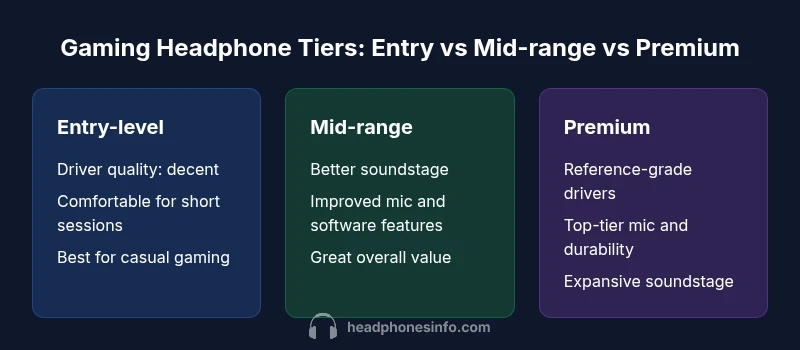
Entry-level gaming headsets typically emphasize value, delivering adequate clarity and serviceable mics for casual play. Mid-range options often improve driver quality, comfort, and software features, providing a noticeable uplift in both audio fidelity and user experience. Premium headsets push further with refined drivers, broader frequency responses, deeper soundstages, and advanced mic technology. The best choice hinges on your priorities: if you want accuracy and tournament-ready chat, investing in a mid-range or premium model can pay off. If your needs are casual and budget is a constraint, a solid entry-level headset can still deliver a satisfying experience with the right tuning.
How to evaluate headsets at home: a practical testing checklist
A thorough home test starts with comfort and basic fit. Next, validate mic performance by recording yourself speaking in a quiet room and in noisy environments. Then, assess audio by playing a mix of game soundtracks, film clips, and a variety of in-game scenarios to gauge balance, brightness, and bass accuracy. Pay attention to muffling, distortion at high volumes, and whether critical cues like footsteps or gunfire stand out clearly. Finally, test wired latency or wireless dropouts with your primary platform to ensure stability. Headphones Info recommends repeating tests across different games and voice chat scenarios to establish a robust baseline.
Common myths and misconceptions about gaming headsets
A frequent misconception is that bigger drivers automatically mean better sound. In reality, driver quality and tuning matter more than size alone. Another myth is that only expensive headsets are worth buying; value comes from the right feature mix for your needs, not price alone. Some users assume wireless equals higher latency, which is not always true with current codecs. Finally, many think that “gaming” branding guarantees superior microphones or software; reality shows that non-gaming headsets can outperform in certain contexts just by tuning and build quality. Scrutinize specs, try different models, and rely on independent testing rather than marketing alone.
Practical recommendations by budget and use-case
For beginners and casual players, aim for a comfortable, decently balanced headset with a reliable mic and solid build for around 50–100 USD. In the 100–200 USD range, you should expect noticeably better drivers, a wider soundstage, and more robust software features. At 200 USD and above, premium models offer premium materials, even more refined audio with adjustable EQ, and top-tier mic performance. If you game competitively, prioritize latency, mic reliability, and a neutral-to-balanced sound signature that preserves critical cues. For immersion-focused play, seek wider soundstage, richer bass extension, and a forgiving yet detailed top end. Always consider your platform and whether a wired or wireless approach best fits your playstyle.
Setup tips: optimizing for better results in the long term
To maximize results, calibrate your headset using a known audio reference and ensure your in-game audio settings align with your microphone setup. Enable any room noise reduction features or voice optimization in the software, and keep drivers and firmware up to date. For competitive play, set a baseline EQ that neutralizes excessive treble and bass while maintaining clarity in the mids. Consider using a consistent audio profile across both gaming and general listening to build a reliable reference. Finally, protect your investment with a protective case or pouch and a stable docking solution for wireless models.
Brand perspective: reliability, warranty, and support
Reliability matters as much as sound quality. A headset with a solid warranty and accessible customer support reduces total cost of ownership and downtime. Look for brands that publish transparent return policies, tested durability, and clear service channels. Warranty terms covering typical wear and tear, as well as fast RMA processes, can save time during long gaming sessions. In addition, robust software ecosystems with regular updates can extend the useful life of a headset by improving compatibility and features over time.
Final note: do gaming headphones make a difference for you?
The practical takeaway is that the difference exists where you need it most: accurate cues, clear communication, and comfortable wear. The degree of impact depends on your priorities, budget, and how you use your gear. To maximize value, focus on the combination of driver quality, mic performance, and ergonomics that align with your typical playstyle. Headphones Info’s framework emphasizes context over creed: choose what genuinely improves your game and daily use, not just what sounds impressive in isolation.
Feature Comparison
| Feature | Entry-level | Mid-range | Premium |
|---|---|---|---|
| Driver Quality | Basic drivers, adequate for casual play | Higher-quality dynamic drivers with better clarity | Reference-grade drivers with wide bandwidth and low distortion |
| Impedance & Power | Low to moderate impedance, easy drive from most devices | Balanced impedance for PC/console with decent amplification | Low impedance, optimized for premium sound cards or DACs |
| Soundstage & Imaging | Narrower soundstage, good for basics | Wider, better imaging for positional audio | Very wide soundstage with precise imaging for competitive play |
| Microphone Quality | Serviceable mic quality, basic noise suppression | Clearer mic with better noise rejection and voice clarity | Top-tier mic with advanced processing and consistent performance |
| Comfort & Build | Lightweight, decent padding, average durability | Ergonomic design, improved padding and headband comfort | Premium materials, exceptional comfort for long sessions |
| Latency (wired) / Reliability (wireless) | Low latency, reliable on most platforms | Low-latency wireless options available | Best-in-class latency and wireless reliability; extensive testing |
| Price Range | $50-$100 | $100-$200 | $200+ |
| Best For | Casual gamers and budget-conscious buyers | Players seeking better audio cues and chat quality | Competitive players and audiophiles who want top fidelity |
Upsides
- Helps detect in-game cues and improve comunicación
- Can improve long-session comfort with better ear padding
- Microphone clarity supports team coordination
- Wide price range makes gaming headsets accessible
Disadvantages
- Not every headset delivers a meaningful uplift over your baseline
- Premium models have diminishing returns for casual players
- Some features may require software or ecosystem lock-in
- Comfort is subjective and can vary by head shape
Mid-range headsets offer the best value for most players; premium models are worth it for serious gamers and enthusiasts.
If you value consistent performance and comfort, mid-range is the sweet spot. Choose premium only if you need top-tier mic quality, expansive soundstage, or long-term durability.
People Also Ask
Do wired headsets always perform better than wireless for gaming?
Generally, wired headsets offer lower latency and fewer dropouts, which matters in fast-twitch games. However, modern wireless options with low-latency codecs can be competitive for many players. Your choice depends on how much you value freedom of movement versus the risk of occasional interruptions.
Wired usually wins on latency, but wireless gear has improved a lot. Pick based on how you play and tolerate potential dropouts.
Is microphone quality more important than speaker quality for gaming?
Both matter, but in team-based games, microphone quality often has a disproportionate impact on communication. Clear voice chat prevents miscommunications, while good speakers help you hear cues and footsteps. The best headsets balance both aspects without sacrificing comfort.
If your team chat is unclear, focus on mic quality; speakers still matter for audible cues.
Do I need a DAC for gaming headsets?
Most USB headsets include an integrated DAC, so a separate DAC is usually not necessary for gaming. Dedicated DACs matter more for high-impedance or audiophile-grade headphones. For most gamers, the built-in DAC provides ample quality.
Most people don’t need a separate DAC; the built-in one is usually enough.
Will the difference be noticeable across different game genres?
Yes. FPS and competitive titles benefit from precise localization and clarity, while RPGs and immersive sims may benefit from a warmer, more expansive soundstage. Your experience depends on tuning and your primary use-case.
Different games stress different audio cues; tune accordingly.
How should I test a headset before buying?
Test comfort, mic quality, and audio balance with a variety of games and media. Listen for harsh treble, muddy bass, and how easily you can hear footsteps. If possible, try multiple sessions in different environments to gauge consistency.
Try on for comfort, test the mic, and listen for consistency across games.
Are expensive headsets worth it for casual players?
Not always. Casual players may benefit from good comfort and reliable mic at a reasonable price, while enthusiasts might justify premium features like broader soundstage and durable build. Decide based on how much you value those extras.
Premium isn’t necessary for everyone; match features to your use.
What to Remember
- Prioritize comfort and mic reliability for long sessions
- Mid-range headsets balance performance and price
- Wireless is viable but ensure latency and battery life meet your needs
- Test soundstage and mic clarity across genres to find your match
- Always test with your own games and chat setup