Do Expensive Headphones Make a Difference? A Thorough Comparison
Explore whether pricey headphones truly improve sound, build, and comfort. This analytical comparison examines performance factors, listening scenarios, and practical buying tips to help you decide if the upgrade is worth it.


Do expensive headphones make a difference? In many listening setups, they can offer quieter noise floors, more precise imaging, and more refined tuning. However, the magnitude of benefit depends on your source, genre, and how you listen. This comparison explains when price correlates with audible gains and when it mostly reflects premium design and branding.
What Expensive Headphones Bring to the Table
According to Headphones Info, do expensive headphones make a difference in critical listening, and the short answer is that differences are real but not universal. In well‑equipped setups, premium models often reveal subtle details—layered micro-dynamics, cleaner separation, and more consistent tonal balance—that budget models may mask. Those gains tend to show up most clearly with high‑quality recordings, a clean power source, and listening at moderate volumes. Beyond sound, luxury materials, refined cable assemblies, and meticulous fit contribute to long sessions with less fatigue. Headphones Info emphasizes that your source and music matter as much as the headphones themselves; a premium pair will not compensate for poor mastering or a weak chain.
In practice, the difference is most noticeable when the listening chain is capable of delivering the data the headphones are designed to reproduce. If you primarily listen through a smartphone or a low‑cost DAC, the audible gains may be muted. For some listeners, even small improvements in imaging and air between instruments are enough to justify the price. The key is to align expectations with your actual use case and preferred genres.
Price Premium: What You Actually Pay For
Premium headphones command a price premium that reflects more than just better drivers. Build quality, symmetry in driver alignment, premium housings, and premium cables contribute to perceived value and durability. Comfort and fit matter too—reduced clamp, better weight distribution, and generous padding keep listening comfortable through long sessions. In addition, many high‑end brands offer advanced tuning, proprietary drivers, and meticulous testing protocols, which add to development costs and, ultimately, the sticker price. The goal for the buyer is to determine if those extras translate to meaningful improvements in everyday listening, not just in lab measurements.
Another factor is brand ecosystem and after‑sales support. A premium purchase often includes stronger warranties, replacement parts, and accessory options, which can reduce long‑term ownership friction. However, the added cost can be difficult to justify if you do not value those extras or if your current setup already meets your needs. It's important to weigh the tangible benefits against your listening habits and budget.
Objective Metrics That Matter
When evaluating headphones, objective metrics help separate hype from practicality. Frequency response tells you how faithfully a model covers the audible range, though it does not capture how it sounds in real life. Impedance and sensitivity affect how much power is required from your source and how loud a headphone can go without distortion. Total Harmonic Distortion (THD) and Signal‑to‑Noise Ratio (SNR) reveal mechanical and electrical cleanliness, while channel balance and cross‑talk indicate stereo precision. While these numbers provide guidance, they must be interpreted in context with real‑world listening, genre, and personal preference.
High‑end models often demonstrate more consistent driver performance across the spectrum, but that consistency matters most when your music demands finesse—classical recordings, acoustic jazz, or studio reference tracks. If your source chain can deliver clean, uncolored signals, expensive headphones have a greater chance to reveal the intended soundstage and micro‑textures. If not, the differences may be less noticeable. Headphones Info notes that measurements are a guide; your ears decide what matters most in daily use.
Listening Scenarios: When Price Matters
Price tends to matter more in scenarios that demand critical listening or long hours of use. For casual listening, budget or mid‑range models often deliver satisfying results with wide compatibility and strong comfort. If you mix tracks of varying quality or enjoy live recordings with complex spatial cues, premium headphones may offer a more convincing sense of space and instrumental shadows. For gamers, some high‑end headphones provide superior positional accuracy and lower latency when paired with appropriate hardware, but mid‑range options are increasingly capable for most titles.
Travel and noise isolation add another dimension. Premium closed‑back designs can blend isolation with comfort and a controlled tonal balance, but the same goals can be achieved with well‑configured mid‑range models and good ear pads. The takeaway: assess your primary use cases, the typical listening environment, and whether your current gear can reveal the price‑driven differences before you buy.
How to Evaluate Before You Buy
A disciplined audition is essential when considering expensive headphones. If possible, test multiple tracks across genres to gauge tonal balance, bass impact, and treble brightness. Pay attention to comfort, clamping force, and how the ear cushions encircle your ears during long sessions. Bring music you know well and compare how the same track feels on different models. Consider source gear—dac/amp quality and device compatibility—since a powerful amplifier can unlock subtle details that a basic player cannot.
Return policies are critical given the price tag. Look for generous trial periods and clear warranty terms. Try to simulate your normal listening conditions at home—volume, room acoustics, and the devices you’ll actually use. This approach helps avoid buyer’s remorse when the perceived upgrade does not translate in your daily life.
Common Myths About Price vs Performance
Many buyers assume that higher price automatically equals better sound in all situations. That is rarely the case. Price can reflect tuning choices, brand prestige, or build finesse more than audible superiority. Some listeners prefer the coloration of a mid‑range model, which may suit certain genres better than a clinical high‑end presentation. Another myth is that premium headphones always require premium sources; while they benefit from a capable chain, better gear does not automatically transform a mediocre model into perfection.
Transparency in marketing can also distort expectations. Some brands emphasize measurement charts while ignoring subjective listening experiences. The truth is that listening is personal, and a headphone’s value depends on alignment with your goals, preferred music, and lifestyle.
Budget Alternatives That Punch Above Their Weight
There are many mid‑range headphones that perform remarkably well across most metrics and use cases. Look for models with proven driver geometry, comfortable pads, and a balanced signature that appeals to a wide audience. These can deliver excellent value by offering close‑to‑premium performance without the premium price tag. Accessories matter too—detachable cables with good shielding, adaptable connectors, and robust carrying cases can enhance everyday usability and longevity.
For many listeners, upgrading to a better pairing chain—more capable DAC/amp or a cleaner digital source—can yield noticeable improvements even with mid‑range headphones. Sometimes, the head‑to‑head difference is more about system synergy than the headphone alone. Evaluating the entire chain helps you decide if the extra cost for premium models is warranted in your setup.
Data-Driven Insights from Headphones Info
Headphones Info Analysis, 2026, emphasizes that real‑world gains from expensive headphones are most pronounced when the listener demands higher resolution and stage accuracy, and when the playback chain can reveal those details. The analysis suggests that some of the perceived value comes from improvements in comfort, durability, and brand support, rather than an automatic sonic leap. In other words, upgrades pay off when they align with your listening goals and the quality of your source material. The team also notes that casual listeners may experience diminishing returns if their routine doesn’t use high‑bitrate files or lossless streams.
Practical Buying Framework: A Step‑by‑Step Guide
- Define your listening goals: critical listening, casual enjoyment, gaming, or monitoring. 2) Audit your source chain: phone DAC, desktop sound card, or dedicated amplifier. 3) Set a realistic budget that reflects your goals. 4) Test multiple models in the same price tier and compare tonal balance, comfort, and isolation. 5) Verify warranty, service, and parts availability. 6) Decide based on the combination of comfort, longevity, and the degree to which sound quality improves your preferred music. 7) Don’t neglect room acoustics and listening volume, which can alter perceived quality.
Final Thoughts: What Matters Most in Real Life
The ultimate decision rests on your listening goals, the audio chain, and the willingness to invest in upgrades that genuinely improve your experience. The premium price tag is meaningful when it results in a tangible, long‑term benefit—especially for critical listening or professional use. If your priority is simple enjoyment and movie nights, a well‑chosen mid‑range model coupled with a quality source can deliver excellent value. The verdict is personal, not universal.
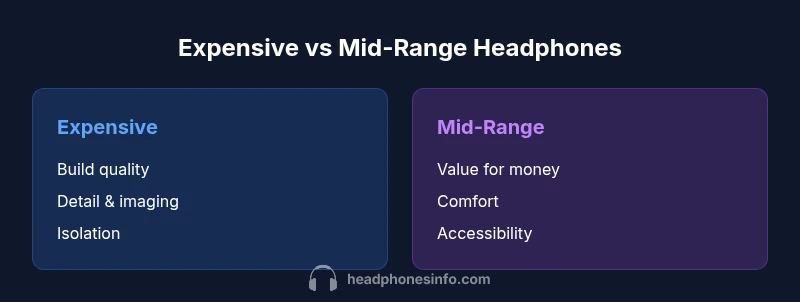
Comparison
| Feature | Expensive headphones | Mid-range headphones |
|---|---|---|
| Build quality | Premium materials, meticulous finishing | Solid construction with strong materials |
| Sound tuning | Often more resolving with wider stage and nuance | Balanced, musical, and less clinical |
| Driver technology | Proprietary/advanced drivers | Quality drivers with proven performance |
| Power needs | May require a capable DAC/amp | Works well with common sources |
| Source compatibility | Best with high‑quality sources | Broad compatibility with most devices |
| Comfort/durability | Luxurious padding; durable chassis | Comfortable for long sessions; sturdy |
| Warranty/Support | Often extended warranties and service | Standard warranties; reliable support |
| Value proposition | High price; potential premium experience | Strong value; easier to justify for many buyers |
| Best for | Critical listening, studios, enthusiasts | Casual listening, general use, value seekers |
Upsides
- Potential for enhanced detail and imaging with quality drivers
- Superior build quality and comfort in premium models
- Better isolation and accessories in higher-end sets
- Long-term durability and stronger warranties
- Improved consistency with high-quality source material
Disadvantages
- Higher upfront cost with diminishing returns for casual listening
- Requires capable source gear to realize benefits
- Returns window can be restrictive for expensive models
- Not all genres or recordings benefit equally from premium tuning
Premium headphones can make a difference, but only when paired with a capable source and music that reveals the detail.
Upgrade for critical listening or professional use when your source and tracks justify the investment. For casual listening, mid-range options often deliver compelling value with less risk.
People Also Ask
Do expensive headphones always sound better?
Not always. Sound quality depends on the music, source, and how well the headphones match your preferences. Some listeners prefer mid‑range models that suit their genres and listening habits just as well as premium designs.
Not always. It depends on your music and gear; some mid‑range models can sound just as good for your preferences.
Is it worth upgrading from mid‑range to high-end for casual listening?
It depends on how much you value subtle details and the overall listening experience. If your setup already sounds satisfying, the upgrade may yield diminishing returns. For occasional critical listening, a premium model could be worth it.
Worth it if you crave finer details and a more immersive stage; otherwise, you might be fine with mid‑range options.
What should I test when auditioning expensive headphones?
Test comfort, clamp force, seal, and padding; listen for tonal balance across bass, midrange, and treble; evaluate imaging and soundstage with familiar tracks; and check for driver consistency between channels.
Try on several tracks you know and check comfort, balance, and how the sound stages your music.
Can expensive headphones perform worse with low-quality DACs?
Yes. A weak DAC or noisy chain can mask the advantages of premium headphones. A clean, high‑quality source helps premium models shine.
Yes—poor sources can mask benefits; a good DAC helps premium headphones show their true potential.
Are premium headphones more durable?
Often yes, due to premium materials and stronger construction, but not universally. Check build quality and warranty as part of your assessment.
Usually more durable, but check the warranty and materials for the specific model.
Do wireless premium headphones justify their price?
They can, if you value convenience, codecs, latency, and ecosystem features. However, wired configurations can outperform in latency and fidelity for critical listening.
They’re convenient and well‑connected, but wired may still win in fidelity for critical listening.
What to Remember
- Assess your listening goals before buying
- Test with high-quality sources to realize true benefits
- Ensure your source chain can support premium performance
- Consider comfort and warranty as part of value
- Balance price against your real use and room setup