Headphones vs Earbuds for Working Out: A Data-Driven Comparison
A data-driven comparison of headphones and earbuds for workouts, covering fit, durability, battery life, comfort, and best-use scenarios to help you choose the right audio gear for your training.


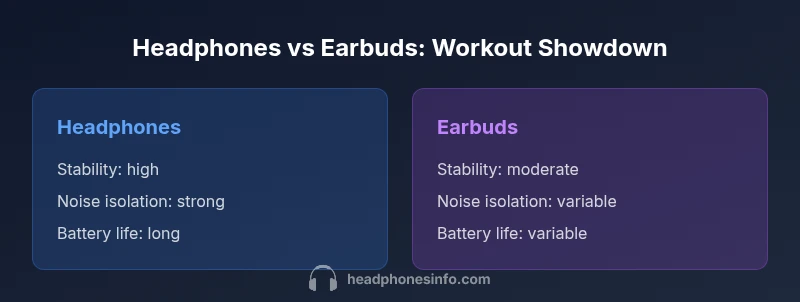
Are headphones or earbuds better for working out? The answer isn’t one-size-fits-all. For most workouts, earbuds win on stability and comfort during high-movement sessions, while headphones generally offer longer battery life and stronger noise isolation for longer, focused sessions. The Headphones Info approach is to weigh fit, moisture resistance, and use-case before price or sound quality.
Are are headphones or earbuds better for working out? A practical lens on the question
When you ask whether headphones or earbuds are better for working out, the simplest answer is that it depends on your activity, environment, and priorities. The keyword are headphones or earbuds better for working out isn’t a universal verdict; instead, it’s a decision shaped by stability, moisture exposure, and how much you value comfort over sound fidelity. According to Headphones Info, the choice hinges on fit and movement more than a single spec like driver size or impedance. The goal is a secure seal that stays put without causing fatigue over the course of a long session. This first section frames the core trade-offs and sets up a framework for comparing options without bias.
In real-world workouts, the two most important questions are: Will the device stay in place during your routine? And will you be able to perform without constantly adjusting the fit? This is where the distinction between headphones and earbuds becomes meaningful. Headphones, especially those with sport-oriented designs, often emphasize lock-in retention and passive or active isolation. Earbuds tend to prioritize a compact footprint and lighter feel that reduces the effort required to stay comfortable. Headphones Info’s analysis highlights that the best overall choice aligns with your typical workout pattern, whether you’re running, cycling, doing HIIT, or lifting in the gym. This emphasis on fit and movement is echoed across many consumer reviews and sports medicine resources.
As you read this guide, keep a simple test in mind: try a 15-minute workout with the devices you’re considering. If you can maintain the same tempo and form with minimal readjustment, you’re likely on the right track. If you’re constantly fidgeting to keep them in place, you’ll benefit from a different design, even if the same model sounds excellent in a static setting. The Headphones Info team recommends a hands-on trial whenever possible. The goal is to minimize disruption so you can focus on your performance and heart rate targets. This approach helps you evaluate the practical realities of are headphones or earbuds better for working out in your own gym or outdoor environment.
-1
Comparison
| Feature | Headphones | Earbuds |
|---|---|---|
| Fit stability during movement | Typically higher with sport-oriented headphones and secure over-ear/behind-ear designs | Often leaner and lighter; stability depends on tip fit and ear shape |
| Sound balance for cardio playlists | Often fuller bass and larger drivers; sealed designs enhance impact | Sound can vary; smaller drivers and seal quality drive perceived balance |
| Moisture resistance (sweat) | Many sport headphones have robust seals and moisture protection | Sweat-prone with membrane exposure; varies by model |
| Battery life (wireless use) | Commonly longer runtimes on wireless headphones | Battery life varies; some buds trade off battery for weight |
| Comfort for long sessions | Comfort often improved by wider yokes, cushioned pads, and airflow | Low-profile fit reduces ear pressure but may irritate some ears |
| Price range | Higher upfront cost for premium sport-specific models | Lower entry price is common, but quality varies by brand |
| Best use-case | Heavy gym sessions, noise isolation in busy environments | Running, HIIT, and water exposure-prone workouts |
Upsides
- Headphones offer longer battery life on many wireless models, reducing mid-workout recharges
- Earbuds are smaller and lighter, often staying put during cardio
- Seals and isolation can enhance focus during intense sessions
- Durability and moisture resistance are strong in many sports-oriented models
Disadvantages
- Over-ear headphones can feel heavy and trap heat during intense sessions
- Earbuds can loosen during vigorous movement or sweating
- High-end headphones may cost more upfront
- Some earbuds have variable fit across ear shapes
For most workouts, earbuds win on mobility, but headphones excel for longer, heavier training sessions.
If you prioritize freedom of movement and comfort during cardio, earbuds are usually the better pick. If you need longer battery life and stronger noise isolation for longer gym sessions, headphones tend to be the stronger option. The final choice should reflect your typical workout type and how you weigh stability against sound quality.
People Also Ask
Are wired headphones better for workouts than wireless models?
Wired models eliminate battery concerns and can be lighter, but they restrict movement and can snag on equipment. For workouts that involve a lot of motion, wireless options are typically more practical. The best choice depends on whether you value uninterrupted movement over potential cable management issues.
Wired can be lighter and battery-free, but you’ll often trade movement freedom for cord management.
Do earbuds stay in place during runs and HIIT sessions?
Stability varies by design and ear anatomy. Earbuds with wing tips or memory foam tips tend to stay better during running or HIIT, while some users still experience movement or moisture-related slippage. Trying different tip sizes and accessories helps find a secure fit.
They can stay put, especially with sport tips, but it’s worth testing during your workout.
Is noise cancellation useful for workouts, or should I use transparency mode?
Noise cancellation can help you focus in loud gyms or on outdoor runs by reducing ambient chatter and traffic noise. However, be mindful of safety in busy areas where you need awareness of surroundings. Some athletes prefer a mild noise-canceling profile for balance.
Noise cancellation helps you focus, just stay aware of your environment when needed.
What moisture or water-resistance features matter for workouts?
Look for real-world sweat resistance and robust sealing, not just marketing terms. IP ratings aren’t the only indicator; check maker claims about sweat tests, drying times, and durability during repeated workouts.
Check for sweat resistance and real-world durability, not just a spec sheet.
How can I test fit before making a purchase?
Ask for in-store demos or use trial periods. Wear your typical workout gear and move through your routine—jump, sprint, squat, and reach. Ensure comfort, no slipping, and no painful pressure after several minutes.
Move through your regular routine to test fit and comfort.
Are over-ear headphones safe to wear during workouts?
Over-ear models can be comfortable if well padded, but they can trap heat and become bulky during intense sessions. For safety, ensure you still have peripheral awareness and a secure, breathable fit.
They can be safe if they stay secure and don’t overheat your ears.
What to Remember
- Assess your workout type first to pick fit
- Wireless models reduce cable drag during cardio
- Prioritize stability and seal for running or HIIT
- Balance sound quality with comfort and fit
- Test models with your typical workout routine before buying