Do Headphones Make Ear Pressure Worse? A Practical Troubleshooting Guide
Discover whether do headphones make ear pressure worse, explore common causes and symptoms, and practical fixes to reduce discomfort while protecting your hearing. A data-informed, urgent guide from Headphones Info.


Yes, headphones can contribute to ear pressure for some listeners, especially when the cups seal tightly around the ear canal and you listen at high volumes. The sensation comes from occlusion of the ear canal combined with pressure changes in the middle ear. To minimize discomfort, ensure a comfortable fit, take regular breaks, and lower the volume.
How Ear Pressure Happens with Headphones
If you’ve ever felt a heavy sense of pressure in your ears after a long listening session, you’re not alone. Do headphones make ear pressure worse? In some cases, yes, especially when the cups seal tightly around the ear canal and you listen at high volumes. According to Headphones Info, the sensation comes from occlusion of the ear canal combined with pressure changes in the middle ear. Even small shifts in ambient air can feel amplified when the drivers push air against a closed system. This is not a defect in sound quality; it’s a physical interaction between your ears and the way headphones create a sealed listening space. The key takeaway is that fit, volume, and listening duration are the primary levers you can adjust to reduce discomfort.
If you notice pressure during or after listening, keep this guide handy. The Headphones Info team will walk you through a safe, practical approach to diagnose and fix common issues without sacrificing sound quality.
How Ear Pressure Happens with Headphones (continued)
For many listeners, the experience centers on the seal that headphones form around the ear. A tight seal can trap air and create a slight push against the ear drum. In addition, higher listening levels elevate the acoustic energy reaching the ear, which can magnify any internal pressure changes. If you have narrow ear canals, a high occlusion angle, or swollen ear passages from allergies or a cold, the sensation can feel more pronounced. The combination of occlusion and volume is what often drives the uncomfortable feeling, especially during longer sessions or when moving between quiet rooms and loud environments.
How Ear Pressure Happens with Headphones (tips for immediate relief)
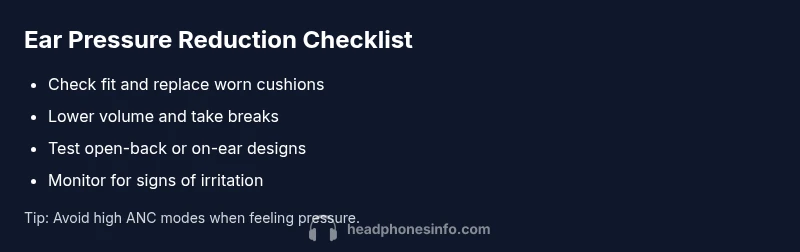
- Reduce volume to a safer, comfortable level.
- Take breaks every 20-30 minutes to relieve ear pressure.
- Loosen the fit slightly if possible without compromising soundstage.
- Switch to a different design (open-back, on-ear, or earbuds) for reduced occlusion.
How Ear Pressure Happens with Headphones (summary)
Taking breaks, adjusting fit, and lowering volume are the simplest, most effective steps to prevent ear pressure from turning into discomfort. If symptoms persist, you may be dealing with other factors beyond fit and volume, which will be covered in later sections.
Steps
Estimated time: 30-60 minutes
- 1
Assess symptoms
Note when pressure occurs: during playback, after removal, or with specific devices. Check if it’s associated with pain, fullness, or muffled hearing. Document duration and any other symptoms.
Tip: Keep a small log of listening times and settings to identify patterns. - 2
Check fit and seal
Inspect cushions and ear seals for wear. Adjust the clamp force or replace worn pads. Make sure the cups sit evenly without excessive pressure on the ears.
Tip: Try a looser but still balanced seal; a perfect seal isn’t always best for comfort. - 3
Reduce volume and take breaks
Set a comfortable volume and pause every 20-30 minutes. Short breaks can relieve pressure and prevent ear fatigue.
Tip: Use the 60/60 rule: 60 minutes at or below 60% volume with a 5-minute break. - 4
Test different designs
If pressure remains, experiment with open-back headphones, on-ear models, or earbuds to lower occlusion.
Tip: Avoid jumping between vastly different types in one session; compare gradually. - 5
Check for ear conditions
If you notice persistent fullness, pain, discharge, or hearing changes, consider OTC ear care and seek evaluation if symptoms persist.
Tip: Don’t insert objects into the ear canal; seek medical advice if you suspect infection. - 6
Know when to seek professional help
Persistent symptoms after trying fixes may indicate an underlying issue requiring a clinician or audiologist’s assessment.
Tip: Early evaluation can prevent potential longer-term issues.
Diagnosis: Persistent ear pressure during or after headphone use
Possible Causes
- highTight seal from over-ear cups or in-ear tips
- mediumHigh listening volume and rapid air pressure changes
- lowUnderlying ear condition (e.g., Eustachian tube dysfunction or infection)
Fixes
- easyCheck fit and adjust cushions or try different ear seal to reduce occlusion
- easyLower volume and schedule regular listening breaks to minimize pressure buildup
- mediumExperiment with different headphone types (open-back, on-ear, or earbuds) to reduce occlusion
- hardConsult a healthcare professional if symptoms persist or worsen
People Also Ask
Do all headphone types cause ear pressure?
Not for everyone. Pressure largely depends on fit, seal, and volume. Open-back and on-ear designs generally seal less than tight over-ear cups, which can reduce occlusion-related pressure.
Not for everyone; fit and volume determine pressure. Open-back or on-ear models often feel less sealed than tight over-ear cups.
Can ANC headphones increase ear pressure?
Active noise cancellation can amplify perceived pressure for some listeners because of how it alters the soundfield and ventilation around the ear. If you notice increased pressure with ANC, try turning it off or using a lower mode.
ANC can make some people feel more pressure. Try reducing ANC or using a different mode to test comfort.
Is ear pressure dangerous?
Occasional ear pressure is common and usually harmless with proper use. Persistent or severe pressure accompanied by pain or hearing changes warrants medical evaluation.
Usually not dangerous, but persistent pressure with pain should be checked by a clinician.
Why does pressure feel worse after long listening sessions?
Prolonged use increases ear fatigue, lid occlusion, and strain on the ear structures, making pressure feel more noticeable as you tire.
Long listening adds fatigue and occlusion, making pressure feel stronger.
Should I wear hearing protection or quiet breaks during use?
Yes, take breaks, use moderate volume, and consider hearing-protective practices if you have recurring discomfort or are exposed to loud environments.
Take breaks and keep volume moderate; seek protection if discomfort recurs.
What if I have allergies or ear infections?
Allergies or infections can alter ear canal ventilation and amplify pressure. Treat the condition and consult a clinician if symptoms persist with headphone use.
Allergies or infections can worsen pressure; treat and seek advice if ongoing.
Can changing cushions help with pressure?
Yes, softer or properly fitted cushions can reduce occlusion and pressure. Check for wear and replace pads as needed.
New cushions can reduce pressure by improving fit and reducing occlusion.
Watch Video
What to Remember
- Loosen the seal for comfort without sacrificing sound
- Lower volume and take regular listening breaks
- Experiment with headphone designs to reduce occlusion
- Seek professional help if pain or hearing changes persist