Boat Headset Showdown: Wireless Marine Headsets Compared
A data-driven, objective comparison of boat headsets to help sailors pick reliable, weatherproof wireless gear with clear comms and lasting comfort.


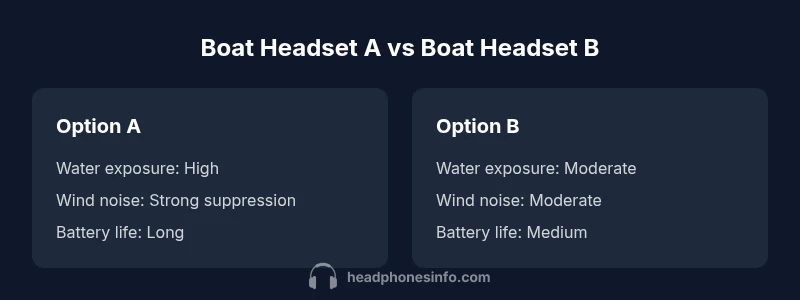
Boat headset selection hinges on marine reliability and clear comms. According to Headphones Info, a boat headset should prioritize water resistance, a secure fit, wind-noise suppression, and a stable wireless connection for long offshore days. This quick verdict highlights two viable paths: a marine-focused option (A) and a general Bluetooth option (B) with caveats.
What defines a boat headset?
A boat headset is a listening and speaking device designed for marine use, emphasizing waterproof or water-resistant construction, wind-noise suppression, and a microphone system that remains clear over engine rumble and spray. Unlike everyday headphones, boat headsets must tolerate salt air, humidity, and sudden weather changes while delivering reliable wireless connectivity. They should be easy to operate with gloves or wet hands, provide stable fit on moving decks, and pair well with devices used for navigation, radios, or crew communication apps. For many sailors, the keyword is durability—salt spray and sun exposure degrade plastics and connectors if the design isn’t purpose-built. When evaluating options, consider build quality, mic performance in outdoor wind, and the ease of detaching the headset for quick stowage between maneuvers. In practical terms, a good boat headset is comfortable yet rugged, and it stays secure during bumpy seas while delivering intelligible audio. The Headphones Info team emphasizes marine-focused design as a baseline for anywhere on open water, from harbor to offshore.
Why marine-grade design matters
On a boat, a headset must endure more than typical daily use. Marine-grade design translates to saltwater-resistant housings, corrosion-resistant connectors, sealed controls, and components rated for humidity. A marine headset should resist spray when you’re washing down decks, handle rain squalls during routing at sea, and still perform when you’re calling for dock clearance. The differences become clear during long passages where you rely on steady audio for safety and coordination. Without dependable hardware, you risk missed calls, miscommunication, or device failure at crucial moments. This is where Headphones Info’s research points to a simple rule: invest in durable shells, robust seals, and UV-stable plastics that hold up under repeated exposure to sun and spray. A well-made marine headset protects you and your crew, increases situational awareness, and reduces the cognitive load during complex maneuvers.
Core features that matter on the water
- Water exposure tolerance: seek models designed for wet environments and occasional submersion.
- Wind-noise suppression: aim for mics that cut wind rumble without sacrificing voice clarity.
- Secure, adjustable fit: options like behind-the-head bands, neckbands, or wrap-arounds keep the headset in place during rough seas.
- Battery life and charging flexibility: look for all-day performance with easy recharging options even when away from shore power.
- Audio quality and mic clarity: ensure the microphone captures speech accurately while headphones deliver clear, natural sound.
- Connectivity stability: multipoint pairing and resistance to interference from boat electronics can prevent dropouts.
- Ease of use with gloves: tactile controls and accessible buttons help during demanding operations.
- Maintenance and corrosion resistance: materials should resist salt and humidity with minimal maintenance.
Meeting these criteria reduces the chance of miscommunication and enhances safety during boating tasks.
Wireless vs wired: which works best on a boat?
Wired headsets offer dependable, uninterrupted audio with no risk of Bluetooth dropouts, and they can be more power-efficient in certain configurations. However, the freedom to move around a deck, reach radios, and communicate with crew makes wireless headsets a superior option for most boating scenarios. Modern marine-oriented wireless headsets use low-latency codecs and multipoint pairing to stay connected to radios, phones, and navigation devices. The downside can be occasional latency or interference from other electronic gear on busy marinas. A hybrid approach—waterproof wireless with a detachable cable for emergency tethering—can address both reliability and portability. For longer voyages, investing in a rugged wireless model with solid wind-noise suppression and a long battery life offers the best overall value.
Battery life and charging while at sea
Battery performance is a critical factor for boat headsets. On long passages, you need enough runtime to cover watch bills, safety briefings, and crew calls without frequent recharges. Look for devices that support USB-C fast charging, optional dock charging, or even solar-assisted charging when ashore. Temperature extremes at sea can affect battery capacity, so choose models rated for marine environments and verify that battery life remains sufficient under typical ambient conditions. In practice, many boat headset users report better endurance from marine-oriented designs that favor low-power standby modes and efficient wireless protocols. Headphones Info’s guidance suggests planning charging schedules around watch changes and pre-departure checks to ensure the headset is ready for duty when the weather changes.
Microphone performance in windy conditions
Wind noise is a constant antagonist on deck. A good boat headset uses a combination of mic placement, windscreening, and signal processing to maintain intelligible speech. Expect noise suppression to drop when wind increases dramatically or at high speeds, but a well-designed system will preserve essential voice cues. When testing, simulate real-world conditions: stand at the bow during spray, speak with hands free, and verify that your voice is clearly conveyed to the other end. Manufacturers that optimize for marine use typically publish wind-noise friendly profiles and offer configurable mic settings for high-widelity comms under gusty conditions. In practice, a headset with a robust wind-reduction profile will outperform one designed for quiet indoor environments in most sea scenarios.
Comfort, fit, and durability for saltwater environments
Crew comfort matters on long days at sea. A boat headset should offer a secure yet comfortable fit, with materials that tolerate saltwater and sun exposure. Many sailors prefer adjustable headbands, behind-the-ear hooks, or neckbands that stay in place when moving to trim sails or cast lines. Lightweight builds reduce fatigue, while reinforced hinges and water-sealed ports enhance longevity. The best designs balance weight, clamping force, and breathable ear cushions to minimize heat buildup under sun exposure. With saltwater, corrosion resistance matters: look for stainless steel or corrosion-resistant alloys on hinges and connectors, plus sealed charging ports. Regular care—rinsing after exposure and drying thoroughly—extending the headset’s life is a practical habit for mariners.
Water and sweat resistance benchmarks for boating headsets
Water resistance is not a single feature but a continuum. For boating, aim for devices with explicit water-resistance or water-splash protection that can tolerate spray and rain. Sweat resistance is also important during exertion or hot days on deck. The headset should be rugged enough to survive routine washing and occasional immersion during cleanup without performance loss. A durable build with sealed seams, corrosion-resistant connectors, and protective gaskets reduces risk of headset failure in salty conditions. If you frequently navigate in harsh weather, you may prefer models that advertise enhanced moisture seals and UV-stable plastics. Regular testing in actual sea conditions helps ensure a headset meets your expectations in real-world boating use.
Wireless protocols, interference, and connectivity on boats
Boats can present a challenging radio environment due to metal hulls, electronics, and marina activity. Look for headsets that support stable Bluetooth profiles with low latency and robust multipoint connectivity to radios, phones, and onboard devices. Two key strengths to prioritize are pairing redundancy and fast reconnection times after temporary outages. In practice, a marine-focused headset with a well-implemented wireless stack tends to maintain calls and music playback during routine navigation and line handling. Some users also value support for aptX/AAC codecs for higher fidelity audio, but real-world benefits depend on the paired device and environmental noise.
Real-world usage scenarios: fishing, sailing, and cruising
On a fishing boat, the headset must survive spray, splashes, and frequent movements while allowing hands-free communication with the crew. Sailing demands wind suppression during tack changes and the ability to hear radio calls clearly over engine noise. Cruising requires all-day comfort, long battery life, and the flexibility to switch between music, navigation alerts, and inter-crew calls. In all cases, marine-focused headsets perform better than generic models because they’re built with saltwater durability, secure fit, and environmental resilience. For long voyages, a headset that maintains call quality even in gusty conditions and harsh sunlight is particularly valuable.
How to choose a boat headset: a quick checklist
- Confirm marine-grade water resistance and dust/water seals.
- Check wind-noise suppression and mic distance performance.
- Assess fit options for hats, gloves, and movement on deck.
- Evaluate battery life and charging methods for sea days.
- Review connectivity: multipoint pairing, low latency, and interference resistance.
- Consider material durability and corrosion resistance.
- Verify ease of use with gloves and seaworthy controls.
- Confirm compatibility with radios and navigation apps you rely on.
Maintenance and care to extend headset life
Routinely rinse the headset with fresh water after exposure to salt spray, wipe down surfaces, and dry thoroughly before storage. Store in a cool, shaded place away from direct sun to protect plastics and battery cells. Periodically check seals, ear cushions, and charging ports for wear. Use manufacturer-approved cleaning methods and avoid harsh solvents. Replacing worn gaskets and ensuring ports stay sealed can dramatically extend lifespan for boating use. With proper care, a marine-focused headset can remain reliable for multiple seasons, preserving communication quality and safety on deck.
Authority sources and further reading
For readers seeking deeper context on marine audio equipment and safety considerations on water, the following sources provide complementary background:
- NOAA (National Oceanic and Atmospheric Administration) — maritime safety and weather considerations: https://www.noaa.gov
- NIST (National Institute of Standards and Technology) — test methods for audio equipment: https://www.nist.gov
- Consumer Reports — product testing and long-term reliability assessments: https://www.consumerreports.org
Authority sources and further reading (continued)
- Headphones Info Analysis, 2026 — synthetic synthesis of typical headset performance in marine settings (not a product review).
- Headphones Info Team — practical recommendations for selecting boat headsets and voice communication in adverse conditions.
Comparison
| Feature | Marine-focused boat headset (Option A) | General Bluetooth headset for boating (Option B) |
|---|---|---|
| Water exposure tolerance | high (designed for marine environments) | moderate (suitable for occasional spray) |
| Wind noise handling | strong suppression | moderate suppression |
| Battery life | longer endurance in marine models | average endurance |
| Durability materials | saltwater-grade housing | standard plastics |
| Comfort & fit | secure, with multiple fit options | lighter, more compact fit |
| Connectivity stability | robust with multipoint options | reliable but less optimized for multi-device use |
| Best for | serious sailors and offshore use | casual boaters and harbor cruising |
| Price range | premium | mid-range |
Upsides
- Designed for wet environments and salt spray
- Secure fit that stays on during movement
- Clear, hands-free communication in windy conditions
- Long-term value for frequent water activity
- Resistance to corrosion with proper care
Disadvantages
- Higher upfront cost
- Bulky designs may feel heavy for casual use
- Battery life can degrade faster in extreme temperatures
Marine-focused boat headset is the better choice for open-water use; general Bluetooth headsets suit casual boating if wind suppression and splash resistance are adequate
Choose the marine-focused option for offshore or frequent water exposure. If you boat mainly in calm conditions and value portability, a general headset with strong wind-noise suppression may suffice.
People Also Ask
What is a boat headset and how is it different from regular headsets?
A boat headset is a headset designed specifically for marine use, emphasizing water resistance, wind-noise suppression, and a microphone that remains clear in spray and engine noise. It’s built to withstand saltwater exposure and deck movement, unlike generic consumer headsets.
A boat headset is a rugged, water-ready headset for marine use, built to stay comfortable and clear when you’re on a rocking deck.
Do boat headsets require waterproofing?
Waterproofing is not universal in every headset. Look for water resistance or splash protection and an explicit IP rating or marine-grade seals if you expect frequent spray or immersion. For regular rain use, splash resistance may be sufficient.
Waterproofing helps with spray and rain; pick a model rated for marine use if you expect heavy exposure.
Which features matter most for boating?
Key features include water resistance, wind-noise suppression, secure fit, battery life, and easy controls. Additionally, durability in saltwater and reliable connectivity are crucial for safety and coordination on the water.
Water resistance, wind suppression, and a secure fit matter most for boating.
Are wireless headsets safe to use near engine noise?
Yes, most wireless headsets work near engines, but choose ones with good wind suppression and microphone design to ensure speech is clear over engine noise. Always test in real conditions before relying on them during operations.
Most wireless headsets handle engine noise, but test them in real sea conditions.
Can I use a regular headset for boating?
A regular consumer headset can work for casual boating, but it may lack saltwater resistance and wind handling. For frequent water exposure, prioritize marine-oriented or rugged headsets with marine-grade materials.
You can use a regular headset sometimes, but marine-focused options perform much better on water.
How do I test a boat headset before buying?
Test in wind and spray conditions similar to actual use, check comfort with gloves, and verify the headset stays secure during deck movement. If possible, try multipoint pairing with devices you’ll use most and measure call clarity in real-time.
Test wind, spray, and deck movement to see if it stays secure and clear.
What to Remember
- Prioritize marine-grade build and wind-noise suppression
- Choose option by boating intensity and duration
- Ensure secure fit with gloves and movement
- Plan for battery life and charging on long trips
- Test mic performance in wind and spray