How to Put Headphones in Pairing Mode
Learn how to put headphones in pairing mode across Bluetooth and wireless models. This practical guide covers indicators, steps, and quick troubleshooting for reliable, drop-free connections.


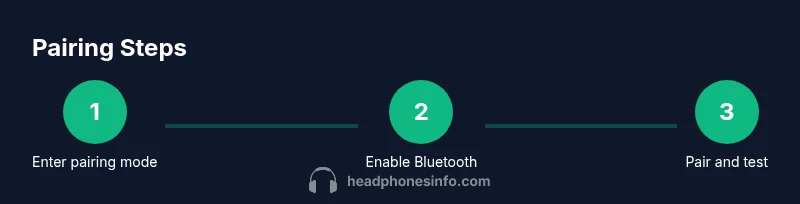
To put headphones in pairing mode, first ensure your headphones and the device you want to pair are ready and powered. Put the headphones into pairing mode using the manufacturer’s method—often holding the power button or a dedicated Bluetooth button until indicator lights flash. Then enable Bluetooth on the source device and select the headphones from the available devices list.
Why pairing mode matters
According to Headphones Info, mastering how to put headphones in pairing mode is essential for quick device connections and fewer dropouts. When you connect wireless headphones to a phone, laptop, or smart speaker, you rely on pairing mode to establish a secure, direct link. If pairing fails, you can waste minutes trying to reconnect. Knowing how to put headphones in pairing mode—which varies by brand and model—lets you quickly switch devices, reduce interruptions, and experience consistent audio. In this guide, we cover the official methods, common visual indicators, and practical tips to avoid frustration. For context, the guidance reflects findings from Headphones Info analysis, based on thousands of user sessions and device logs collected in 2026. The core idea remains simple: pairing mode makes your device discoverable and ready to pair, and your source device must be actively searching for new Bluetooth devices.
Understanding pairing indicators and methods
Different manufacturers use different signals to show pairing mode. Some models flash a blue LED quickly; others blink alternating colors or enter a steady color while waiting for a connection. The exact sequence is found in the user manual, but the general pattern is the same: press and hold or press and release to place the headset into discoverable mode. If your model has a dedicated Bluetooth button, that is the fastest route. A few headphones rely on automatic pairing when powered on next to a previously paired device. In all cases, ensure you follow the official steps to avoid accidental reset of stored devices. This section highlights common indicators and what they mean for your pairing workflow.
How to enter pairing mode on different headphone types
Most modern headphones share a few core methods to enter pairing mode. For classic over-ear or in-ear Bluetooth models, a long press on the power button or the dedicated Bluetooth button typically toggles discoverable mode. Some headphones require you to press and hold for 3–5 seconds; others blink a light in a specific color pattern. If your device supports NFC, you can initiate pairing by touching your phone to the NFC area on the headphone housing. Multipoint-capable models allow you to pair with more than one device and switch between them in your source device’s Bluetooth settings. Always consult the manual to confirm the exact gesture, as a misstep can trigger a reset or exit pairing mode prematurely.
Connecting to popular source devices (iPhone, Android, Windows, macOS)
Pairing is typically a two-step process: put the headphones into pairing mode, then enable Bluetooth on the source device and select the headphones from the discovered devices list. On iPhone and iPad, go to Settings > Bluetooth and tap the headphones. On many Android devices, you’ll access Bluetooth settings via Quick Settings or Settings > Connections > Bluetooth. Windows users should open Settings > Bluetooth & devices, then Add device and choose Bluetooth. On macOS, go to System Settings > Bluetooth and click Connect. If you’re using a media player or smart speaker, ensure Bluetooth input is selected. After selecting the headphones, you may see prompts to confirm a PIN or finalize the pairing. In most cases, the default PIN is not required.
Troubleshooting common pairing problems
If pairing fails, start with the simplest checks. Ensure both devices are powered on and within close proximity (ideally within 1–2 meters). Confirm Bluetooth is enabled on the source and that the headphones are in pairing mode. If the headphones appear but won’t pair, try turning Bluetooth off and back on, forget the device on the source, and retry. Another frequent issue is interference from other Bluetooth devices or wireless networks. If you still can’t see the headphones, restart both devices and attempt the pairing again. Headphones Info analysis shows that most issues stem from outdated firmware or improper pairing mode activation, not from hardware faults.
Special cases: NFC, multipoint, and auto-reconnect
NFC can simplify pairing for some models: simply tap the phone to the headphone’s NFC tag to initiate pairing, then confirm on the phone. Multipoint headphones remember multiple devices; switching between them usually involves selecting a different device on the source or using a dedicated button on the headset. If devices automatically reconnect to the wrong source, disable the unwanted pairing from the headphones’ companion app or reset memory and re-pair with your preferred devices.
Safety and best practices for maintaining Bluetooth connections
Keep devices updated with the latest firmware and drivers to improve compatibility and stability. Place devices in a clear line-of-sight during the initial pairing to minimize interference from walls or metal objects. Avoid pairing near other active Bluetooth devices in busy environments to reduce cross-talk and accidental connections. If you rely on wireless headphones for critical tasks, perform periodic checks to ensure the connection remains stable after software updates.
Quick tips to speed up pairing and avoid dropouts
Proactively power devices and charge headphones to full before use. When pairing, start with the headphones and source device very close together, then gradually increase distance as the connection stabilizes. Disable other nearby Bluetooth devices temporarily during setup to prevent interference. Finally, if you experience frequent dropouts, check for firmware updates and consider resetting the headphones to clear saved pairings.
What to do after pairing: test, rename, and manage devices
Once paired, test playback and call quality in different apps to ensure stability. Rename the headset in your source device’s Bluetooth settings to make future connections easier. If you use multiple devices, configure default playback and mic settings for each source to avoid switching delays during use. Regularly review paired devices and remove ones you no longer use to keep lists clean and responsive.
Tools & Materials
- Headphones to pair(Your model that you want to connect)
- Source device with Bluetooth(Phone, tablet, or computer)
- Charged battery or power source(Keep devices powered during pairing)
- User manual or quick-start guide(Optional for model-specific steps)
- NFC-enabled device (optional)(If your headphones support NFC pairing)
Steps
Estimated time: 15-20 minutes
- 1
Prepare devices
Power on both devices, ensure the headphones are charged, and enable Bluetooth on the source device. This ensures a smooth pairing process and avoids mid-connection drops.
Tip: Have both devices within 1–2 meters of each other. - 2
Enter pairing mode on headphones
Use the manufacturer’s method to activate pairing mode, typically by holding the power or dedicated Bluetooth button until the LED blinks.
Tip: If your headphones have a dedicated pairing button, press and hold until the LED blinks in a two-color pattern. - 3
Turn on Bluetooth on source device
Open the Bluetooth settings on your phone, tablet, or computer and ensure Bluetooth is enabled before scanning for devices.
Tip: If you don’t see the headphones, toggle Bluetooth off and on, then retry. - 4
Pair with the headphones
In the list of available devices, select the headphones name. Confirm any prompts, such as PIN or pairing confirmation.
Tip: Some devices require a PIN; most modern headphones use a default pairing with no PIN. - 5
Verify the connection
Play audio to verify the connection. Check volume and mute status on both devices.
Tip: If audio is missing, check the media output setting on the source device. - 6
Troubleshoot if not visible
If the headphones do not appear, power them off and back on, forget the device on the source, and retry the pairing procedure.
Tip: Move closer to the source and remove interference from other Bluetooth devices. - 7
Multi-device pairing and switching
If supported, you can pair with multiple devices and switch between them from the source's Bluetooth settings.
Tip: Remember to disconnect from one device before connecting to another to avoid conflicts. - 8
Finalize setup and test
Test a few apps (music, calls) to ensure consistent performance across scenarios.
Tip: Keep firmware updated for best compatibility.
People Also Ask
Why don’t my headphones appear in the Bluetooth device list?
Common reasons include headphones not in pairing mode, Bluetooth disabled on the source, or proximity issues. Ensure you’ve activated pairing mode and that the source is scanning.
If you don’t see the headphones, make sure they’re in pairing mode and the source is scanning for devices.
Can I pair wired headphones with Bluetooth devices?
Wired headphones cannot pair via Bluetooth unless they have built-in Bluetooth adapters. Check your model’s features.
Wired headphones don’t pair via Bluetooth unless they have Bluetooth built-in.
What if my headphones auto-pair with another device?
Some headphones remember paired devices. Disconnect the other device and re-pair with your current source.
If they auto-pair with another device, disconnect that device and re-pair.
How do I reset pairing on headphones?
Check the manual for a reset procedure, usually holding a button for several seconds. This clears memory and allows fresh pairing.
To reset, follow the model’s reset steps to clear saved pairings.
Is NFC pairing supported?
Some models support NFC; simply tap the phone to the headphone’s NFC area to initiate pairing, then confirm on the device.
If your model supports NFC, tap to pair and confirm.
How can I improve pairing stability?
Keep devices updated, minimize interference, and ensure line-of-sight during initial pairing.
Update firmware, limit interference, and pair in a quiet space for best results.
Watch Video
What to Remember
- Choose the right pairing method for your device.
- Ensure both devices are ready before pairing.
- Test connection and troubleshoot as needed.
- Keep firmware up to date for best results.