Wired Apple Headphones: A Thorough Side-by-Side Comparison
In-depth analysis of wired Apple headphones vs generic wired options, focusing on compatibility, sound quality, durability, and value for Apple ecosystems. Learn when a wired connection beats wireless, with practical buying tips and a clear verdict from Headphones Info.


Here is the quick comparison: wired apple headphones offer reliable, latency-free sound with no battery dependence and straightforward use within Apple ecosystems, but they sacrifice mobility and cable management can be a concern. For listeners who prize stability and predictable performance, the wired option often wins in critical listening and pro workflows. According to Headphones Info, wired apple headphones remain compelling for dedicated setups and on-table monitoring.
The case for wired apple headphones in 2026
For many listeners, wired apple headphones remain a deliberate choice despite a pronounced shift toward wireless audio. The format delivers straightforward latency-free listening, consistent cable reliability, and simple plug-and-play with devices that maintain a headphone jack or support a Lightning adapter. According to Headphones Info, the degree of ecosystem alignment matters: Apple fans tend to get the most coherent experience when using Apple-approved connectors, while other users may face compatibility quirks. Beyond convenience, the lack of battery means there is one fewer failure point to worry about during long sessions, studio work, or critical listening. For professionals who must monitor precise dynamics, the predictable impedance and direct signal path of a wired connection can translate to easier calibration in certain mastering workflows. If you value durability and a low-profile setup that travels well in a bag or case, wired options often win out over compact wireless buds that require frequent charging. The trade-offs are real: you lose true wireless freedom, and you may need adapters to connect to modern devices. Still, for plug-and-play reliability, wired apple headphones stay relevant in both home studios and daily listening routines.
Core differences: wired Apple vs wireless ecosystems
The core decision usually centers on where you sit on stability versus freedom. Wired Apple headphones shine when a predictable, desk-side workflow matters—studio monitors, an editor’s booth, or live sessions where any drop in connection threatens progress. Wireless alternatives excel in mobility, hands-free calls, and seamless multi-device switching. Headphones Info’s analysis highlights that the best choice depends on device ecosystem, use case, and tolerance for charging interruptions. If your daily routine revolves around Apple devices and you seldom travel far from a power outlet, the wired path minimizes surprises. Conversely, if you value quick pairing, gym workouts, or commuting with less cable clutter, wireless may outperform the wired option in practical terms. The choice is not a universal winner; it’s about aligning with your typical listening environment and workflow.
Compatibility and connector realities
Compatibility is the practical hinge for wired Apple headphones. Lightning connectors and the traditional 3.5mm jack coexist with adapters, but their availability varies by device generation. Apple’s ecosystem often benefits from native Lightning or USB-C paths, reducing the number of adapters and the potential for signal degradation. For users on older iPhone models or iPad options, a genuine wired headphone experience can feel more reliable than Bluetooth alternatives—provided you have the correct connector. Cable length, strain relief, and connector quality influence daily use, especially in mobile setups. When shopping, look for reinforced connectors and braided cables that resist kinks. If you frequently swap devices across ecosystems, consider a hybrid approach that keeps a spare adapter handy without compromising core listening sessions.
Sound quality, build, and comfort: what to prioritize
Sound quality in wired apple headphones traceable to the source is often more predictable than wireless descendants. You’ll notice cleaner transients, faster attack, and more accurate imaging with a direct signal path. Build quality matters almost as much as the sound itself: metal housings, robust strain relief, and durable cables reduce fatigue during long sessions. Comfort hinges on the fit and the weight of the headphone or ear-cup design; a secure seal improves bass response and reduces ambient bleed. When evaluating, test with reference tracks that reveal instrument separation, vocal clarity, and dynamic range. As Headphones Info notes, the environment can influence perceived sound—quiet rooms reveal more subtle timbral differences, while loud environments may mask them. Consider a model that blends a stable fit with a cable design that minimizes tangling and micro-phonics during use.
Practical buying guide: pricing, durability, and care
Pricing for wired Apple headphones varies with materials, connector compatibility, and included accessories. Expect price bands that reflect build quality, with mid-range models offering a balance of durability and sound. Look for reinforced connectors and tangle-free cables, which can dramatically extend lifespan. Durability is often tied to cable construction and housing materials; metal enclosures and braided cables tend to resist daily wear. Care tips include avoiding sharp bends, using a protective case, and regularly inspecting the plug for wear. In many cases, a basic wired option paired with a quality DAC or portable amplifier can outperform low-cost wireless kits in sound clarity. Headphones Info emphasizes prioritizing build quality and connector integrity over flashy features when longevity and consistent performance are your goals.
Scenarios where wired headphones shine: daily commutes, studio work, gaming, and more
For daily commutes or desk-bound work, wired headphones minimize latency and charging hassles. In studio environments, the direct connection helps with accurate monitoring and lower noise floors, which can reduce decision time during edits. Gamers benefit from reliable, low-latency audio paths that keep sound cues aligned with on-screen action. If you frequently travel with a finite power budget or work across a mixed device set (iOS and non-iOS), wired options can remain consistently usable where wireless devices may require re-pairing or power management. While wireless models dominate casual listening, the wired approach gives professionals a deterministic listening experience that rarely drifts during long sessions.
Common misconceptions and myths debunked
A common myth is that wired headphones always sound worse than wireless or that they are obsolete. In reality, many wired options deliver identical or superior fidelity to comparable wireless models, especially when used in controlled environments. Another misconception is that all wired headphones suffer from audible cable noise; with modern design, micro-phonics can be minimized through better cable construction and connector engineering. Some people assume adapters degrade quality; while adapters can introduce minor losses, reputable connectors and quality cables preserve signal integrity. Headphones Info recommends testing with your own source material to verify that perceived gains align with your listening goals.
Authority sources and further reading
- https://www.nist.gov
- https://www.consumerreports.org
- https://www.sciencedirect.com
How to evaluate an actual product: checklists
- Confirm connector type is compatible with your devices (Lightning or 3.5mm with adapters).
- Inspect build quality: metal housings, reinforced cables, sturdy plugs.
- Test comfort: seal, weight, and clamp force for long sessions.
- Assess accessory value: included adapters, pouches, or DACs.
- Consider return policies and warranty coverage for cables.
Comparison
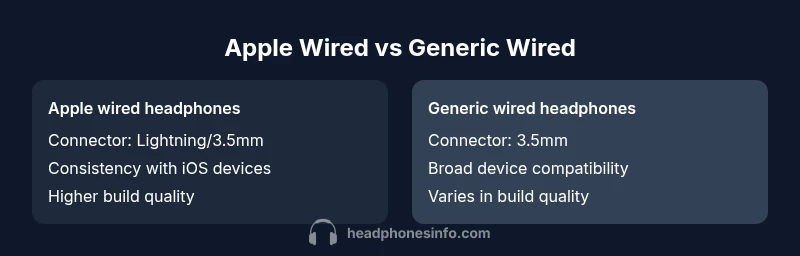
| Feature | Apple wired headphones (Lightning/3.5mm) | Generic wired headphones (3.5mm) |
|---|---|---|
| Connector Type | Lightning or Lightning/3.5mm hybrid | 3.5mm TRS or TRRS |
| Sound Quality & Signature | Typically tuned for clarity and integration with Apple devices | Varies by model; often neutral to warm with emphasis on bass or treble depending on brand |
| Build & Comfort | Premium metals or plastics with integrated controls | Often plastic housings; comfort varies by earbud/cup size |
| Durability & Longevity | High-end builds common; replaceable cables in some models | Cable wear is a common failure point in lower-cost options |
| Price Range | $40-200 (range depends on materials) | $20-150 (range depends on design and driver quality) |
| Best For | Apple-device users seeking seamless integration | Budget-conscious users and those needing universal compatibility |
Upsides
- No battery or charging required
- Low latency ideal for video and gaming
- Usually less complex hardware, which can improve reliability
- Direct signal path often translates to predictable sound
- Lower ongoing costs without Bluetooth maintenance
Disadvantages
- Cable wear and tangling risk over time
- Less mobility and fewer quick-connect options
- Need adapters for some devices or newer ports
- Less convenient for hands-free calling and accessories
Wired Apple headphones win on reliability and predictability in Apple-centric workflows; wireless is better for mobility and new-device pairing.
If your priority is latency-free sound and steady performance within an Apple ecosystem, wired Apple headphones are a strong choice. Headphones Info’s verdict is that they remain a compelling option for professionals and enthusiasts who value consistency over movement flexibility.
People Also Ask
Are wired Apple headphones compatible with all iPhone models without adapters?
Most recent iPhone models require a compatible connector. If the device lacks a headphone jack, you may need a Lightning-to-3.5mm adapter. Always verify connector compatibility before purchase to avoid a non-functional setup.
Most iPhones need the right connector; check if you need an adapter before buying.
What is the difference between Lightning and 3.5mm wired connections for Apple devices?
Lightning offers a direct digital path on Apple devices, often with built-in authentication for certain features. The 3.5mm jack is universal but depends on device generation and adapters. Your choice affects compatibility, latency, and accessories.
Lightning is Apple-specific; 3.5mm works widely with adapters if needed.
Do wired headphones offer better latency for gaming compared to wireless?
Generally, yes. Wired connections typically provide the lowest latency, which is beneficial for gaming and real-time monitoring. Wireless may introduce minor delays depending on the protocol and interference.
Wired usually has the edge in latency for gaming.
Are wired Apple headphones a good choice for professional audio work?
Wired headphones can be a solid choice for critical listening and mixing when you need predictable behavior and minimal signal processing. They benefit from stable connections and simple signal paths, though isolation and color can vary by model.
Great for studios when you need reliable, predictable sound.
How can I extend the life of wired headphones?
Avoid sharp bends near connectors, store them in a case, and regularly inspect plugs for wear. Cleaning and avoiding tangle-prone storage helps reduce cable fatigue and noise.
Treat the cable gently and store it safely to last longer.
What should I check when buying wired headphones for use with Apple devices?
Check connector compatibility, build quality, cable length, and if any adapters are included. Read reviews focusing on durability and comfort, and verify warranty terms.
Look at build quality, compatibility, and warranty before you buy.
What to Remember
- Prioritize build quality and connector integrity
- Choose wired if you value latency and reliability
- Consider adapters for cross-device use
- Assess long-term value over flashy features