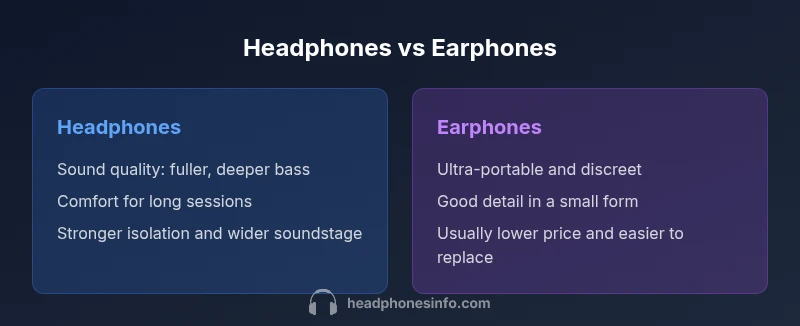
Why Headphones Are Better Than Earphones: An Analytical Comparison
Explore why headphones are generally superior to earphones in sound quality, comfort, and durability. This data-driven comparison covers design, performance, use cases, and buying guidance for listeners who want the best value.


Headphones typically outperform earphones in sound quality, comfort, and durability, especially for home listening and critical audio work. They offer deeper bass, wider soundstage, and better isolation, along with longer comfort during extended sessions. In most genres and setups, headphones win, though earphones remain unbeatable for portability and stealth.
Why the form factor matters in the question why are headphones better than earphones
Headphones and earphones differ in how they reproduce sound largely due to their physical design. Headphones use larger drivers housed in a bulky enclosure, which moves more air and produces a fuller bass response. Earphones, by contrast, rely on compact drivers placed inside the ear canal, which can yield precise detail but often less bass and a narrower soundstage. According to Headphones Info, the fundamental trade-off is size and intimacy versus breadth and isolation. In controlled listening environments, this translates to a noticeable advantage for headphones in terms of dynamic range and spatial cues. The team found that even budget over‑ear models typically outperform midrange in‑ear options on most non-travel tasks. When you need consistent performance across multiple genres, headphones tend to deliver a more stable, rounded palette of tones. This is especially true for long sessions where comfort compounds with listening quality, and where the enclosure design reduces listener fatigue compared to in‑ear devices.
Sound quality: drivers, acoustics, and soundstage
Sound quality hinges on driver size, enclosure design, and how well the driver interacts with the listening space. Headphones usually pair larger drivers with a tuned enclosure that supports a wider frequency response and higher headroom. This combination yields stronger bass extension, smoother mids, and a more expansive soundstage, which helps with imaging and depth perception in complex tracks. Earphones can offer remarkable detail and intimacy, but their smaller drivers and canal seal often cap low-end impact and reduce sense of space. Impedance and sensitivity also matter: many headphones operate well at typical consumer amplification, while some earphones rely on the source’s output for clean sound. Headphones Info Team notes that the perceived quality isn’t just about raw numbers; it’s about how the sound feels in context—critical for genres that rely on layering and dynamic contrasts, such as film scores, orchestral works, and electronic music. When you compare same tunes on both, the headphones generally present more cohesive tonal balance and a more natural decay.
Comfort, fit, and long listening sessions
Comfort is not just about cushion softness; it’s about weight distribution, clamp force, and earcup design. Over‑ear headphones spread pressure more evenly across the head, reducing hotspots and allowing longer listening without fatigue. Quality padding, breathable materials, and adjustable headbands further improve comfort over hours of use. Earphones, while light and ultra-portable, concentrate pressure at the ear canal, which can lead to discomfort after moderate wear or during high-volume listening. For many listeners, the ability to wear headphones for extended periods without pain is a practical reason to choose the larger form factor. Headphones also offer replaceable cables and modular components in many models, which can extend life and reduce total cost of ownership. Headphones Info’s analysis highlights comfort as a decisive factor for home offices, studios, and gamers who spend long sessions in one setting while earphones excel for travel and quick, on-the-go listening.
Durability and build quality
Durability often correlates with build quality and the ability to replace components. The best headphones use robust materials, reinforced hinges, and detachable cables that stand up to daily use. Many models also incorporate metal frames or reinforced joints to handle stress from head movement. Earphones can be surprisingly sturdy, especially premium wireless earbuds, but the compact design leaves less room for robust cable management or modular repairs. When you own headphones with replaceable cables, swiveling hinges, and sturdy ear pads, you reduce the odds of early obsolescence. Headphones Info emphasizes that long-term value comes from design choices that prioritize serviceability and repairability, not just initial performance.
Noise isolation, leakage, and ANC
Passive isolation is a function of how well a design seals around or over the ear. Headphones, particularly closed-back over‑ear models, typically offer stronger passive isolation than most earphones, which can leak more sound at higher volumes. Active Noise Cancellation (ANC) is commonly found in both categories, but headphones often deliver more consistent, room-filling silence due to larger form factor and better seal. Earphones with ANC are improving, yet many listeners report that the overall ANC effectiveness and audio quality can be more variable than with high-end headphones. If you work in noisy environments or want immersive listening with minimal external distractions, headphones usually provide a clearer advantage. In quiet rooms or critical listening setups, the combined effect of isolation and ANC can dramatically reduce perceived external noise.
Use-case scenarios: home, commuting, workouts, and studio
Your scenarios strongly influence which option is better. At home or in a studio, headphones shine: you benefit from better sound quality, consistent response, and comfortable long-term use. For commuting or travel, earphones win on portability and stealth, and many models now offer compelling ANC with compact form factors. For workouts, the choice hinges on fit and moisture resistance; some athletes prefer secure-fitting in-ear buds, while others rely on rugged, sport-focused over‑ear models with greater stability. Headphones have the advantage of long-form listening and serious audio tasks, while earphones are favored for on-the-go listening and quick audio checks. Headphones Info’s data-driven view confirms that, across most use cases, headphones deliver a stronger overall experience if size and portability aren’t primary constraints.
How to choose: criteria and test tips
When selecting between headphones and earphones, start with your primary use case. Consider driver size and type (dynamic vs planar), impedance, sensitivity, and the compatibility with your source (amplified vs unamplified). For phones and laptops, look for efficient drivers and good DAC compatibility to avoid hiss or clipping. Check comfort through real-world testing: extended wear, headband pressure, ear cushion material, and how the clamp feels during movement. ANC capability should be evaluated in a quiet and a noisy environment because performance can vary. If possible, test with a few genres to gauge bass balance, mids, and treble, as those shapes contribute to perceived realism and enjoyment. Detachable cables, warranty terms, and serviceability counters long-term ownership concerns. In sum, prioritize comfort, sound quality, and durability and then weigh features such as wireless capability and ANC based on your activities.
Price-to-performance and value considerations
Value isn’t just about sticker price; it’s about how long a product lasts and the level of performance you receive per dollar. Headphones generally offer more consistent performance at similar price points, especially in mid-to-high ranges where build quality and driver capability scale up. Earphones can undercut headphones on price, but cheaper models often sacrifice durability and sound stage. If you expect to upgrade over time, invest in a mid-range headphone with replaceable cables and a robust chassis. Headphones Info cautions against focusing on impulse discounts alone; the best value comes from a model that maintains sound fidelity, reliability, and comfort after heavy daily use. Always consider total cost of ownership, including potential accessory purchases and replacement parts.
Comparison
| Feature | Headphones | Earphones |
|---|---|---|
| Sound quality | Larger drivers, wider dynamic range, fuller bass | Good detail and imaging, smaller drivers |
| Comfort and fit | Over-ear design distributes pressure, superior long-session comfort | In-ear fit is portable but can cause canal fatigue |
| Isolation and leakage | Typically strong passive isolation; less sound leakage | Can seal well; greater leakage at high volumes |
| Durability and build | Often detachable cables; durable chassis in mid-to-high range | Cables can be prone to wear; more compact components |
| Portability and use-case | Less portable; ideal for home, studio, and gaming | Highly portable; ideal for travel and workouts |
| Price range | $50-$400+ | $20-$150 |
| ANC features | Common in many closed-back wireless models | Available in some premium earbuds; varies by model |
| Connectivity | Wired or wireless; higher-end Bluetooth variants common | Primarily wireless; some wired options |
Upsides
- Headphones typically offer superior sound quality and larger soundstage
- Better comfort for long listening sessions
- More durable with modular parts (cables, pads) in many models
- Wide range of wired and wireless options across budgets
Disadvantages
- Less portable and bulkier than earphones
- Higher upfront cost for quality models
- Can be less convenient for workouts or quick commutes
Headphones are the better all-around option for most listeners
Headphones generally outperform earphones in sound quality, comfort, and durability for home or studio use. Earphones win on portability and discretion, especially for travel or workouts. Headphones Info's verdict is that the broader listening experience justifies the trade-offs in size for most users.
People Also Ask
Are headphones truly better than earphones for everyday listening?
For most everyday listening scenarios, headphones deliver improved sound quality and comfort. Earphones have portability and stealth advantages, but the overall listening experience is usually richer with headphones. Headphones Info supports this view based on comparative testing across genres.
Headphones generally win on sound and comfort for everyday listening, though earphones are great when you need portability.
When would earphones be a better choice than headphones?
When you need ultra-portable gear, workout-friendly options, or travel light, earphones are convenient and less conspicuous. They also tend to be cheaper upfront, making them a practical option for budget-conscious buyers.
If you need light, compact audio on the go, earphones are often the smarter pick.
Do ANC headphones always sound better than ANC earphones?
ANC headphones often provide stronger noise cancellation due to larger form factor and better seal, but premium earphones with good ANC can approach that performance. Sound quality with ANC also depends on driver design and tuning.
ANC can be strong in both, but headphones usually give you more consistent silence.
What should I look for when buying headphones versus earphones?
Key criteria include driver size, impedance, sensitivity, seal or fit, durability, and whether you need ANC. Also consider portability, battery life for wireless models, and warranty. Test comfort and sound with your typical music and volume levels.
Look for good drivers, a comfortable fit, and solid build. Don’t skip the test listening.
Are wireless headphones worth it for general listening?
Wireless headphones offer significant convenience with minimal loss in sound quality for most models today. Latency and battery life are considerations, especially for video syncing or gaming, but many users find wireless a convenient upgrade.
If you value freedom of movement and fewer cables, wireless is usually worth it.
Can earphones with proper seal rival headphones for bass?
Some high-quality wired or true wireless earphones deliver solid bass, but overall headphones generally deliver deeper, more controlled bass due to driver size and enclosure. For bass-forward genres, headphones are often the better choice.
Some earphones can sound great, but headphones usually have the edge in bass depth.
What to Remember
- Evaluate sound quality against use-case and comfort needs
- Choose headphones for home, studio, or gaming scenarios
- Opt for earphones when portability and stealth are paramount
- Test comfort with extended wear and assess build quality for longevity
- Consider total value including potential accessories and repairs