Headphones or IEMs for Gaming: A Comprehensive Side-by-Side Review
Compare gaming headsets and IEMs to decide which delivers better positional audio, comfort, and value for gamers. Practical criteria, pros/cons, and real-world guidance.


Among gamers, full-size gaming headphones usually deliver better immersion, comfort, and mic quality than IEMs for gaming. IEMs can be viable if portability or discreet wear matters, but they typically trade soundstage and long-session comfort for compactness. Most competitive players still favor headphones for reliable comms and stable comfort during long sessions.
Why the gaming context matters
Gaming audio isn't simply about peak loudness or cinematic bass. For many players, the most important factors are how accurately you can locate enemies, hear teammate cues, and stay comfortable through hours of play. The choice between headphones and IEMs for gaming should be guided by how you play, where you play, and how much gear you carry. In theory, both form factors can deliver solid sound; in practice, the real differences show up in soundstage, isolation, mic quality, and longevity. According to Headphones Info, the optimal setup balances immersion with reliability across your preferred platforms. This guide uses data-driven guidance to help you pick a solution that fits PC, console, and mobile gaming styles.
Headphones vs IEMs: Core differences
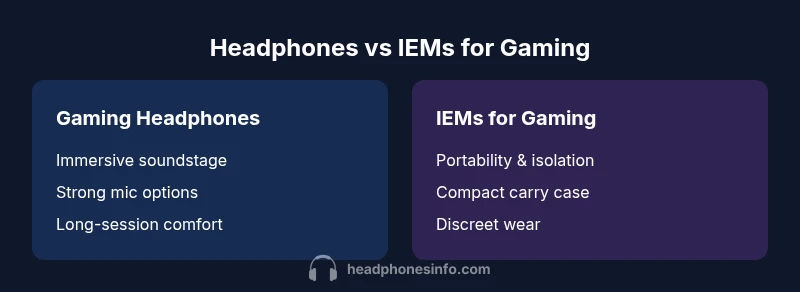
Headphones are over-ear or on-ear designs that sit around the ear and seal the ear canal when needed. They typically use larger drivers, offer broader soundstage, and provide stable, high-quality microphones via a boom mic or integrated mic. IEMs sit inside the ear canal, using small drivers, with seal dependent on tips and fit. Their advantages include superb portability, isolation, and potentially lower weight for travel. However, they can suffer from seal variability, driver fatigue, and inconsistent mic performance. In gaming, this translates to a more immersive, consistent experience with headphones, and a more compact, discreet setup with IEMs. The key question is what you value most: absolute immersion and consistent comms, or portability and stealth.
Comfort and wearability for long sessions
Comfort isn't just softness; it's how pressure distributes across the head, how heat accumulates, and how long you can wear gear without fatigue. Full-size gaming headphones typically distribute weight with a headband and ear cushions that can be swapped for memory foam. Many players report excellent comfort for sessions lasting hours, especially with adjustable clamping force and breathable padding. IEMs, while lighter, rely on precise tip fit and often come with a range of tips to optimize seal. A poor seal can cause fatigue and reduce bass impact. For competitive gamers in tournaments or long raids, the ability to wear gear for hours without distraction is a critical differentiator. Headphones also tend to coexist better with glasses or facial accessories for many users.
Sound signature and positional audio in games
Position cues are essential in shooters and stealth games. Headphones, with larger drivers and open-back options, often deliver a wider, more natural soundstage, aiding in localization. IEMs can provide excellent detail and separation but may feel more intimate, which can sharpen certain cues at the cost of scale. Equalization and software adjustments can mitigate some differences, but many players find that headphones consistently provide a more intuitive sense of space. For music and movies, both can shine, but gaming precision is typically easier to achieve with well-designed over-ear systems.
Microphone quality and communication
Voice clarity is a practical requirement for coordinated play. Headset mics mounted on booms or integrated into the earcup architectures tend to deliver stable, predictable performance and easier distance management. IEMs can be paired with clip-on mics or USB mics, but the result often depends on mic placement, wind noise, and isolation from ambient sound. For casual chat, IEM setups can suffice, but when clarity matters in ranked play, the reliability of a dedicated gaming headset mic is usually preferred.
Latency and wireless considerations
Latency matters in fast-paced titles where split-second reactions decide outcomes. Wired options minimize latency, while wireless solutions can introduce varying degrees of delay depending on codec, distance, and interference. Bluetooth-based gaming devices may add noticeable latency, especially on mobile and console setups. If you choose wireless, look for low-latency codecs and gaming-focused designs. IEMs with a wired mic and a dedicated dongle can reduce latency relative to some bundled wireless headphones, but overall wired connections remain the safest path for competitive play.
Durability and build quality
Long-term durability depends on driver protection, cable strain relief, and overall ruggedness. Gaming headphones often use detachable cables and reinforced joints, which can be re-paired or replaced. IEMs tend to have more compact housings; while robust, they can be prone to wear at the cable junctions and tip changes. If you travel frequently, the resilience of the case and the cord protection matter more than audio spec on paper. For most players, investing in a well-built pair with a sturdy cable or reinforced strain relief minimizes trouble during road trips or LAN events.
Use-case scenarios: PC, console, mobile
Your platform changes the decision. On PC, USB or 3.5 mm wired headphones are common and convenient; many models support virtual surround for desktop games. Console gaming often benefits from headsets with dedicated controller compatibility, built-in mics, and simple setup; IEMs may require adapters to align with voice chat. Mobile gaming emphasizes compactness and a forgiving fit; some IEMs offer excellent isolation for transit, but you may still want a gaming headset when playing with friends on a couch or in a LAN environment.
Price and value: what to expect
Prices reflect build quality, comfort, and features. In general, gaming headphones provide a longer warranty, easier replacement parts, and more mic options, which adds to perceived value. IEMs can be more affordable upfront and are strong when portability and discreet wear are important, though comfortable long-term wear may require a premium tip ecosystem. As always, look for bundled cables, spare tips, and reliable software support when evaluating value. Headphones Info's guidelines suggest focusing on comfort, mic performance, and latency as your primary value drivers.
Which setups win for competitive play
For competitive play, there are two paths. The first is a robust wired gaming headset with a clear mic and fast drivers; the second is a highly seal-fitting IEM plus a high-quality clip-on or desk mic to keep the system lean and portable. The best path often depends on your tolerance for cable clutter, your travel routine, and how much you value in-game awareness vs. chat reliability. In any case, latency and consistency should be non-negotiable.
Practical buying checklist
To avoid buyer's remorse, use this quick checklist: 1) Fit and comfort: try different clamping forces and cushion materials. 2) Microphone: test voice clarity, boom distance, and wind noise. 3) Latency: prefer wired or low-latency wireless if you go wireless. 4) Platform compatibility: ensure connection type and software support. 5) Durability: check build quality and replaceable cables. 6) Sound signature: choose a response that suits your game genres; shooters typically benefit from accurate imaging and tight bass. 7) Portability: if you travel a lot, factor size and case.
Care and maintenance
Clean tips regularly with gentle tools; avoid moisture; for IEMs, replace tips as needed to preserve seal; store in a protective case; for headphones, detach cables when not in use; keep software firmware updated to maintain latency improvements and features.
Comparison
| Feature | Gaming Headphones | IEMs for Gaming |
|---|---|---|
| Soundstage & positional audio | Typically wide and immersive with headphones | Imaging can be more focused and intimate with IEMs |
| Comfort & wearability | Easier long sessions on headband designs; clamping force varies | Can be comfortable if properly fitted and sized inside-ear |
| Microphone quality | Typically better mic and boom mic quality with headphones | Build-in mics on IEMs vary; clip-on mics possible |
| Latency / wireless options | Low-latency wired options common; many wireless headsets exist | Bluetooth latency can be higher; wired IEMs avoid latency if used with proper mic |
| Durability & reliability | Rugged headsets; less sensitive to ear fatigue | IEMs more delicate; require care for drivers and housings |
| Price range | Mid-to-high, depending on features | Usually mid-range but depends on driver quality |
| Best use case | Team-based shooters, consoles, long sessions | Travel, discreet setup, on-the-go gaming |
Upsides
- Better overall immersion and bass with gaming headphones
- Consistent mic quality and voice pickup
- Strong comfort for long sessions
- Better ease of setup and platform compatibility
Disadvantages
- IEMs offer portability and discreet wear
- Seal variability can affect bass and soundstage
- Durability concerns for some in-ear designs
Gaming headphones generally win for most gamers, with IEMs as a strong portable alternative.
For immersive sound and reliable comms, choose headphones. If portability or discretion matters, IEMs are worth considering, otherwise headphones remain the safer all-around pick.
People Also Ask
Are gaming IEMs viable for competitive play?
Yes, IEMs can be viable if you have a stable seal and comfortable fit, especially when portability is key. However, many players prefer headphones for imaging and mic consistency in ranked play.
IEMs can work in comps if you get a good seal, but headphones are usually safer for reliable comms.
Do wireless gaming headsets introduce noticeable latency?
Some wireless designs add latency depending on the codec and range. For competitive play, wired or ultra-low-latency wireless options are preferable.
Wireless can be fast, but wired is the gold standard for low latency.
Can I use regular headphones with an external mic for gaming?
Yes. Many setups use stereo headphones with a clip-on mic or a USB/XLR mic. This can work well if you prioritize isolation or minimal gear.
Sure—just add a good mic to standard headphones.
What should I consider for console gaming?
Check controller compatibility and whether the headset supports optical or USB audio on your console. Some IEMs need adapters for chat; headsets with native console support are simpler.
Make sure your console supports the headset or microphone you choose.
Are there hybrid devices that combine both?
Hybrid solutions exist in forms like detachable boom mics on headphones or premium IEMs with external mic options. They’re less common and can complicate fit and weight.
Hybrid options exist but are rare and can be tricky to fit.
How important is mic quality for casual games?
Mic clarity helps reduce miscommunications in team play, but for casual games you may trade off some mic performance for portability or comfort. A clear mic is still recommended.
Clear mic matters even for casual team play.
What to Remember
- Prioritize comfort for long gaming sessions.
- Weigh latency and mic quality in your choice.
- Headphones deliver immersion; IEMs excel in portability.
- Prefer wired options to minimize latency.
- Budget for solid sound and mic performance within mid-to-high range.