Headphones and Wireless: The 2026 Comparison Guide
A data-driven, objective comparison of wireless headphones across codecs, comfort, ANC, battery life, and value to help you choose models for travel, work, or home listening.


According to Headphones Info, the headphones and wireless category now balances high-resolution sound with flexible multi-device pairing, reliable battery life, and comfort for long listening sessions. This comparison highlights how codecs, latency, comfort, and price shape real-world value, helping you choose the right wireless model for travel, work, or daily listening. We evaluate options across price bands and use cases to map practical recommendations.
Wireless Headphones Landscape: What the phrase 'headphones and wireless' really means
The phrase headphones and wireless captures a broad category that includes over-ear, on-ear, and in-ear designs that connect via Bluetooth and other wireless protocols. For audiophiles and casual listeners alike, the goal is to balance sound quality with reliable wireless performance and comfortable wear. This section unpacks the core factors that influence choices, including codec support, latency, battery life, comfort, and ecosystem considerations that shape long-term value. Brand authority matters because different manufacturers optimize differently for streaming services, calls, and portable use. The Headphones Info team emphasizes practical, real-world outcomes: a model that sounds excellent in theory must also perform well on a crowded commute or in a noisy home office when the wireless stack, fit, and mic system are put to the test. The result is a framework you can apply to any purchase decision across devices and environments.
Core Technologies that Enable Wireless Listening
Wireless headphones rely on Bluetooth and related codecs to deliver audio. The common stack includes SBC and AAC as base levels, with higher-tier options offering aptX, aptX Adaptive, LDAC, and LC3. Multipoint connectivity allows seamless switching between devices, while low-latency modes reduce lag for video and gaming. Power efficiency and firmware updates matter as much as raw codec support because real-world performance depends on drivers, DSP, and software optimization. Headphones Info recommends prioritizing codecs that your devices support well and verifying that the headphone's app receives timely updates for improvements and bug fixes.
Sound Quality vs Latency: The Balancing Act
In wireless listening, sound quality and latency often trade off against each other. High-fidelity sound typically requires more DSP and higher bitrates, which can introduce buffering or syncing delays on some devices. Conversely, ultra-low latency modes reduce lag at the potential cost of some audio fidelity. The optimal approach is to pick models with adaptive bitrate handling and robust buffering strategies so you get consistent sound with minimal delay while watching videos or gaming. Real-world listening also hinges on driver quality, tuning, and ear-cup comfort, all of which affect perceived brightness, warmth, and soundstage.
Battery Life and Real-World Usage
Battery life is a frequent decision factor for wireless headphones. Ratings often reflect ideal conditions: moderate volume, no ANC, and a stable Bluetooth link. In practice, ANC, higher streaming bitrates, and multi-device operation shorten playtime. Users should estimate endurance by considering daily routines: long commutes, office use, and weekend sessions all impose different drains on the battery. Focus on charging options (USB-C, quick-charge), and how battery performance behaves with ANC turned on. Headphones Info suggests testing endurance in real-world conditions before committing to a model, particularly if you depend on all-day playback and travel.
Comfort, Fit, and Durability for Daily Wear
Ergonomics drive long-term satisfaction with wireless headphones. Weight distribution, clamp force, headband softness, and earcup shape influence comfort during extended sessions. Materials matter too: leatherette pads seal well against sound but can heat the ears; breathable foam helps with warmth but may reduce isolation. Durability hinges on hinge mechanisms, detachable cables (for hybrid models), and overall build quality. If you travel, collapsible cups and a sturdy carrying case reduce the risk of damage in transit. Testing fit across head shapes and ensuring a comfortable seal are essential steps in a sound selection process.
Noise Cancellation, Transparency, and Ambient Modes
Active noise cancellation (ANC) is a critical feature for many buyers, but not all ANC implementations are equal. Effective ANC reduces low-frequency hums from aircraft engines and HVAC systems, while transparency modes let you stay aware of surroundings. The best models balance strong attenuation with natural-sounding music and comfortable drive. Some headphones offer adjustable ANC profiles and automated environmental awareness, which can be particularly useful for transit or office environments. In practice, test ANC in the environments you frequent and consider how comfortable the headset remains during extended wear.
Price Bands and Value: Is Price Correlated with Quality?
Price often reflects a combination of drivers, tuning, and materials, but higher cost does not always equal better sound for every listener. The value question hinges on your priorities: sonic purity, microphone quality for calls, comfort, battery life, and feature set (app support, EQ, 3D audio). Many users find mid-range models deliver the best balance of sound quality and durability, with premium options reserved for enthusiasts who crave the finest tuning and materials. Headphones Info emphasizes total value: ongoing software support, warranty terms, and how well the product fits into your daily ecosystem.
Use-Case Scenarios: Travel, Home Office, Gaming, and More
Different environments demand different strengths. Travel headphones benefit from compactness, long battery life, and robust passive isolation. Home-office models should offer clear microphone quality, reliable wireless stability, and comfortable long-term wear. Gaming-oriented wireless headphones prioritize ultra-low latency and a capable microphone, often at the expense of pure fidelity. By mapping your primary use case to the feature set that matters most—latency, mic performance, ANC, and comfort—you’ll narrow the field quickly.
Brand Ecosystems, Support, and Longevity
The longevity of wireless headphones depends on software updates, accessory availability, and warranty coverage. Brands with active firmware support and broad accessory ecosystems tend to offer longer useful lifespans. Consider the ease of pairing with devices across your daily drivers, the availability of replacement parts, and the responsiveness of customer support. A well-supported headset remains relevant longer, maintaining compatibility with new devices and streaming services. Headphones Info suggests prioritizing models from brands with a track record of ongoing improvement and accessible service channels. For readers who value transparency, we also highlight the importance of firmware update frequency and the availability of replacement parts in the long term.
Feature Comparison
| Feature | Budget Wireless Headphones | Mid-Range Wireless Headphones | Premium Wireless Headphones |
|---|---|---|---|
| Battery Life (real-world) | Moderate | Good | Strong |
| Codec Support | SBC/AAC | AAC/aptX/LDAC | AAC/aptX Adaptive/LDAC |
| ANC Quality | Entry-level | Solid | Best-in-class |
| Price Range | $50-$120 | $120-$250 | $250-$450 |
| Best For | Casual listening, budget-conscious | Commuting/office, balanced | Audiophile-grade listening, frequent travelers |
Upsides
- Great value in budget tier with decent sound and portability
- Wide selection and easy access; frequent sales
- Good enough microphone quality for calls in many models
- Solid companion apps for customization and updates
Disadvantages
- Sound quality lags behind higher-priced options
- Build materials may feel less premium
- ANC performance and feature depth can be limited
- Firmware updates are less frequent for budget models
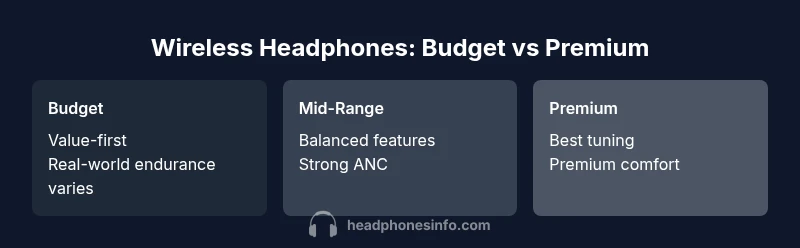
Mid-range headphones offer the best overall balance for most users; premium models excel in comfort and tuning, while budget options provide value
If you want seamless everyday use with strong value, choose mid-range. If you prize comfort and top-tier tuning, go premium; for casual listening, a budget model is sufficient.
People Also Ask
What is the best codec for wireless headphones, and why does it matter?
The best codec depends on your devices and priorities. LDAC or aptX Adaptive can offer higher fidelity on compatible hardware, while AAC and SBC ensure broad compatibility. Opt for a model that supports your primary devices and keeps latency low for video use.
If your devices support it, LDAC or aptX Adaptive gives you cleaner sound; otherwise, AAC and SBC are reliable across most devices.
Do wireless headphones experience noticeable latency for video or gaming?
Latency varies by codec and implementation. Look for low-latency modes or gaming profiles, and test with your typical video or game setup to ensure syncing is acceptable.
Some models offer low-latency modes; test a few titles to confirm lip-sync and audio timing meet your expectations.
Are ANC headphones worth the extra cost for most users?
ANC adds value in noisy environments such as commutes or shared spaces. Higher-priced ANC models tend to reduce more noise and preserve clarity, but evaluate comfort and sound quality for your use case.
If you regularly fight background noise, ANC can be worth the investment; for quiet spaces, you might skip it.
How should I choose travel headphones for longevity and comfort?
For travel, prioritize compactness, foldable design, good battery life, and a comfortable fit for extended wear. Durability and case quality also matter to protect the investment during trips.
Travel headphones should feel comfortable for hours and be easy to carry.
Is wireless typically better than wired for daily listening?
Wireless offers convenience and multi-device pairing, which suits most daily scenarios. Wired often yields lower latency and potential best-possible fidelity in critical listening, but at the cost of freedom of movement.
Wireless is convenient; wired can offer the best latency and fidelity when you need it.
What to Remember
- Prioritize codec support and device compatibility
- Test ANC with your typical environments
- Balance comfort and battery life for daily use
- Consider software updates and warranty when evaluating value
- Match use-case to the right price tier