Headphones Buds: True Wireless vs Wired Earbuds
A data-driven comparison of headphones buds, weighing true wireless vs wired in-ear options on sound quality, fit, battery life, durability, and value to help you choose the best buds.


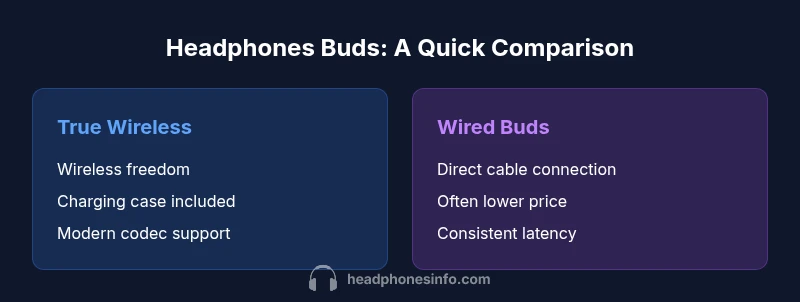
Two main categories dominate the headphones buds landscape: true wireless earbuds (TWS) and wired in-ear buds. TWS offers ultimate mobility and hassle-free charging cases, while wired buds deliver steady latency, potentially lower distortion, and simpler durability. For most shoppers, the choice hinges on mobility versus price and long-term ownership; weigh battery life, comfort, and use case to decide which fits best.
What Are Headphones Buds?
Headphones buds refer to compact in-ear listening devices, typically worn inside the ear canal. In this guide, we consider two main subcategories: true wireless earbuds (TWS), which operate without a physical cable to the source and rely on a charging case, and wired in-ear buds, which connect to devices via a cable. The Headphones Info team emphasizes that the term encompasses a range of designs—from tiny sport buds to larger, cinema-style in-ear monitors—and that fit and seal often determine perceived sound more than the driver count alone. For many listeners, buds are the entry point to high-fidelity portable audio, making comfort and stability as important as the technical specs. This article uses the keyword headphones buds to anchor the conversation and help you compare options with real-world considerations.
Key Differences Between True Wireless and Wired Buds
The most obvious difference is the absence or presence of a cable to your device. True wireless buds stand out for portability, instant pairing, and a charging case that adds to total usable time, but they can be pricier and occasionally more prone to audio latency issues with specific codecs. Wired in-ear buds, by contrast, generally offer simple, reliable connections, lower perceived latency, and often better value at lower price tiers, though you’re tethered to your device and need to manage a cable. Beyond cables, the listening experience is shaped by driver size, tuning, sealing technique, and the quality of the source material. The Headphones Info analysis highlights that most listeners will notice smoother bass control and more consistent volume with well-designed wired buds, but the convenience and feature sets of modern TWS—like multi-point pairing and on-device controls—create compelling trade-offs for active users.
Criteria That Matter When Choosing Buds
When comparing headphones buds, several criteria consistently separate good options from great ones. Start with comfort and seal; a snug fit minimizes outside noise and prevents sound leakage. Next, evaluate sound quality tuning: do you prefer a neutral, balanced profile or a bass-forward sound? Battery life and charging logistics matter for TWS, while cable length, build quality, and plug compatibility matter for wired buds. Consider durability features such as IP ratings and removable cables. Finally, factor price and ecosystem compatibility—some buds work better with certain devices or apps. Headphones Info emphasizes testing in real-world scenarios (commute, gym, desk work) to gauge comfort, fit stability, and perceived sound quality over time.
Sound Quality and Tuning: What to Listen For
Sound quality in buds depends on driver type, enclosure design, and tuning by the manufacturer. Look for clear highs without sibilance, strong but controlled bass that doesn’t overpower mids, and a wide dynamic range for transient sounds. For TWS, codec support (AAC,
Fit, Comfort, and Durability for Long Sessions
A secure fit is not optional: it determines not only comfort but bass response and passive isolation. Try buds with multiple ear tips and wings; subtle anatomy differences can drastically change seal and comfort. For durability, TWS typically feature water resistance ratings and robust charging cases, while wired buds rely on cable strain relief and connector longevity. Be mindful of weight distribution; heavier buds can pull on the ear during physical activity, reducing isolation and comfort. Headphones Info’s practical guidance: prioritize fit first, then evaluate build quality and warranty terms as a signal of long-term reliability.
Battery Life, Charging, and Reliability
Battery life is a critical differentiator for true wireless models. Look for usable hours per charge and the total runtime provided by the charging case. Latency and Bluetooth stability matter for gaming and video sync. Wired buds have essentially unlimited cable longevity concerns rather than battery issues, but the cord and jack quality affect durability and compatibility with devices that lack a headphone jack. In practice, testers find that reliable wired buds deliver consistent sound with minimal signal loss, while modern TWS offer competitive sound with the convenience of wireless operation. Consider your daily rhythm: long commutes or gym sessions favor TWS; desk listening or budget-conscious shoppers may prefer wired buds.
Price, Value, and Long-Term Ownership
Prices for headphones buds span from budget to premium. True wireless models often command higher upfront costs due to wireless components, battery packs, and feature sets like touch controls and active noise cancellation. Wired buds can provide excellent value, especially at mid to budget price points, with fewer potential failure modes related to wireless circuitry. When evaluating value, factor in replacement tips, cable wear, and the potential cost of ongoing charging, if applicable. Headphones Info’s framework encourages comparing total ownership costs over a typical device lifecycle, not just the initial sticker price.
Practical Buying Scenarios and Quick-Start Tips
To translate the comparison into a practical decision, map your use cases: daily commutes, workouts, remote calls, or critical listening. For commuters and travelers, prioritize portability, case capacity, and fast pairing. For workouts, look for a secure fit, sweat resistance, and IP ratings. For work-from-home setups, consider microphone quality and multipoint pairing to connect to multiple devices. Quick-start tip: if you’re unsure between TWS and wired, test a mid-range TWS model and a mid-range wired bud to compare comfort, latency, and perceived sound at typical listening volumes. This approach yields actionable insight without getting lost in spec sheets.
Maintenance and Care for Headphones Buds
Maintenance extends the life of headphones buds. Keep buds clean and dry, particularly tips and mesh covers that can accumulate earwax. For TWS, charge the case regularly and avoid exposing devices to extreme temperatures. For wired buds, inspect the cable and connectors for signs of wear and replace tips as needed. Store buds in a protective case when not in use, and avoid yanking cables or tucking them under heavy objects. Regular cleaning and mindful handling reduce the need for repairs and improve overall listening experience.
Comparison
| Feature | True Wireless Earbuds | Wired In-Ear Buds |
|---|---|---|
| Sound Quality | Balanced tuning with modern codecs; depends on seal and driver quality | Solid, reliable sound; often easier to achieve consistent performance without wireless variability |
| Latency | Low to moderate latency with modern codecs; improvements continue | Low latency by nature of direct wired connection |
| Battery Life | Battery remains key; charging case extends total runtime | No battery dependency; one cable deters portable power concerns |
| Durability | Portable, with cases; susceptible to loss of small parts but typically robust | Cable wear and connector wear are the main durability concerns |
| Portability | Extremely portable; pocketable charging cases | Very portable; compact but needs a cable for use with devices |
| Price Range | Mid-to-high depending on features like ANC and codecs | Usually lower upfront price; cost depends on build quality |
| Best For | On-the-go listening, workouts with secure fit, advanced features | Budget listening, desk work, situations where a wired connection is preferred |
Upsides
- Portability and wireless freedom enable workouts and travel
- Charging case extends usable hours and simplifies storage
- Wide feature sets (touch controls, ANC, multipoint) in many models
- Wired buds often deliver consistent, immediate response with fewer wireless issues
- Lower long-term replacement risk due to simpler internals in some models
Disadvantages
- Higher upfront cost for quality TWS models
- Potential latency and codec compatibility issues on some devices
- Charging case adds extra component to manage and charge
- Cable wear and connector problems for wired buds over time
- Sound quality can vary more widely in budget wired options
True wireless buds win on mobility; wired buds win on value and simplicity
If you prioritize travel, calls, and hands-free convenience, choose true wireless buds. If you want reliable performance at a lower upfront cost and minimal maintenance, wired buds are the safer bet. The Headphones Info team recommends aligning the choice with your daily routine and tolerance for charging.
People Also Ask
What is the difference between true wireless buds and wired in-ear buds?
True wireless buds use Bluetooth and have no cords, offering portability and case-charged power. Wired in-ear buds connect via a cable and generally deliver consistent audio with no latency concerns tied to wireless transmission. Your choice depends on mobility vs. price and simplicity.
True wireless buds are cordless and portable, wired buds stay connected by a cable and often cost less. Your call should balance convenience against value.
Are headphones buds good for workouts?
Yes, many buds are designed for workouts with secure fit and sweat resistance. Look for IP ratings, stable tips, and a design that stays in place during movement. Test fit in a light jog to ensure comfort and sealing.
If you want buds for workouts, focus on fit, water resistance, and a secure seal to stay in place during activity.
Do wired buds have latency issues?
Wired buds typically have minimal to no perceptible latency because the signal travels directly through the cable. This makes them a reliable choice for gaming or video work where timing matters.
Latency is usually negligible with wired buds; great for gaming and video where timing is key.
How should I balance sound quality and price?
Start with a baseline you’re comfortable paying, then assess tuning and build quality. Look for a balanced sound with clear mids and a controllable bass. If possible, audition models in-store or via return policies before committing.
Set a budget, then pick a model with solid tuning and good build quality you can actually try before buying.
What is the best option for budget buyers?
For strict budgets, wired buds often provide better value per dollar and fewer surprises. If you can stretch for wireless, look for models with essential features at a lower price tier and good battery life.
If budget is tight, wired buds usually give you more value; otherwise pick a basic true wireless with a solid case and battery life.
What to Remember
- Prioritize mobility if you travel often
- Test fit for comfort; seal affects bass and isolation
- Balance battery life against total ownership costs
- Consider latency and codec support for media use
- Choose wired if budget and reliability are paramount